Quranic Answer
The feeling of aimlessness in life is a common problem that many individuals struggle with, often leading to a sense of discontent and unease. Aimlessness can manifest in various ways, from a lack of direction in pursuing one's career or personal goals to a deeper existential crisis concerning one's purpose in life. In a fast-paced world teeming with distractions and competing priorities, understanding the essence of our existence becomes vital. Many people embark on their journeys without a clear purpose, leaving them susceptible to feelings of confusion and uncertainty. To alleviate these feelings and find fulfillment, one must delve into the spiritual underpinnings of life as emphasized in various religious texts, particularly the Holy Quran. The Quran presents a comprehensive understanding of the purpose of human life, which is intricately linked to the concept of worship and a close relationship with God. Specifically, in Surah Adh-Dhariyat, verse 56, Allah states, 'And I did not create the jinn and mankind except to worship Me.' This fundamental teaching indicates that the primary purpose of human creation transcends mundane pursuits; it is, in essence, to foster a meaningful connection with the Creator through acts of worship. This direct line of communication with Allah is pivotal because it forms the foundation for all other aspects of life, and when individuals recognize that their existence is designed for worshipping and serving Allah, they begin to align their daily activities and ambitions with this ultimate purpose. When individuals stray from this path, they may find themselves grappling with feelings of aimlessness. Society often pushes us toward pursuing material success or societal approval, but these goals can sometimes lead to a disconnection from our spiritual essence. It is crucial to remember that true fulfillment doesn’t stem from superficial accomplishments or accolades but rather from connecting with our Creator. When we immerse ourselves in the deep meanings of worship, we cultivate a sense of security and purpose that permeates every aspect of our lives. Worship is not confined to ritualistic practices; it extends to the intentions behind our actions. A life lived with the intention to please Allah, regardless of the circumstances, can fill the void that often accompanies aimlessness. Moreover, the Quran emphasizes that engaging in good deeds and cultivating positive relationships is integral to a meaningful life. In Surah Al-Baqarah, verse 177, it is stated that engaging in charity, believing in God, maintaining faith in the Day of Judgment, and treating others with kindness and respect are among the actions that can bring a person closer to their ultimate goals. This verse not only reinforces the importance of worship but highlights that the essence of a fulfilling life lies in serving others and contributing positively to society. Therefore, individuals who align their goals with these religious and moral values are less likely to experience feelings of aimlessness, as they have a robust framework within which to operate. In the quest for purpose, it is beneficial to draw from the wisdom of religious teachings that underscore the significance of both worship and ethical conduct in achieving personal satisfaction and collective harmony. By engaging in acts of charity, individuals can understand the value of community and support, which helps to alleviate loneliness and aimlessness. Giving back not only fosters a sense of gratitude but also strengthens one's connection to the collective human experience. This interconnectedness can serve as a powerful antidote to feelings of emptiness and directionlessness. Furthermore, reflecting on the Day of Judgment reminds individuals of the temporal nature of life. This perspective encourages us to prioritize what truly matters—our actions and the impact they create in the world. Understanding that our time on Earth is limited can be a profound motivator to engage in worthwhile endeavors grounded in spiritual and moral principles. Such awareness can guide individuals in making choices that are in alignment with their values, steering them away from trivial pursuits that contribute to feelings of aimlessness. It is essential to recognize that a commitment to the principles and values of monotheism—acknowledging the Oneness of God, accountability for one's actions, and the belief in a life beyond this world—can significantly enhance one’s sense of purpose. Living in accordance with these principles fosters resilience in the face of life’s uncertainties. By adhering to a spiritual and ethical compass, individuals can navigate the complexities of their lives with confidence, knowing that they are aligning their efforts with their true purpose. The journey toward discovering and embracing one's purpose is ongoing and can often be challenging. However, by wandering back to the essence of our creation—worshiping and serving Allah—we can find the clarity needed to navigate life’s path amidst distractions and challenges. The feelings of aimlessness do not have to define our existence; instead, they can serve as catalysts for introspection, prompting us to re-evaluate our life choices and make necessary adjustments. In conclusion, combating the feeling of aimlessness in life requires more than mere goal-setting or achieving societal markers of success; it demands a deeper understanding of our spiritual purpose as articulated in the Holy Quran. By prioritizing our relationship with Allah and conducting our lives through the lens of worship and good deeds, we can transcend feelings of purposelessness and nurture a life rich in meaning and fulfillment. The teachings of the Quran offer enduring wisdom and guidance, allowing us to realize that a commitment to spiritual and ethical principles is what truly makes life fruitful and meaningful. As we embark on this sacred journey, we must remind ourselves of the core purpose behind our creation and strive to live in a way that honors and fulfills this divine intent.
Related Verses
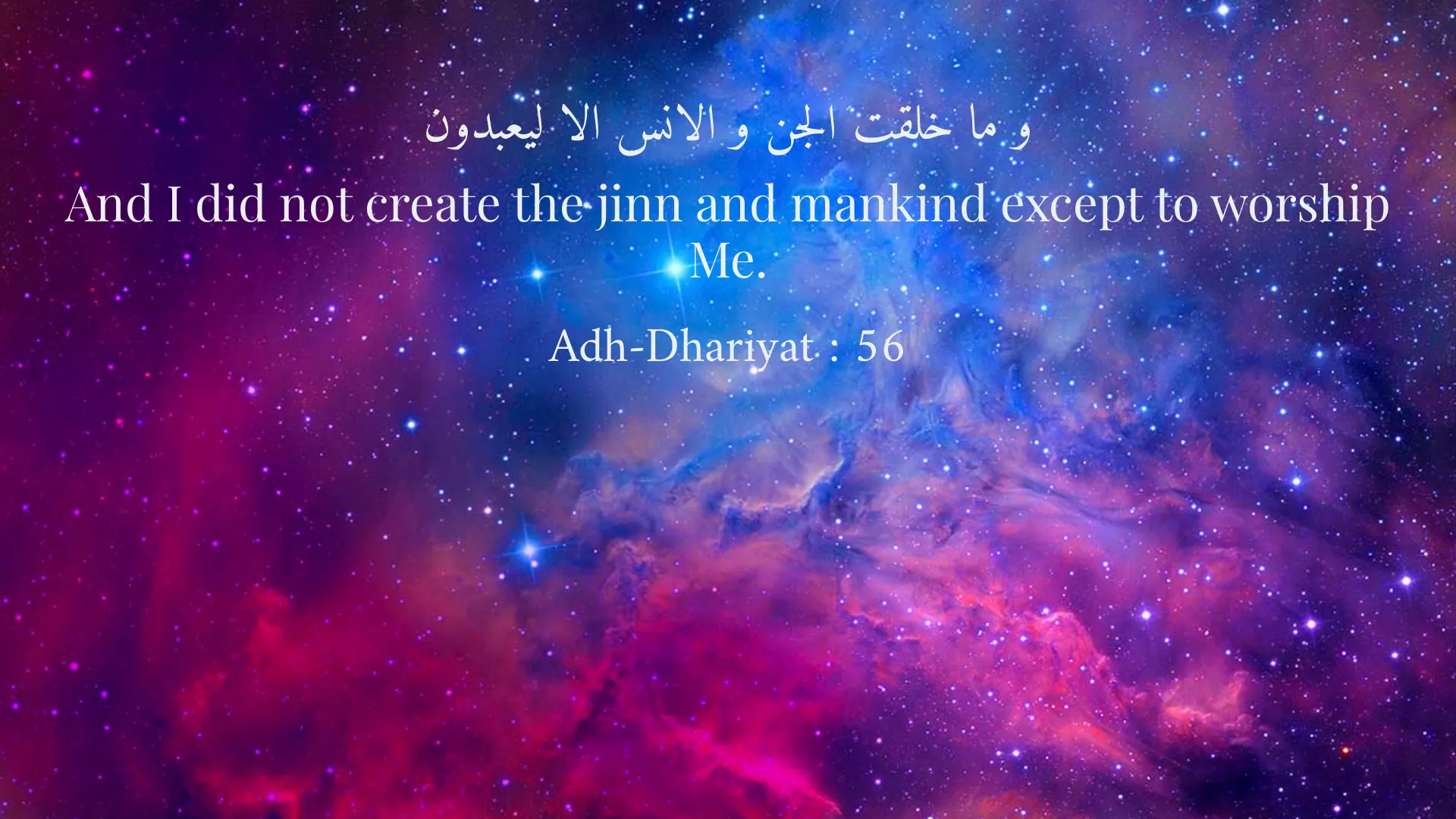
و ما خلقت الجن و الانس الا لیعبدون
And I did not create the jinn and mankind except to worship Me.
Adh-Dhariyat : 56
لَيْسَ الْبِرَّ أَن تُوَلُّوا وُجُوهَكُمْ قِبَلَ الْمَشْرِقِ وَالْمَغْرِبِ وَلَٰكِنَّ الْبِرَّ مَنْ آمَنَ بِاللَّهِ وَالْيَوْمِ الْآخِرِ وَالْمَلَائِكَةِ وَالْكِتَابِ وَالنَّبِيِّينَ وَآتَى الْمَالَ عَلَىٰ حُبِّهِ ذَوِي الْقُرْبَىٰ وَالْيَتَامَىٰ وَالْمَسَاكِينِ وَابْنَ السَّبِيلِ وَالسَّائِلِينَ وَفِي الرِّقَابِ وَأَقَامَ الصَّلَاةَ وَآتَى الزَّكَوٰةَ وَالْمُوفُونَ بِعَهْدِهِمْ إِذَا عَاهَدُوا وَالصَّابِرِينَ فِي الْبَأْسَاءِ وَالضَّرَّاءَ وَحِينَ الْبَأْسِ أُو۟لَـٰئِكَ الَّذِينَ صَدَقُوا ۖ وَأُو۟لَـٰئِكَ هُمُ الْمُتَّقُونَ
Righteousness is not that you turn your faces toward the east or the west, but [true] righteousness is in one who believes in Allah and the Last Day and the Angels and the Book and the Prophets and gives his money, in spite of his love for it, to relatives, orphans, the needy, the traveler, those who ask [for help], and for freeing slaves; and [who] establishes prayer and gives zakah; [those who] fulfill their promise when they promise; and [those who are patient in poverty and hardship and during battle. Those are the ones who have been true, and it is those who are the righteous.
Al-Baqarah : 177
Short Story
One day, a man named Hassan felt a sense of aimlessness. Seeking the meaning of life, he turned to religious books, and through studying the Quran, he discovered that his purpose was to worship God. By beginning to perform good deeds and help others, he found more satisfaction and peace in his life. Gradually, he realized that his life was full of meaning, and he passed this feeling on to others.