Quranic Answer
Your question is profoundly insightful, touching upon one of the subtle complexities of the human soul and its relationship with the Creator. At first glance, it might seem that a pure heart should naturally gravitate towards God and never drift away. However, the realities of life and the teachings of the Holy Quran reveal that various factors can create this distance, even if the heart fundamentally harbors good intentions and purity. This spiritual distance often stems not from malice, but rather from heedlessness, misplaced priorities, or the subtle influences of the environment and the ego. One of the primary reasons for this detachment is 'Ghaflah,' or heedlessness. Ghaflah implies forgetfulness, unawareness, and negligence of what is truly important. The Quran repeatedly warns humanity against falling into heedlessness. A pure heart might indeed be a wellspring of faith and goodwill, but if it is not constantly nurtured and reminded, it can become clouded, much like a mirror that gathers dust. Heedlessness can arise from excessive preoccupation with worldly affairs, fleeting pleasures, or even the mundane routines of daily life that distract a person from contemplating divine signs and remembering Allah. Someone with a pure heart might not commit major sins, but due to Ghaflah, they might neglect minor acts of worship, remembrance (Dhikr), supplication (Du'a), and reflection on creation. This gradual heedlessness is like a droplet of water slowly moving away from the ocean; it seems insignificant at first, but the path gradually changes until a great distance is formed. The Quran states: "And We have certainly created for Hell many of the jinn and mankind. They have hearts with which they do not understand, and they have eyes with which they do not see, and they have ears with which they do not hear. Those are like livestock; rather, they are more astray. It is they who are the heedless." (Al-A'raf, 7:179). This verse clearly states that the heedless are those who, despite possessing the faculties of understanding (hearts, eyes, ears), do not use them to perceive the truth and comprehend divine signs, and this heedlessness distances them from the straight path, even if their initial intentions were not malicious. Another significant reason is 'Hubb al-Dunya,' or excessive love of the worldly life. This doesn't mean loving worldly possessions per se, as naturally, people love wealth, children, and a beautiful life. Rather, it means that the world and its allure become a person's sole preoccupation and ultimate goal, such that the love of the world overshadows the love of Allah and the Hereafter. An individual with a pure heart might initially seek wealth or social status with good intentions, perhaps to use it for charitable purposes. However, gradually, the attractions of the world consume their attention, diverting them from their primary spiritual objective. The Quran warns about this danger: "Indeed, those who do not expect the meeting with Us and are satisfied with the worldly life and feel secure therein and those who are heedless of Our signs - Those will have as their refuge the Fire because of what they used to earn." (Yunus, 10:7-8). These verses indicate that those who are content with worldly life, find security in it, and become heedless of divine signs will ultimately find themselves distant from their Lord. Even permissible matters and lawful pleasures, if they dominate a person to the extent of distracting them from the remembrance of God and the ultimate purpose of creation, can become veils that create distance. A pure heart might initially experience lawful pleasure with the intention of showing gratitude for divine blessings, but if this pleasure itself becomes an end, it can lead to deviation from the main path. Furthermore, the subtle influences of 'Shaytan' (Satan) and his whispers should not be underestimated. Shaytan approaches not only wicked individuals but also those with good intentions and even devout worshippers, subtly leading them astray through imperceptible methods. He beautifies minor sins, makes acts of worship seem difficult, and encourages procrastination. For instance, he might whisper to a pure-hearted individual, "You are still young, there is plenty of time for repentance," or "Wait until conditions improve, then you can fully turn to God." These whispers, though seemingly harmless, gradually weaken the spiritual connection, causing the individual to feel distant. Shaytan makes a person feel self-sufficient, removing the perceived need for further effort in drawing closer to God, whereas the path to divine proximity constantly requires effort and vigilance. The Quran describes Shaytan as an open enemy to humanity, stating: "Indeed, Satan is an enemy to you; so take him as an enemy. He only invites his party that they may be among the companions of the Blaze." (Fatir, 35:6). Shaytan constantly lies in wait to lead humanity astray, even from paths that seem good. Another reason is the lack of 'Tafakkur and Tadabbur' – deep reflection and contemplation. A pure heart is a vessel ready to receive divine light, but if this vessel is not filled with spiritual nourishment and is not explored through contemplation, it cannot find its way correctly. Many individuals may possess a pure innate disposition (fitra) and be morally good people, but a lack of study, contemplation of Quranic verses, reflection on God's signs in the universe, and a deep connection with religious teachings prevents this purity of heart from translating into active worship and a strong relationship with God. A pure intention alone is not sufficient; it must be accompanied by action and effort to know God better and obey Him. To stay on the path, one needs guidance, and the Quran and the Sunnah of the Prophet are the best guides. If a pure-hearted individual neglects these guidances, they might lose their way. Ultimately, this distance from God, for a heart that is pure, is usually not due to malice or animosity, but rather due to inattention, life's preoccupations, and negligence of core priorities. The door to return is always open, and Allah is more merciful than to deprive a servant with good intentions of His mercy. It is enough for the individual to awaken, emerge from heedlessness, correct their priorities, and return to the Lord with sincerity and diligence. Remembering God, distancing oneself from satanic whispers, and reflecting on divine signs are the ways that reconnect the pure heart to the source of light and guidance, bridging this distance.
Related Verses
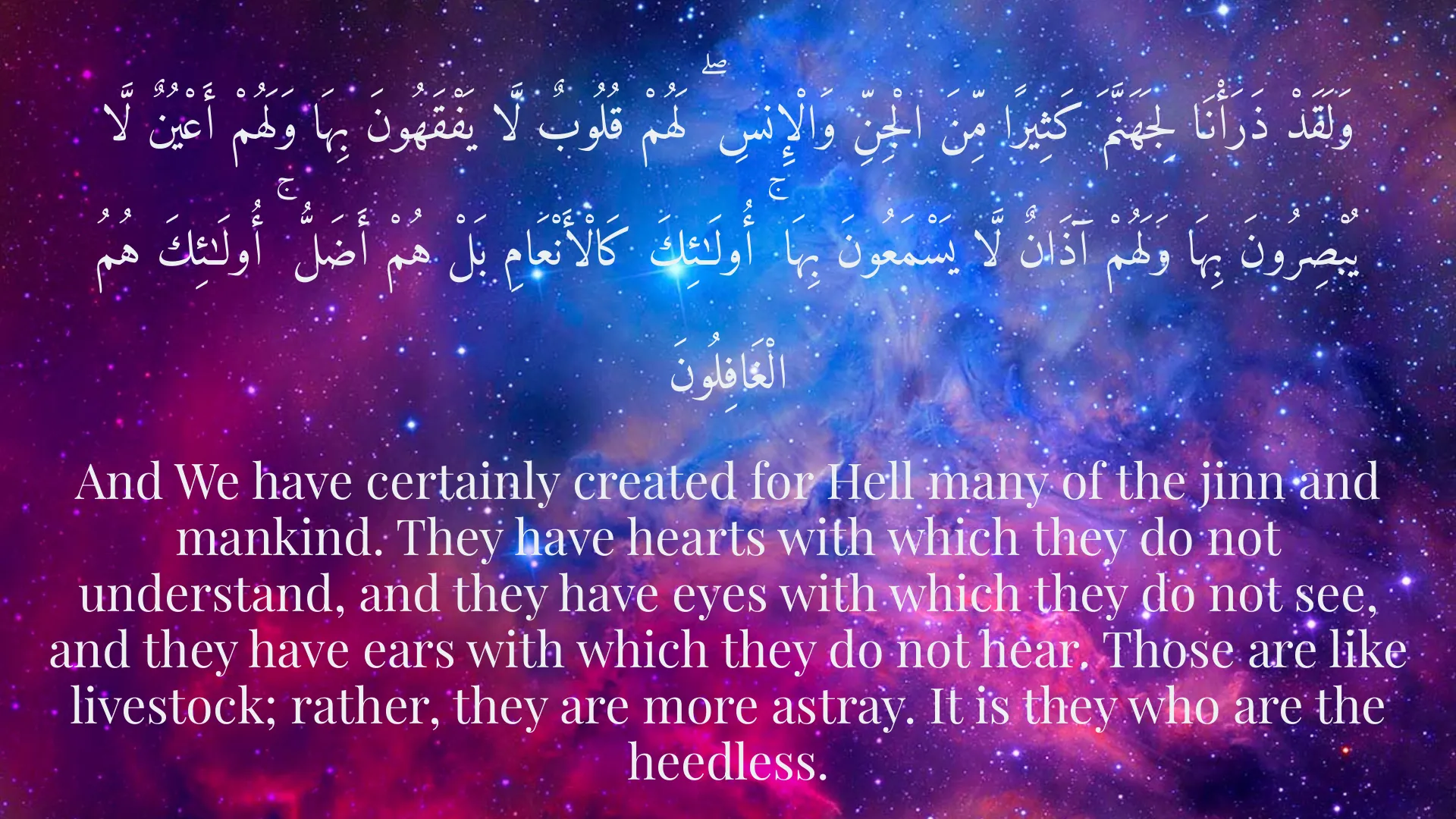
وَلَقَدْ ذَرَأْنَا لِجَهَنَّمَ كَثِيرًا مِّنَ الْجِنِّ وَالْإِنسِ ۖ لَهُمْ قُلُوبٌ لَّا يَفْقَهُونَ بِهَا وَلَهُمْ أَعْيُنٌ لَّا يُبْصِرُونَ بِهَا وَلَهُمْ آذَانٌ لَّا يَسْمَعُونَ بِهَا ۚ أُولَٰئِكَ كَالْأَنْعَامِ بَلْ هُمْ أَضَلُّ ۚ أُولَٰئِكَ هُمُ الْغَافِلُونَ
And We have certainly created for Hell many of the jinn and mankind. They have hearts with which they do not understand, and they have eyes with which they do not see, and they have ears with which they do not hear. Those are like livestock; rather, they are more astray. It is they who are the heedless.
Al-A'raf : 179
إِنَّ الَّذِينَ لَا يَرْجُونَ لِقَاءَنَا وَرَضُوا بِالْحَيَاةِ الدُّنْيَا وَاطْمَأَنُّوا بِهَا وَالَّذِينَ هُمْ عَنْ آيَاتِنَا غَافِلُونَ
Indeed, those who do not expect the meeting with Us and are satisfied with the worldly life and feel secure therein and those who are heedless of Our signs -
Yunus : 7
أُولَٰئِكَ مَأْوَاهُمُ النَّارُ بِمَا كَانُوا يَكْسِبُونَ
Those will have as their refuge the Fire because of what they used to earn.
Yunus : 8
إِنَّ الشَّيْطَانَ لَكُمْ عَدُوٌّ فَاتَّخِذُوهُ عَدُوًّا ۚ إِنَّمَا يَدْعُو حِزْبَهُ لِيَكُونُوا مِنْ أَصْحَابِ السَّعِيرِ
Indeed, Satan is an enemy to you; so take him as an enemy. He only invites his party that they may be among the companions of the Blaze.
Fatir : 6
Short Story
It is said that a dervish with inner purity and a bright heart once devoted himself to the remembrance of God in seclusion. One day, he passed by the mansion of a wealthy merchant who possessed vast riches and status, yet had a kind heart and a generous hand. The merchant welcomed the dervish with honor and hosted him for some time. The dervish observed that although the merchant was a person of good deeds and harbored no malice, from dawn till dusk, he was immersed in business calculations, meeting merchants, and attending to his worldly affairs. His remembrance and prayers were limited to the tip of his tongue, and he rarely found time to contemplate divine signs. The dervish thought to himself: "How often is a heart pure and good-natured, yet heedlessness and attachment to the glitter of the world prevent it from communing with the True Beloved. Not out of denial, but from unawareness and preoccupation." The dervish decided to depart so that the merchant would not fall into heedlessness due to his generosity, and with a gentle smile, he said: "Worldly wealth is like salty water; the more you drink, the thirstier you become. May your heart be freed from these superficial thirsts and reach the sweet spring of God's remembrance." The merchant, who himself felt a sense of distance deep within his heart, was moved by the dervish's words. From then on, amidst his busy schedule, he tried to dedicate moments to the remembrance of his Beloved, and gradually, he tasted the sweetness of proximity once more.