Quranic Answer
From the perspective of the Holy Quran, the human inclination towards this world and excessive attachment to its allurements has deep roots in human nature. The phenomenon where some individuals seek God only to achieve worldly benefits and advantages reflects a fundamental misunderstanding of the purpose of creation and the essence of servitude to God. The Quran repeatedly addresses this issue, offering clear warnings about the dangers of worldliness and preferring it over the Hereafter. This approach often stems from heedlessness concerning the reality of life, the fleeting nature of this world, and the truth of life after death. Humans, due to their perceptual limitations and natural inclinations, sometimes gravitate towards what is tangible and accessible—namely, worldly pleasures and successes—forgetting that this world is merely a passage to the eternal abode. This materialistic viewpoint reduces God from an absolute Creator and Object of Worship to a mere means for achieving personal goals, such as wealth, power, fame, or health. The Quran repeatedly emphasizes that worldly life is deceptive and temporary, while the life of the Hereafter is enduring and eternal. In Surah Al-A'la (verses 16 and 17), it states: “بَلْ تُؤْثِرُونَ الْحَيَاةَ الدُّنْيَا * وَالْآخِرَةُ خَيْرٌ وَأَبْقَىٰ” (But you prefer the worldly life, while the Hereafter is better and more enduring). These verses explicitly highlight a significant error in human prioritization. Some individuals, due to weak faith, lack of certainty in the afterlife, or the whispers of Satan, deviate from the true path and perceive the purpose of worshipping God solely as gaining material benefits. They may pray, supplicate, or perform good deeds, but not out of sincerity and proximity to God, rather in the hope of receiving quick and tangible worldly rewards. If these rewards do not materialize, they might fall into despair and doubt, or even abandon their faith, because they lack a correct understanding of the concept of divine testing and the wisdom behind events. The Holy Quran clearly explains that those who desire only this world will receive the recompense for their deeds in this life, and in the Hereafter, they will have no share except punishment. In Surah Hud (verses 15 and 16), it says: “مَن كَانَ يُرِيدُ الْحَيَاةَ الدُّنْيَا وَزِينَتَهَا نُوَفِّ إِلَيْهِمْ أَعْمَالَهُمْ فِيهَا وَهُمْ فِيهَا لَا يُبْخَسُونَ * أُولَٰئِكَ الَّذِينَ لَيْسَ لَهُمْ فِي الْآخِرَةِ إِلَّا النَّارُ ۖ وَحَبِطَ مَا صَنَعُوا فِيهَا وَبَاطِلٌ مَّا كَانُوا يَعْمَلُونَ” (Whoever desires the life of this world and its adornments – We fully repay them for their deeds therein, and they will not be deprived of it. Those are the ones for whom there is nothing in the Hereafter but the Fire. And meaningless is what they did therein, and worthless is what they used to do.) These verses illustrate that Allah is just, and He grants even worldly intentions their due in this life, but they also emphasize that this approach deprives a person of eternal rewards and divine pleasure. Such individuals, with a limited and superficial outlook, miss out on the depth of spirituality and the joy of connection with God. One of the reasons for this inclination is the temptations of Satan and the glitter of the world, which blind the human eye and divert it from the truth. Satan constantly strives to lure humans towards fleeting pleasures and make them forget God and the Day of Judgment. Societal pressures and expectations, built upon materialism and superficial success, can also fuel this tendency. Individuals might feel that to be accepted or gain respect, they must be wealthy and powerful, and they may use religion as a ladder to achieve these goals. However, the Quran advises us not only not to neglect this world but to use it as a means to attain the Hereafter. In Surah Al-Qasas (verse 77), it states: “وَابْتَغِ فِيمَا آتَاكَ اللَّهُ الدَّارَ الْآخِرَةَ ۖ وَلَا تَنسَ نَصِيبَكَ مِنَ الدُّنْيَا ۖ وَأَحْسِن كَمَا أَحْسَنَ اللَّهُ إِلَيْكَ ۖ وَلَا تَبْغَ الْفَسَادَ فِي الْأَرْضِ ۖ إِنَّ اللَّهَ لَا يُحِبُّ الْمُفْسِدِينَ” (But seek, through that which Allah has given you, the home of the Hereafter; and [yet], do not forget your share of the world. And do good as Allah has done good to you. And desire not corruption in the land. Indeed, Allah does not like corrupters.) This verse demonstrates that Islam is not a religion of extremism; rather, it recommends a balance between this world and the Hereafter. A true believer sees this world as a cultivation ground for the Hereafter, utilizing its resources to earn divine pleasure, help those in need, and promote justice, rather than making it their ultimate goal. The primary objective should always be God's pleasure and the attainment of eternal bliss. Therefore, the main root of seeking worldly gains from God lies not only in weak faith but also in a lack of proper understanding of the philosophy of life and the human relationship with the Creator. These individuals view God as merely a granter of power or a provider of material needs, not as the Deity whose ultimate purpose of creation and servitude is to achieve proximity to Him and salvation in the Hereafter. This short-sighted view deprives humans of true peace and heartfelt tranquility, which are only attained through genuine reliance on God and sincere devotion, trapping them in an endless cycle of greed and covetousness for worldly matters. Ultimately, the way out of this trap is to deepen one's knowledge of God, reflect on the verses of the Quran, remember the reality of death and the Hereafter, and strengthen one's heartfelt connection with the Creator, so that instead of seeking fleeting benefits, one seeks eternal pleasure and the highest Paradise.
Related Verses
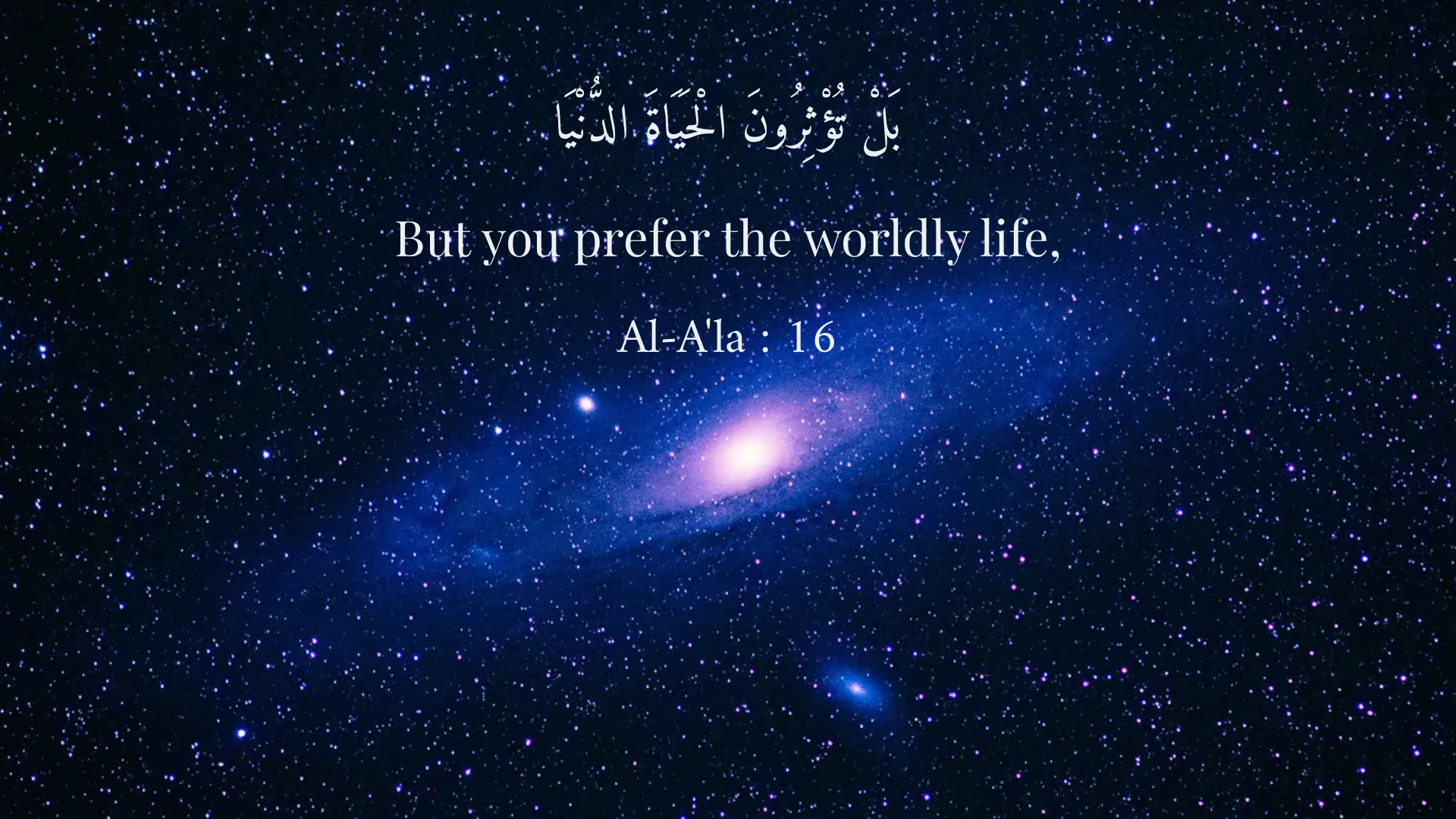
بَلْ تُؤْثِرُونَ الْحَيَاةَ الدُّنْيَا
But you prefer the worldly life,
Al-A'la : 16
وَالْآخِرَةُ خَيْرٌ وَأَبْقَىٰ
while the Hereafter is better and more enduring.
Al-A'la : 17
مَن كَانَ يُرِيدُ الْحَيَاةَ الدُّنْيَا وَزِينَتَهَا نُوَفِّ إِلَيْهِمْ أَعْمَالَهُمْ فِيهَا وَهُمْ فِيهَا لَا يُبْخَسُونَ
Whoever desires the life of this world and its adornments – We fully repay them for their deeds therein, and they will not be deprived of it.
Hud : 15
أُولَٰئِكَ الَّذِينَ لَيْسَ لَهُمْ فِي الْآخِرَةِ إِلَّا النَّارُ ۖ وَحَبِطَ مَا صَنَعُوا فِيهَا وَبَاطِلٌ مَّا كَانُوا يَعْمَلُونَ
Those are the ones for whom there is nothing in the Hereafter but the Fire. And meaningless is what they did therein, and worthless is what they used to do.
Hud : 16
Short Story
It is mentioned in Gulistan by Saadi that a merchant who was a great accumulator of wealth had his ship sink. He, who had spent his entire life gathering riches, wept day and night over his lost wealth, asking God for nothing but the return of his fortune. One of the righteous people saw him and said: 'O brother, you who spent your whole life thinking of this fleeting world and were heedless of the Hereafter, now that you have lost your wealth, why do you not turn your heart to the Creator who is the Provider Himself and does not perish? Wealth comes and goes, but the faith with which you seek God's pleasure is enduring and will lead you to the eternal abode.' The merchant, upon hearing these words, was awakened and understood that the purpose of seeking God is not just for worldly matters, but to attain His eternal peace and contentment.