Quranic Answer
The question of why some individuals shun spirituality is a profound one, and the Holy Quran addresses it through various lenses. While the Quran posits that humanity is innately inclined towards God and truth by nature (fitra), it also illuminates the obstacles and veils that can obscure this pristine inclination, leading individuals away from the spiritual path. From a Quranic perspective, three primary factors contribute to this aversion: excessive attachment to worldly life, heedlessness and forgetfulness of life's ultimate purpose and destiny, and the pursuit of selfish desires coupled with arrogance. One of the most significant reasons repeatedly emphasized in the Quran is over-attachment to worldly life and its transient pleasures (Hubb ad-Dunya). In the Quran's view, this world (Dunya) is a sowing field for the Hereafter (Akhirah) and a bridge to attain ultimate perfection. However, if it transforms from a means into an ultimate end, it becomes a thick veil that obscures the light of spirituality. Numerous verses describe Dunya as a fleeting provision, a deceptive adornment, a mere play, and amusement. Individuals who dedicate all their effort and ambition to acquiring wealth, status, power, fame, and fleeting worldly pleasures inadvertently become heedless of God and the primary purpose of their existence. This attachment can become so profound that spiritual values, such as prayer, charity, patience, and gratitude, appear insignificant compared to material goals. The Quran states in Surah Al-Imran, verse 14: “Beautified for people is the love of desires – from women and sons, heaped-up sums of gold and silver, fine branded horses, and cattle and tilled land. That is the enjoyment of worldly life, but with Allah is the best return.” This verse illustrates that while these attachments may seem natural, they can divert a person from their true purpose. Similarly, in Surah Al-Kahf, verse 46, it says: “Wealth and children are the adornment of the worldly life. But the enduring good deeds are better in your Lord's sight for reward and better for [one's] hope.” This verse clearly indicates that while wealth and children are adornments of this life, what is lasting and truly valuable are righteous deeds and a spiritual orientation. When a person expends all their energy and thought on luxuries, material competitions, and endless desires, they find no time or motivation to engage in spiritual and inner matters. This relentless pursuit, instead of bringing peace, leads to anxiety and unrest, because the heart becomes attached to something ephemeral and unstable. The individual who shuns spirituality is often attempting to escape an inner void and anxiety brought about by these very worldly attachments, mistakenly believing the solution lies in accumulating more, rather than letting go of them. The second factor is heedlessness and forgetfulness (Ghaflah). Ghaflah is a state of deep unawareness and inattention to the realities of existence and one's place within it. The heedless individual is oblivious to the signs of God in the universe and within themselves, to divine wisdom and planning in the world, and to the Day of Judgment and accountability. This unawareness leads to deviation from the path of truth. In Surah Al-A'raf, verse 179, the Quran provides a striking description of the heedless: “And We have certainly created for Hell many of the jinn and mankind. They have hearts with which they do not understand, and they have eyes with which they do not see, and they have ears with which they do not hear. Those are like livestock; rather, they are more astray. It is they who are the heedless.” This verse indicates that heedlessness impairs the natural function of human perceptive faculties; the heart does not understand, the eyes do not see, and the ears do not hear. These individuals, even when presented with clear divine signs or enlightening messages, are unable to grasp the truth because a veil of heedlessness has fallen over their hearts. Ghaflah originates from becoming so immersed in the cycle of daily life that one finds no opportunity to reflect on the meaning of existence, the purpose of life, and their ultimate destiny. They constantly pursue superficial and immediate matters, failing to look at depth and permanence. This forgetfulness is an unconscious choice that prevents an individual from engaging in spiritual matters and connecting with the source of existence, because they either do not feel a need for this connection or perceive it as an interference with their worldly plans. The third reason is the pursuit of selfish desires and arrogance (Ittiba' al-Hawa wa al-Kibr). The 'Nafs al-Ammara bis-Su'' (the soul that inclines to evil) – which manifests as desires, boundless pleasure-seeking, and selfishness – leads individuals to perceive any divine restriction or commandment as an infringement on their freedom. When personal desires (hawa) overpower reason and the innate human nature, an individual rejects truth, even if they recognize it. The Quran states in Surah Al-Furqan, verse 43: “Have you seen he who takes his desire as his god? Then would you be responsible for him?” This verse clearly states that when a person becomes obedient to their desires, they are, in effect, worshipping their self instead of God. Such an individual is unwilling to adhere to religious injunctions because they view them as contradictory to their pleasures and desires. Furthermore, arrogance (kibr) plays a significant role in shunning spirituality. The arrogant person considers themselves too superior to need divine guidance or to submit to a higher power. They judge everything with their limited intellect and refuse to accept anything beyond their comprehension. This arrogance prevents them from listening to advice and accepting spiritual truths, causing their hearts to be sealed off from divine light. This state not only distances them from self-knowledge and knowledge of God but also plunges them into an illusion of self-sufficiency that results in nothing but isolation and emptiness. In addition to these three main factors, the whispers of Satan play a complementary role. Satan is always lying in wait to mislead humans from the straight path by beautifying falsehood and making truth appear difficult. He exacerbates attachment to worldly life, heedlessness, and the pursuit of desires through false worldly promises and instilling fear of spiritual consequences, thus pushing individuals towards a complete evasion of spirituality. By creating doubts and suspicions in hearts, he weakens faith and paves the way for the dominance of worldly inclinations. Ultimately, the Quran also offers the path to salvation and return to spirituality: remembrance of God (Dhikr), reflection and contemplation on divine verses, patience and perseverance, striving for self-purification, and righteous deeds. An individual who shuns spirituality is, in essence, running away from true peace and the primary purpose of life. Returning to spirituality is a return to one's innate nature and true home, which is only possible through awareness, repentance, and continuous effort, resulting in lasting peace and felicity in this world and the Hereafter. This flight is often out of fear of losing imagined pleasures or apparent hardships, while true peace lies in letting go of these fears and seeking refuge in the embrace of the Lord. This evasion of spirituality gradually transforms a person into a consumerist, aimless, and restless being who, the further they move from their innate roots, the deeper they sink into a sea of anxiety and emptiness. The Quran repeatedly invites humanity to awaken and return, an invitation not to restrict, but to liberate the soul from the bonds of worldly captivity and soar towards infinite perfection. Word count: 950 words
Related Verses
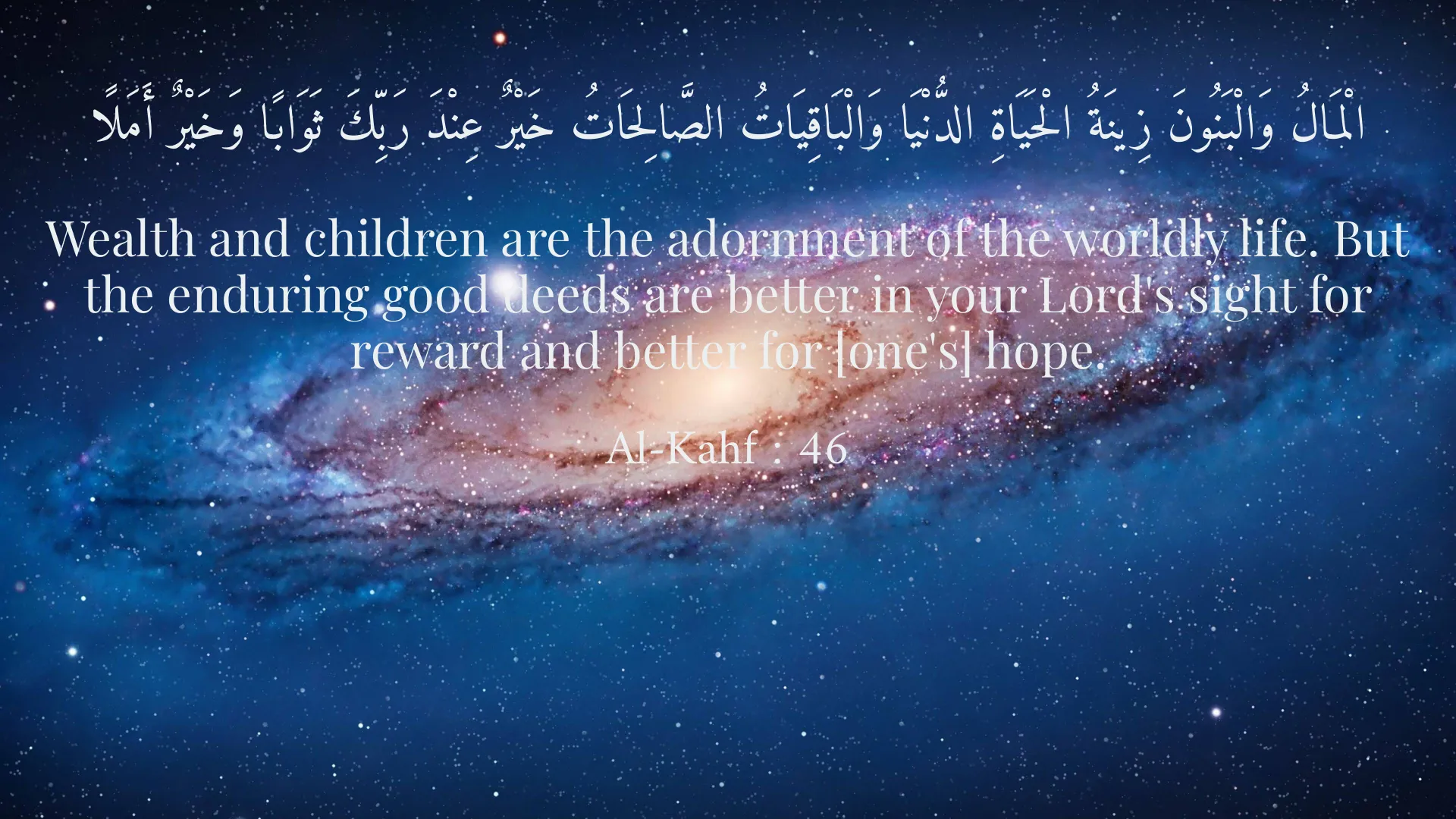
الْمَالُ وَالْبَنُونَ زِينَةُ الْحَيَاةِ الدُّنْيَا وَالْبَاقِيَاتُ الصَّالِحَاتُ خَيْرٌ عِنْدَ رَبِّكَ ثَوَابًا وَخَيْرٌ أَمَلًا
Wealth and children are the adornment of the worldly life. But the enduring good deeds are better in your Lord's sight for reward and better for [one's] hope.
Al-Kahf : 46
وَلَقَدْ ذَرَأْنَا لِجَهَنَّمَ كَثِيرًا مِنَ الْجِنِّ وَالْإِنْسِ لَهُمْ قُلُوبٌ لَا يَفْقَهُونَ بِهَا وَلَهُمْ أَعْيُنٌ لَا يُبْصِرُونَ بِهَا وَلَهُمْ آذَانٌ لَا يَسْمَعُونَ بِهَا أُولَٰئِكَ كَالْأَنْعَامِ بَلْ هُمْ أَضَلُّ أُولَٰئِكَ هُمُ الْغَافِلُونَ
And We have certainly created for Hell many of the jinn and mankind. They have hearts with which they do not understand, and they have eyes with which they do not see, and they have ears with which they do not hear. Those are like livestock; rather, they are more astray. It is they who are the heedless.
Al-A'raf : 179
أَرَأَيْتَ مَنِ اتَّخَذَ إِلَٰهَهُ هَوَاهُ أَفَأَنْتَ تَكُونُ عَلَيْهِ وَكِيلًا
Have you seen he who takes his desire as his god? Then would you be responsible for him?
Al-Furqan : 43
Short Story
It is said that in ancient times, there was a wealthy merchant who possessed immense riches but never found peace of mind, constantly striving to amass more. Even in his bed, instead of resting, his thoughts were consumed by business and increasing his fortune. One night, overcome by great sorrow and anxiety, sleep eluded him, and he mused, "Why, with all this wealth, do I lack peace, while I know a dervish who sleeps soundly and contentedly with just a piece of dry bread?" In the morning, he went to the dervish and recounted his state. The dervish smiled and said, "My friend, you are a prisoner in your own cage of gold and silver, but I am free, having nothing and being content with that. Peace lies not in accumulating more of this world, but in letting go of its attachments and turning towards what is everlasting." The merchant was deeply moved by the dervish's words and realized that his boundless attachment to the world and his heedlessness of his spirit and the truth of existence had deprived him of the sweet taste of spirituality and inner peace. He decided that from then on, instead of accumulating wealth, he would enrich his heart with the remembrance of God and kindness to people. He understood that true treasure lies within a person, and only by turning to it can one be freed from suffering and anxiety. He found peace in spirituality, not in wealth.