Quranic Answer
Why do some individuals approach worship with a transactional mindset? This profound question delves deep into the essence of sincerity in faith and the correct understanding of the human being's relationship with the Almighty. In the perspective of Islam and the teachings of the Holy Quran, worship is far more than a mere transaction; it is an embodiment of love, gratitude, obedience, and pure servitude. But why do some adopt this transactional approach? The roots of such a perspective can be traced to several factors, all stemming from an incomplete or distorted understanding of the true meaning of worship and divine unity (Tawhid), leading to a detachment from the true core of faith. This transactional approach is not only unacceptable from a divine perspective but also serves as an obstacle to genuine spiritual growth and closeness to God. One of the primary reasons is a materialistic and worldly interpretation of divine rewards. Some people mistakenly believe that every good deed they perform should immediately yield tangible, material results in this world, such as an increase in sustenance, removal of calamities, or attainment of success. These individuals view worship as a form of investment that must guarantee immediate and definite returns. If these "returns" do not materialize, they feel disappointed or even cheated, and might abandon worship or lose their motivation. This type of expectation often stems from a limited understanding of the concepts of "divine trial" and "divine wisdom." The Holy Quran repeatedly emphasizes that the true reward for righteous deeds lies in the Hereafter and in proximity to divine mercy, though blessings might also be bestowed in this world. However, the primary focus should never be the acquisition of worldly benefits. Surah Al-Bayyinah, verse 5, clearly states: "And they were not commanded except to worship Allah, [being] sincere to Him in religion, inclining to truth, and to establish prayer and to give zakah. And that is the correct religion." This verse explicitly stresses sincerity in worship, identifying the goal as pure devotion to God, not the pursuit of personal gain. This emphasis on sincerity indicates that any hint of materialism or transactionalism detracts from the authenticity of worship and deviates it from its true path. Another significant reason is the incorrect understanding of divine trials. Worldly life is a testing ground for humanity. Allah tests His servants with blessings and adversities, ease and hardships, to reveal the extent of their patience, gratitude, and genuine faith. Individuals with a transactional mindset, when confronted with difficulties, feel that the "deal" was unfair and that Allah has not fulfilled His "promise." However, Quranic teachings show that challenges are opportunities for spiritual growth and drawing closer to Allah, not indicators of rejected worship. Surah Al-Ankabut, verses 2-3, state: "Do people think that they will be left alone because they say, 'We believe,' and will not be tested? But We have certainly tested those before them, and Allah will surely make evident those who are truthful, and He will surely make evident the liars." These verses clearly indicate that faith is accompanied by trials, and one should not expect everything to go according to worldly desires. Understanding this truth guides humans from a transactional view towards a perspective of submission and reliance on God. A third contributing factor is societal upbringing and prevailing cultural norms. In some societies, due to the incorrect propagation of religious teachings, worship might be presented as a mere tool to achieve worldly objectives; for instance, "pray so you become rich," or "give charity to be cured of illness." While acts of worship can indeed bring worldly blessings, reducing the philosophy of worship to a mere material exchange deviates from its primary purpose. This approach strips worship of its soul, which is proximity to Allah and fulfilling the duty of servitude, transforming it into a dry, lifeless formula. Such superficial teachings prevent the formation of a deep and lasting relationship with the Creator. Furthermore, a weak faith and a lack of deep knowledge of Allah Almighty contribute to this transactional view. When a person lacks complete faith in Allah's greatness, mercy, wisdom, and infinite power, they cannot perform worship solely for the inherent worthiness of the Creator. In such a state, worship becomes more like paying an insurance premium for the future or buying a lottery ticket to win. This perspective indicates that the relationship with God is not built on love and knowledge, but rather on fear of punishment or greed for material rewards. While a true believer fears divine punishment and hopes for divine mercy, these are not their sole motivations; rather, love for Allah and seeking His pleasure are the highest motivations. The Quran, in numerous verses, invites humans to ponder over creation and divine blessings to increase their knowledge of God, resulting in worship that stems from love and gratitude. This deep understanding is the fundamental basis for sincerity and avoidance of any form of transactionalism. Finally, the transactional view might also be influenced by satanic whispers and the commanding self (nafs al-ammara). Satan constantly strives to divert acts of worship from their true path, transforming them into tools for egoism and showing off. Someone who worships with the intention of being seen or praised by people has, in reality, made a deal with Satan, rendering their worship void. The Quran in Surah An-Nisa, verse 142, describes the state of hypocrites: "Indeed, the hypocrites [think to] deceive Allah, but He is deceiving them. And when they stand for prayer, they stand lazily, showing [themselves to] the people and not remembering Allah except a little." This verse clearly illustrates that hypocritical worship, devoid of true remembrance of Allah, is a result of a perspective far from sincerity, where one deals with people or their own ego instead of truly dealing with God. This type of worship not only lacks spiritual value but can also lead to further detachment from the truth. To overcome this transactional approach, there are several Quranic remedies: 1. Strengthening Sincerity (Ikhlas): Sincerity is the heart of worship. We must constantly purify our intentions for Allah. Every action, from prayer and fasting to helping others, must be solely for the sake of Allah's pleasure and not for personal gain or the praise of others. 2. Increasing Knowledge of Allah: The more one understands Allah's names and attributes, the deeper their love and affection for Him will become, leading to worship based on love and knowledge rather than mere fear or greed. Studying and reflecting upon the verses of the Quran and the universe is key to this understanding. 3. Patience and Gratitude during Trials: We must understand that this world is a testing ground, and both hardships and ease come from Allah for our growth. By exercising patience in calamities and gratitude for blessings, we can shift our perspective from transactionalism to pure servitude and see divine wisdom behind every event. 4. Avoiding Ostentation (Riya): We must always be aware of the hidden egoistic and satanic motives that lead us to show off, and we must avoid them. Worship should be a private affair between the servant and Allah, free from any display or showmanship. 5. Focusing on the True Purpose of Creation: Humanity was created for servitude and knowledge of Allah. The purpose of creation and life is to attain proximity to Allah and His pleasure, not merely to achieve material goals. When this understanding deepens, worship transforms into an inner and spiritual joy, no longer needing to be measured by worldly standards. In conclusion, a transactional view of worship stems from superficiality, an incorrect understanding of Tawhid, the philosophy of divine trials, and egoistic temptations. Islam teaches us that worship is a bridge to perfection and divine proximity, not a commercial contract where material interests take precedence. The deeper one's faith and knowledge, the more sincere and purely loving their worship will be. This correct outlook not only secures one's afterlife but also brings profound peace and meaning to their worldly life, freeing them from dependence on superficial and material outcomes, and guiding them towards an inner life full of tranquility and divine contentment.
Related Verses
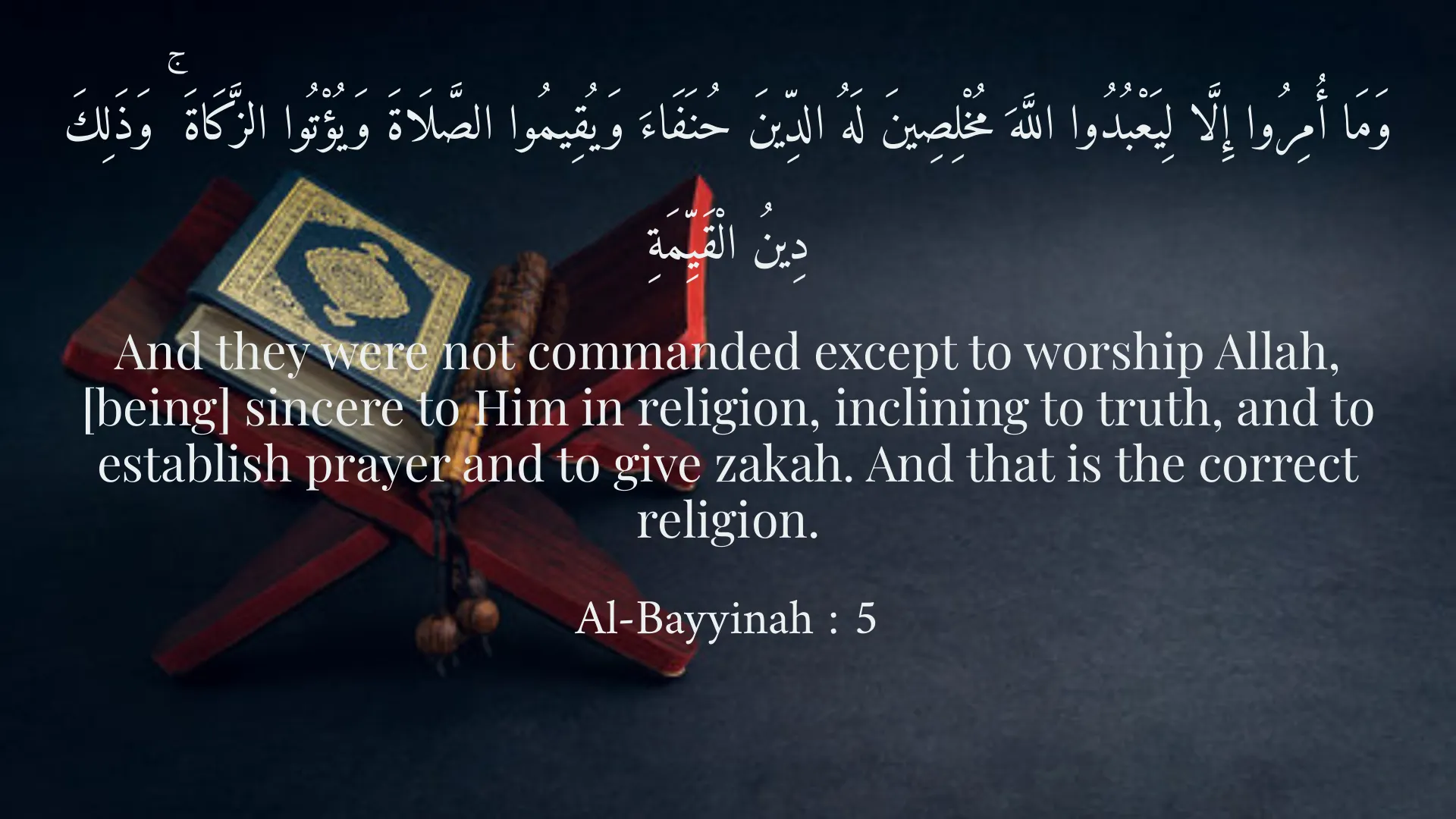
وَمَا أُمِرُوا إِلَّا لِيَعْبُدُوا اللَّهَ مُخْلِصِينَ لَهُ الدِّينَ حُنَفَاءَ وَيُقِيمُوا الصَّلَاةَ وَيُؤْتُوا الزَّكَاةَ ۚ وَذَلِكَ دِينُ الْقَيِّمَةِ
And they were not commanded except to worship Allah, [being] sincere to Him in religion, inclining to truth, and to establish prayer and to give zakah. And that is the correct religion.
Al-Bayyinah : 5
إِنَّ الْمُنَافِقِينَ يُخَادِعُونَ اللَّهَ وَهُوَ خَادِعُهُمْ وَإِذَا قَامُوا إِلَى الصَّلَاةِ قَامُوا كُسَالَىٰ يُرَاءُونَ النَّاسَ وَلَا يَذْكُرُونَ اللَّهَ إِلَّا قَلِيلًا
Indeed, the hypocrites [think to] deceive Allah, but He is deceiving them. And when they stand for prayer, they stand lazily, showing [themselves to] the people and not remembering Allah except a little.
An-Nisa : 142
أَحَسِبَ النَّاسُ أَن يُتْرَكُوا أَن يَقُولُوا آمَنَّا وَهُمْ لَا يُفْتَنُونَ
Do people think that they will be left alone because they say, 'We believe,' and will not be tested?
Al-Ankabut : 2
Short Story
It is said that in ancient times, there lived a wealthy merchant who built a grand mosque. Whenever he passed by it, he would gaze with pride, thinking, "Truly, no one has spent in the way of God as much as I have!" In the same city, there lived a poor cobbler who, every day before dawn, with a heart full of sincerity, would offer two units of prayer. Then, with pure intention, he would sprinkle a drop of water from the stream onto a withered plant. One night, the merchant dreamt that an angel proclaimed: "Your edifice is grand, but in the sight of the Truth, that single drop of water which the cobbler, with sincere intention, sprinkled upon a withered plant, is more valuable than all your wealth; for you acted for reputation and recognition, while he acted solely for the pleasure of the Truth." The merchant awoke, deeply pondering, and realized that the worth of an action lies in its intention, not in its outward appearance or quantity. From that day forward, he strove to prioritize sincerity over ostentation in all his deeds, worshipping not just for reward, but for the pleasure of the Beloved.