Quranic Answer
The Holy Quran, revered as the divine scripture of Islam, offers a profound exploration of the significance of communication and the use of words in human interactions. Central to Islamic teachings is the understanding that humans are inherently social beings, designed to connect and communicate with one another. This article aims to delve deeper into the importance of speaking, the apprehensions surrounding it, and the teachings of the Quran that encourage expressions of kindness, justice, and sincerity. Language serves as the foundation of communication. It allows individuals to share ideas, feelings, and experiences, fostering a sense of understanding and community. However, despite the essential nature of speaking, many individuals often find themselves hesitant or unwilling to express their thoughts and emotions, particularly in certain social settings. Various factors contribute to this reluctance, and it is crucial to analyze these dimensions through an Islamic lens to reveal both personal and societal implications. One prevalent reason individuals may shy away from articulating their feelings is the fear of being judged or facing negative repercussions. Such fears can stem from previous negative experiences, societal expectations, or simply a lack of confidence. Under the weight of these fears, individuals may silence their inner thoughts, leading to a suppression of their true selves. The Quran provides guidance on how believers should navigate these challenges. For instance, in Surah Al-Ahzab, verse 70, Allah instructs, "O you who have believed, fear Allah and speak words of appropriate justice." This verse compels believers to express themselves thoughtfully and justly, emphasizing that even in hesitation, one must remember the worthiness of honesty and justice in speech. Moreover, the Quran's commands are not merely about the act of speaking but also emphasize the heart's condition from where these words emanate. In Surah Al-Baqarah, verse 83, it states, "And when We took the covenant from the Children of Israel, [enjoining upon them], 'Do not worship except Allah; and to parents, do good, and to relatives, orphans, the needy, and speak to people good [words].'" Here, the emphasis on speaking positively and kindly further underlines the ethical responsibility that Islam places on individuals to be vocal in promoting goodness and justice. From these verses, it is clear that the act of speech is not insignificant—it is a reflection of one's faith and moral character. The hesitation to speak can also be tied to self-doubt or a perceived lack of authority to voice opinions. This psychological barrier often results in a lack of participation in discussions, whether in family settings, workplaces, or broader social gatherings. When people internalize their thoughts instead of sharing them, the potential for communal support, understanding, and problem-solving significantly diminishes. In Islamic tradition, seeking knowledge and sharing it with others is highly encouraged. The Prophet Muhammad (peace be upon him) emphasized the importance of spreading knowledge and engaging in conversations that foster growth and learning among believers. Furthermore, societal and cultural sensitivities play a crucial role in inhibiting individuals from expressing their thoughts. In many cultures, certain topics may be considered taboo or inappropriate for public discussion. Such societal norms can stifle open dialogue and lead to the accumulation of unshared thoughts and feelings, as individuals alter their expressions to fit within socially acceptable boundaries. The Quran acknowledges these societal dynamics; however, it continually prompts believers to remain true to their inner convictions and share their insights, even in the face of adversity. The balance between upholding social decorum and expressing honesty is critical in Islam. In addition, the psychological effects of remaining silent about one's thoughts and feelings can lead to internal conflict. Bottling up emotions might result in stress, anxiety, and a feeling of disconnection from the community. The Quran's teachings encourage not only verbal expressions but also the nurturing of one’s emotional intelligence. Greater emphasis on emotional communication can lead to healthier interpersonal relationships and a more cohesive community spirit. Thus, the concept of speaking out takes on numerous dimensions—ethical, social, and psychological—all intertwined within the Islamic framework. The ultimate goal of expressing oneself in line with Islamic teachings is not merely about voicing opinions; it resides in the spirit of fostering kindness, understanding, and justice—values universally acknowledged as the cornerstones of a peaceful society. Islam is designed to cultivate a community where individuals uplift each other while speaking truthfully and compassionately. This approach directly counters the silence that often shields individuals from fully participating in their communities. Moreover, we observe that the reluctance to speak does not just stop at individuals; it reflects broader issues within communities where individuals hold back their thoughts out of fear of hostility or disagreement. A significant challenge lies in creating environments where open dialogue is encouraged and where differing opinions are treated with respect. This comprehensive understanding expands the conversation about speech to include the collective responsibility of leaders and community members in fostering an inclusive atmosphere. In summary, the Quran and Islamic teachings assert the utmost importance of words as a powerful tool for connection and understanding. The encouragement to express kind and just words aligns with the intrinsic human need for communication and companionship. It is a reminder that through speaking, fostering dialogue, and overcoming the barriers of fear and sensitivity, individuals can cultivate a harmonious and prosperous society. The moral imperative to express our thoughts honourably and lovingly serves as guidance in enriching interpersonal relationships and forging stronger communities. Therefore, individuals are encouraged to overcome the hesitation of unspoken thoughts and instead, embrace the transformative power of words, echoing the wisdom found within the teachings of the Holy Quran.
Related Verses
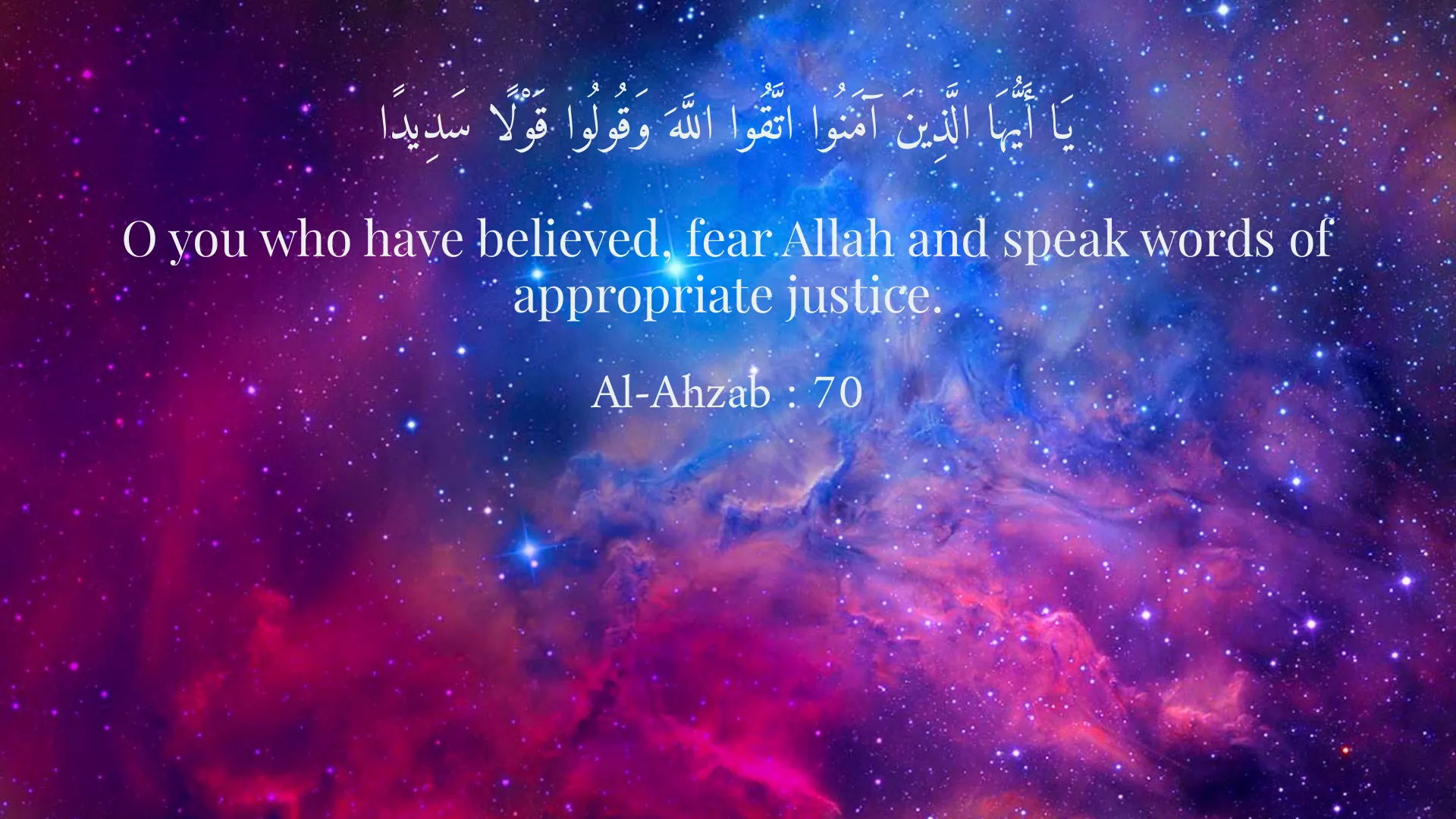
يَا أَيُّهَا الَّذِينَ آمَنُوا اتَّقُوا اللَّهَ وَقُولُوا قَوْلًا سَدِيدًا
O you who have believed, fear Allah and speak words of appropriate justice.
Al-Ahzab : 70
وَإِذْ أَخَذْنَا مِيثَاقَ بَنِي إِسْرَائِيلَ لَا تَعْبُدُونَ إِلَّا اللَّهَ وَبِالْوَالِدَيْنِ إِحْسَانًا
And [mention] when We took the covenant from the Children of Israel, [enjoining upon them], 'Do not worship except Allah; and to parents, do good.'
Al-Baqarah : 83
Short Story
One day, a young man named Ali was chatting with his friends at a party. One of his friends asked about his feelings towards his family. Initially, Ali couldn’t express anything, but after reflecting on the Quranic verses about the importance of speaking out and conveying emotions, he decided to share his feelings honestly. This changed the atmosphere of the party, prompting other friends to also start speaking. This experience reminded Ali that he shouldn’t be afraid to express his feelings and that conversation can strengthen connections.