Quranic Answer
The feeling of suffocation in seemingly religious gatherings is a profound and often disheartening experience for many sincere seekers. It's a sentiment that speaks to a dissonance between the spiritual yearning within one's heart and the reality of an external environment that, despite its religious veneer, feels stifling rather than uplifting. The Quran, while not directly addressing the specific modern phenomenon of 'feeling suffocated,' provides a wealth of wisdom and guidance on the true essence of faith, community, and the pitfalls of superficial religiosity. By understanding these Quranic principles, we can better comprehend why such feelings might arise and how to navigate them. Firstly, the Quran consistently emphasizes the paramount importance of sincerity (Ikhlas) in all acts of worship and devotion. God repeatedly stresses that actions are judged by their intentions. If a gathering, despite its outward religious symbols and rituals, is permeated by individuals whose primary motivations are not solely for the sake of God—perhaps driven by social status, seeking recognition (riya), gossiping, or even internal power dynamics—then the spiritual atmosphere can become heavy and inauthentic. The Quran warns against those who perform religious duties merely to be seen by people, as highlighted in Surah Al-Ma'un (107:4-6): "So woe to those who pray, [but] who are heedless of their prayer - those who make show [of their deeds]." Such a warning suggests that a lack of genuine intention can strip religious acts of their spiritual value, and by extension, can create an environment that feels hollow or oppressive to those who seek true connection with the Divine. When sincerity is absent, the very purpose of coming together for spiritual nourishment is undermined, leading to a sense of unease or suffocation. Secondly, the Quran promotes a vision of a community (Ummah) built on principles of mutual respect, compassion, unity, and a shared pursuit of righteousness, not judgment or division. In Surah Al-Hujurat (49:10), Allah declares: "The believers are nothing else than brothers. So make reconciliation between your two brothers, and fear Allah, that you may receive mercy." This verse underscores brotherhood and unity. If a "religious" gathering, instead of fostering this sense of family and mutual support, becomes a place for backbiting (gheebah), slander, self-righteousness, or harsh judgment of others, it inevitably deviates from the Quranic ideal. Surah Al-Hujurat (49:12) explicitly cautions against suspicion and backbiting: "O you who have believed, avoid much [negative] assumption. Indeed, some assumption is sin. And do not spy or backbite each other. Would one of you like to eat the flesh of his brother when dead? You would detest it." When people in such gatherings engage in these behaviors, the environment becomes toxic, suffocating the spirit of brotherhood and compassion that Islam champions. True religious community should be a sanctuary of peace, understanding, and acceptance, where individuals feel safe to grow spiritually, not judged or scrutinized. Moreover, the Quran frequently reminds believers that true piety transcends mere outward rituals and appearances. While rituals are essential pillars of faith, they are means to an end – spiritual purification and closer communion with God – not ends in themselves. Surah Al-Baqarah (2:177) beautifully articulates this: "Righteousness is not that you turn your faces toward the East or the West, but [true] righteousness is [in] one who believes in Allah, the Last Day, the angels, the Book, and the prophets and gives wealth, in spite of love for it, to relatives, orphans, the needy, the traveler, those who ask [for help], and for freeing slaves; [and who] establishes prayer and gives zakah; [and who] fulfill their promise when they promise; and [who] are patient in poverty and hardship and during battle. Those are the ones who have been true, and it is those who are the righteous." This verse broadens the definition of piety to encompass a holistic approach to life, emphasizing belief, charity, moral conduct, and perseverance. If religious gatherings become overly focused on rigid adherence to external forms, dogmatic pronouncements, or an exclusive interpretation of "correct" practice, while neglecting the cultivation of virtues like compassion, empathy, and humility, they can feel restrictive. The emphasis shifts from nurturing the soul to performing rituals for show, which can feel deeply inauthentic and, yes, suffocating for someone seeking genuine spiritual depth. Finally, the Quran stresses the importance of mercy, gentleness, and wisdom in communication and interaction. Prophet Muhammad (peace be upon him) himself was described in the Quran as being merciful and gentle. Surah Al-Imran (3:159) states: "So by mercy from Allah, [O Muhammad], you were lenient with them. And if you had been rude [in speech] and harsh in heart, they would have disbanded from about you." This verse highlights the profound impact of leadership and communal interaction characterized by kindness and understanding. When religious gatherings lack this compassionate approach, when discussions are characterized by harshness, rigidity, or an unwillingness to acknowledge diverse perspectives (within Islamic bounds), it can create an oppressive atmosphere. The true essence of inviting to the path of God is with wisdom and good counsel, as mentioned in Surah An-Nahl (16:125): "Invite to the way of your Lord with wisdom and good instruction, and argue with them in a way that is best." A gathering that feels unwelcoming, judgmental, or intellectually stifling, despite its religious label, can naturally lead to feelings of alienation and spiritual suffocation. In conclusion, the feeling of suffocation in seemingly religious gatherings often stems from a deviation from the Quran's core teachings regarding sincerity, genuine community, holistic piety, and compassionate interaction. It's a sign that the external practice might be divorced from the internal spirit of faith. For those experiencing this, it’s a call for introspection: to reaffirm one's personal connection with God, to seek out environments that genuinely embody Islamic virtues, and to remember that true religiosity blossoms in the sincerity of the heart and is manifested through beautiful character. The Quran encourages believers to seek knowledge, practice humility, and foster an environment of love and unity, which are antidotes to the very feelings of constraint and inauthenticity.
Related Verses
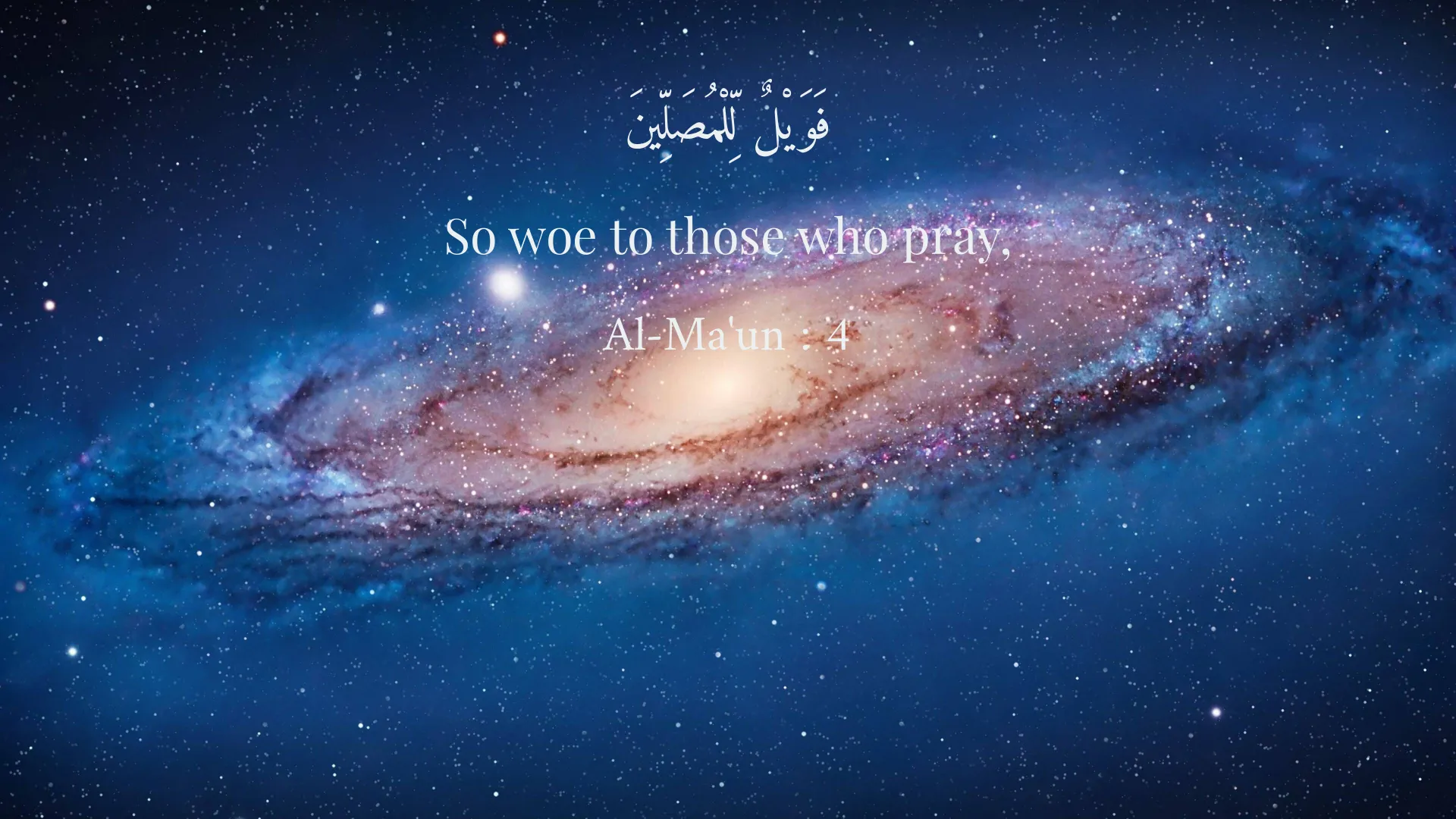
فَوَيْلٌ لِّلْمُصَلِّينَ
So woe to those who pray,
Al-Ma'un : 4
الَّذِينَ هُمْ عَن صَلَاتِهِمْ سَاهُونَ
[But] who are heedless of their prayer -
Al-Ma'un : 5
الَّذِينَ هُمْ يُرَاءُونَ
Those who make show [of their deeds]
Al-Ma'un : 6
يَا أَيُّهَا الَّذِينَ آمَنُوا اجْتَنِبُوا كَثِيرًا مِّنَ الظَّنِّ إِنَّ بَعْضَ الظَّنِّ إِثْمٌ ۖ وَلَا تَجَسَّسُوا وَلَا يَغْتَب بَّعْضُكُم بَعْضًا ۚ أَيُحِبُّ أَحَدُكُمْ أَن يَأْكُلَ لَحْمَ أَخِيهِ مَيْتًا فَكَرِهْتُمُوهُ ۚ وَاتَّقُوا اللَّهَ ۚ إِنَّ اللَّهَ تَوَّابٌ رَّحِيمٌ
O you who have believed, avoid much [negative] assumption. Indeed, some assumption is sin. And do not spy or backbite each other. Would one of you like to eat the flesh of his brother when dead? You would detest it. And fear Allah; indeed, Allah is Accepting of repentance and Merciful.
Al-Hujurat : 12
فَبِمَا رَحْمَةٍ مِّنَ اللَّهِ لِنتَ لَهُمْ ۖ وَلَوْ كُنتَ فَظًّا غَلِيظَ الْقَلْبِ لَانفَضُّوا مِنْ حَوْلِكَ ۖ فَاعْفُ عَنْهُمْ وَاسْتَغْفِرْ لَهُمْ وَشَاوِرْهُمْ فِي الْأَمْرِ ۖ فَإِذَا عَزَمْتَ فَتَوَكَّلْ عَلَى اللَّهِ ۚ إِنَّ اللَّهَ يُحِبُّ الْمُتَوَكِّلِينَ
So by mercy from Allah, [O Muhammad], you were lenient with them. And if you had been rude [in speech] and harsh in heart, they would have disbanded from about you. So pardon them and ask forgiveness for them and consult them in the matter. And when you have decided, then rely upon Allah. Indeed, Allah loves those who rely [upon Him].
Al-Imran : 159
Short Story
In the verdant gardens of Shiraz, where the scent of roses mingled with the wisdom of ages, Saadi once told of a sincere soul, a seeker named Farhad. Farhad, despite his deep reverence for faith, often felt a profound unease in the grand, bustling gatherings where scholars debated and the devout showcased their piety. He longed for genuine spiritual connection, but in those crowds, he felt a strange sense of suffocation. One day, he sought out an old, wise dervish who sat quietly by a flowing stream, his eyes reflecting a serene inner peace. Farhad poured out his heart, "O venerable one, I strive to walk the path of faith, yet when I join the devout, I feel a tightness in my chest, a spiritual longing that remains unfulfilled. Why do these seemingly pious gatherings not bring me the solace I seek?" The dervish smiled gently, gazing into the stream. "My dear Farhad," he began, "Know that the essence of faith lies not in the grandness of assemblies, nor in the loud proclamations of piety. It is like this water: it flows purest when it is free, unburdened by the clamor of the world. Many seek faith outwardly, in form and display, but true peace, like true water, nourishes the heart in sincerity and humility. When the heart is burdened by show, judgment, or empty talk, it becomes a cage, and the soul yearns for the open sky of genuine devotion. Seek the quiet stream of your own sincerity, and you shall find the boundless ocean of divine peace, even if alone, and the suffocating feeling will dissipate, replaced by the refreshing breeze of truth." Farhad understood. He learned that true piety was not found in crowded halls of outward religiosity, but in the spacious sanctuary of a sincere heart, where genuine connection to the Divine blossomed freely.