Quranic Answer
The question you've raised is one of the deepest and most fundamental inquiries that many individuals encounter on their spiritual journey. It's a common human experience to know God's commands and what He expects of us, yet sometimes fall short in acting upon them, or even move in an opposing direction. The Holy Quran, with its unparalleled insight, addresses various dimensions of this phenomenon and clarifies the roots of this gap between knowledge and action. Understanding these reasons can serve as a guiding light to overcome this challenge and align our lives with what the Lord of the Worlds expects from us. One of the primary reasons for this discrepancy is the inherent nature of humanity, as highlighted in the Quran. Humans, alongside their elevated and divine spirit, also possess an 'ammarah' (enjoining evil) self and earthly instincts. This self inclines towards ease, following desires, and gravitating towards fleeting worldly pleasures. Almighty God refers to this aspect of human existence in several verses, such as Surah Yusuf (12:53): "And I do not acquit myself. Indeed, the soul is a persistent enforcer of evil, except for what my Lord has mercy upon. Indeed, my Lord is Forgiving and Merciful." This internal struggle between intellect and the self (nafs) is one of the most significant obstacles to acting upon knowledge. Many times, despite knowing the correctness of a divine decree, we surrender to our whims and choose the easier or seemingly more pleasurable path. Another factor emphasized by the Quran is the whispers and deceptions of Satan (Shaytan). Satan is described as a clear enemy of humanity, who has sworn to lead people astray from the straight path. He beautifies sins, creates doubts in hearts, and tempts individuals to procrastinate repentance and good deeds, thereby hindering them from fulfilling divine commands. In Surah An-Nisa (4:120), it states: "He [Satan] promises them and arouses their vain desires; and Satan does not promise them except delusion." These temptations can be so powerful that even after knowing the truth, they can pull a person towards falsehood or discourage them from performing their duties. Love for the worldly life (dunya) and attachment to its fleeting manifestations are also major impediments mentioned in the Quran. Humans naturally have an affinity for wealth, children, status, and material pleasures. If this affection exceeds moderation and transforms into idolatry of the world, it can divert a person from the primary purpose of creation and obedience to God. Surah At-Tawbah (9:24) explicitly states that if your fathers, your sons, your brothers, your wives, your relatives, the wealth which you have obtained, and the commerce in which you fear decline, and the dwellings in which you delight are more beloved to you than Allah and His Messenger and jihad in His cause, then wait until Allah executes His command. This verse demonstrates that sometimes false worldly priorities prevent acting upon divine injunctions; for instance, out of fear of losing a job, one might take a bribe, or to increase wealth, one might violate the rights of others, even though they know such actions are condemned in divine teachings. Heedlessness (ghaflah) and forgetfulness are other significant reasons addressed in the Quran. Daily life, with all its preoccupations and attractions, sometimes engrosses individuals so deeply that they forget God, the Day of Judgment, and their ultimate purpose in life. This heedlessness causes a person to neglect what they know and not attach importance to acting upon it. Surah Al-A'raf (7:179) refers to those who have hearts with which they do not understand, and eyes with which they do not see, and ears with which they do not hear; and finally calls them 'ghafiloon' (the heedless). This state of heedlessness is one in which an individual becomes indifferent to undeniable truths they know, delaying or completely abandoning action upon them. Weakness of faith and lack of heartfelt conviction can also be a reason for inaction. Sometimes, our knowledge of divine rulings is merely intellectual and theoretical, and it has not yet reached the level of profound faith and conviction that compels one's entire being into action. True faith is that which conquers not only the intellect but also the heart and will, prompting action. If this faith is weak, when faced with temptations or the difficulties of practice, we become hesitant and deviate from the path. For this reason, the Quran advises believers to increase their faith and reliance on God. What is the remedy? The Holy Quran offers numerous solutions to overcome these challenges. One of the most important is the constant remembrance of God (Dhikr). The remembrance of God brings tranquility to hearts and frees a person from heedlessness. Surah Ar-Ra'd (13:28) states: "Those who have believed and whose hearts are assured by the remembrance of Allah. Unquestionably, by the remembrance of Allah hearts are assured." Furthermore, steadfastness in prayer and patience, seeking assistance from God, continuous repentance and seeking forgiveness, and keeping good company are among other Quranic remedies for strengthening willpower and acting upon knowledge. Ultimately, it must be remembered that this is an internal struggle, and every small step taken towards acting upon divine commands is a great stride towards perfection and eternal bliss.
Related Verses
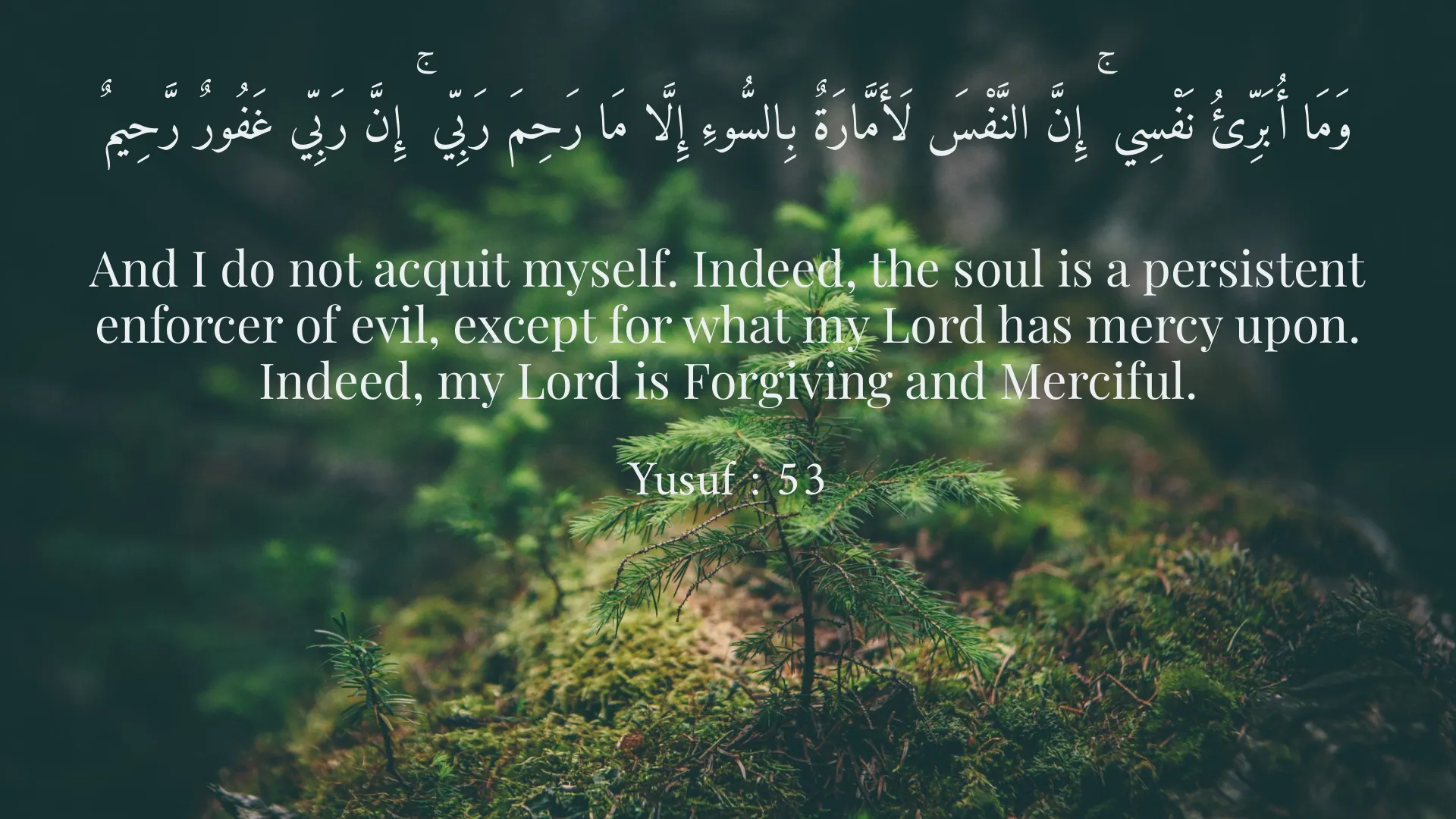
وَمَا أُبَرِّئُ نَفْسِي ۚ إِنَّ النَّفْسَ لَأَمَّارَةٌ بِالسُّوءِ إِلَّا مَا رَحِمَ رَبِّي ۚ إِنَّ رَبِّي غَفُورٌ رَّحِيمٌ
And I do not acquit myself. Indeed, the soul is a persistent enforcer of evil, except for what my Lord has mercy upon. Indeed, my Lord is Forgiving and Merciful.
Yusuf : 53
وَلَقَدْ ذَرَأْنَا لِجَهَنَّمَ كَثِيرًا مِّنَ الْجِنِّ وَالْإِنسِ ۖ لَهُمْ قُلُوبٌ لَّا يَفْقَهُونَ بِهَا وَلَهُمْ أَعْيُنٌ لَّا يُبْصِرُونَ بِهَا وَلَهُمْ آذَانٌ لَّا يَسْمَعُونَ بِهَا ۚ أُولَٰئِكَ كَالْأَنْعَامِ بَلْ هُمْ أَضَلُّ ۚ أُولَٰئِكَ هُمُ الْغَافِلُونَ
And We have certainly created for Hell many of the jinn and mankind. They have hearts with which they do not understand, and they have eyes with which they do not see, and they have ears with which they do not hear. Those are like livestock; rather, they are more astray. It is those who are heedless.
Al-A'raf : 179
قُلْ إِن كَانَ آبَاؤُكُمْ وَأَبْنَاؤُكُمْ وَإِخْوَانُكُمْ وَأَزْوَاجُكُمْ وَعَشِيرَتُكُمْ وَأَمْوَالٌ اقْتَرَفْتُمُوهَا وَتِجَارَةٌ تَخْشَوْنَ كَسَادَهَا وَمَسَاكِنُ تَرْضَوْنَهَا أَحَبَّ إِلَيْكُم مِّنَ اللَّهِ وَرَسُولِهِ وَجِهَادٍ فِي سَبِيلِهِ فَتَرَبَّصُوا حَتَّىٰ يَأْتِيَ اللَّهُ بِأَمْرِهِ ۗ وَاللَّهُ لَا يَهْدِي الْقَوْمَ الْفَاسِقِينَ
Say, [O Muhammad], 'If your fathers, your sons, your brothers, your wives, your relatives, the wealth which you have obtained, and the commerce in which you fear decline, and the dwellings in which you delight are more beloved to you than Allah and His Messenger and jihad in His cause, then wait until Allah executes His command. And Allah does not guide the defiantly disobedient people.'
At-Tawbah : 24
الَّذِينَ آمَنُوا وَتَطْمَئِنُّ قُلُوبُهُم بِذِكْرِ اللَّهِ ۗ أَلَا بِذِكْرِ اللَّهِ تَطْمَئِنُّ الْقُلُوبُ
Those who have believed and whose hearts are assured by the remembrance of Allah. Unquestionably, by the remembrance of Allah hearts are assured.
Ar-Ra'd : 28
Short Story
It is narrated that a wise man had a student who was very intelligent and highly skilled in religious sciences, but in practice, laziness and procrastination always overcame him. One day, the wise man told him: "O son, knowledge without action is like a tree without fruit. If you are a doctor and know of a healing medicine, but never take it yourself, what good is it?" The student knew the wise man's words and articulated them beautifully, but whenever he intended to act, the whispers of his self or worldly distractions held him back. One day, he suddenly fell ill and was confined to bed. In those difficult moments, he looked back with regret and saw how many opportunities he had lost with "I'll do it tomorrow." He sighed and said to himself, "Oh, if only I had known that true wisdom lies in acting upon knowledge, not just knowing it!" After that, as long as he lived, whenever he learned something, he immediately strove to put it into practice and would tell others that "tomorrow" is a trap that Satan lays on the path of human resolve.