Quranic Answer
The countless and astounding scientific advancements in the modern era have brought unprecedented comfort, speed, and access to information in many aspects of our lives. From medical discoveries to communication technologies and space exploration, humanity has remarkably expanded the boundaries of its knowledge and unlocked many mysteries of the material world. Yet, surprisingly, many individuals in advanced societies still grapple with feelings of emptiness, meaninglessness, anxiety, and depression. This appears to be a strange paradox: the more our knowledge and ability to control the material world increase, why does inner peace and contentment decrease? The answer to this question can be sought in the comprehensive view of existence and humanity presented in the Holy Quran. The Quran teaches us that humans are not merely material beings whose needs can only be satisfied by scientific progress and worldly prosperity. Humans possess a soul with deeper needs; needs that are spiritual in nature, involving purposefulness, connection with the Creator, and understanding one's place in the universe. In reality, scientific progress in itself is not the ultimate goal of creation, but rather a tool for better understanding the grandeur of the Lord and facilitating a life in which humans can fulfill their primary duty, which is servitude and moving towards perfection. The Quran states this reality that the main purpose of creating humans and jinn is to worship the Lord, as it says in Surah Adh-Dhariyat, verse 56: “And I did not create the jinn and mankind except to worship Me.” When humans become heedless of this primary purpose and dedicate all their efforts and concerns to accumulating material possessions and worldly pleasures, a sense of emptiness gradually overtakes them. This emptiness is not due to a lack of resources, but due to the non-fulfillment of spiritual and existential needs. Scientific knowledge, while illuminating the world, cannot answer fundamental existential questions such as 'Where did I come from?', 'Why am I here?', and 'Where am I going?' These questions only find meaning in the light of divine revelation and connection with the source of existence, namely, Allah Almighty. The Quran emphasizes that the true tranquility of hearts is achieved only through the remembrance of Allah. Surah Ar-Ra'd, verse 28, states: “Those who have believed and whose hearts are assured by the remembrance of Allah. Unquestionably, by the remembrance of Allah hearts are assured.” This verse clearly indicates that the source of inner peace and freedom from emptiness is not in material and technological advancements, but in a spiritual connection to the Creator. Scientific progress can improve our physical environment, but it cannot fill the spiritual void caused by forgetting God and the ultimate purpose of life. Furthermore, the Quran warns humanity that excessive attachment to worldly life and heedlessness of the Hereafter lead to deviation and misery. In Surah Taha, verse 124, it is stated: “But whoever turns away from My remembrance - indeed, he will have a depressed life, and We will gather him on the Day of Resurrection blind.” "Ma’ishatan Dhanka" or a constricted and hard life, does not necessarily mean financial poverty, but can refer to a life that is spiritually and emotionally constrained and pressured, even if it is materially prosperous. This is precisely the feeling of emptiness that afflicts many people despite scientific progress. This spiritual and emotional constriction is the result of turning away from the remembrance of Allah and the primary purpose of creation. The Quran also shifts human perspective from the limitations of the ephemeral world to eternity and eternal life in the Hereafter. In Surah Al-Kahf, verse 46, we read: “Wealth and children are the adornment of the worldly life; but the enduring good deeds are better with your Lord for reward and better for [one’s] hope.” This verse clearly shows that lasting values are not found in material achievements, which are transient, but in good deeds and a spiritual connection with God. When all human focus is on accumulating these fleeting adornments, it is natural for a sense of aimlessness and emptiness to eventually overcome them, as these cannot quench the soul's inner thirst for eternal truth and meaning. Therefore, scientific progress can never replace humanity's spiritual and existential needs. In fact, science without spirituality is like a body without a soul. To overcome the feeling of emptiness, it is essential for humans to return wholeheartedly to the true source of peace, the Lord of the worlds. This return is achieved through worship, remembrance (dhikr), contemplation of divine verses, service to creation, and living with a Quranic purpose and meaning. In this way, knowledge and science will not only help satisfy material needs but will also be a path to deepening faith and achieving lasting inner peace, transforming emptiness into contentment and meaning.
Related Verses
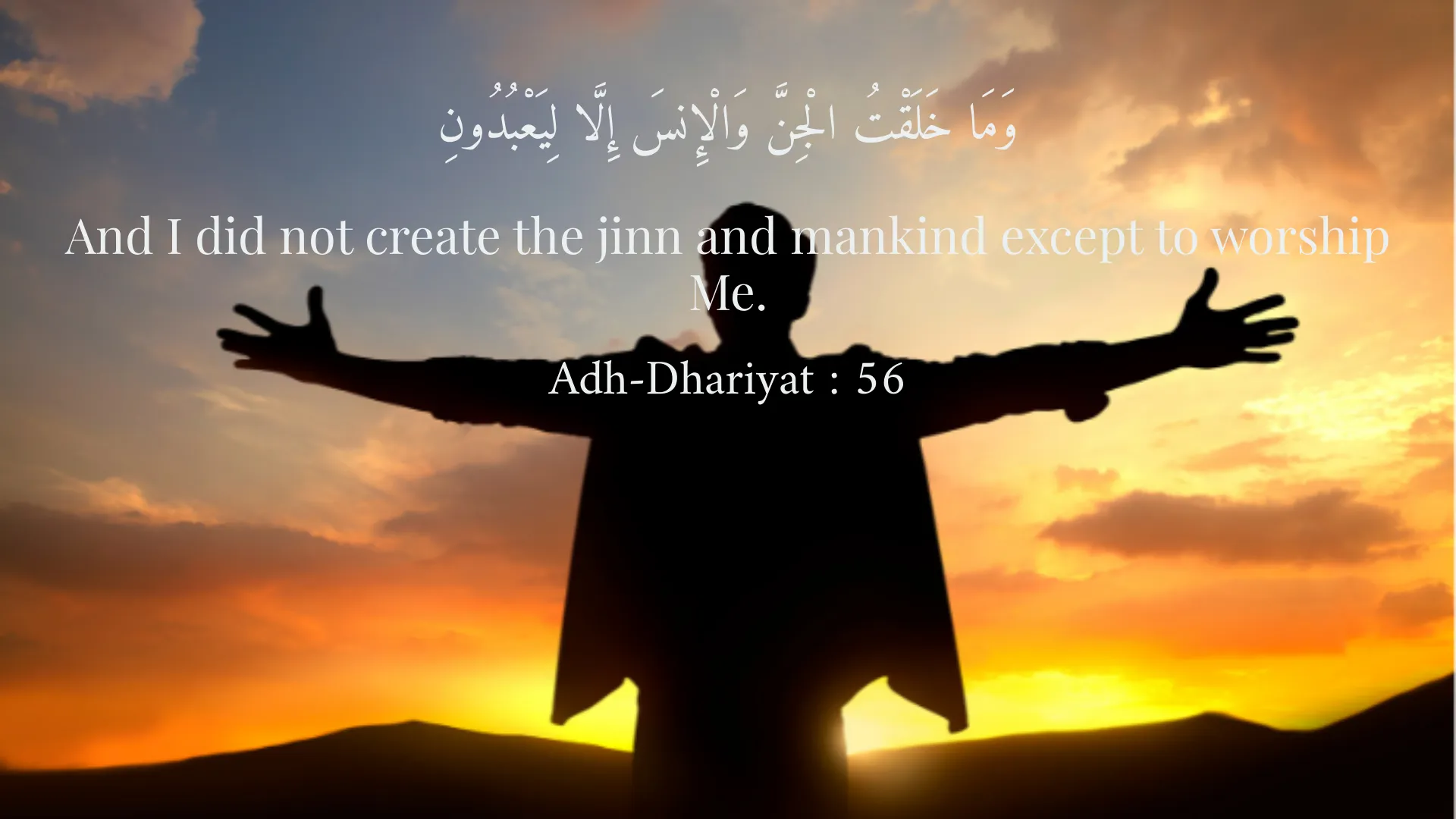
وَمَا خَلَقْتُ الْجِنَّ وَالْإِنسَ إِلَّا لِيَعْبُدُونِ
And I did not create the jinn and mankind except to worship Me.
Adh-Dhariyat : 56
الَّذِينَ آمَنُوا وَتَطْمَئِنُّ قُلُوبُهُم بِذِكْرِ اللَّهِ ۗ أَلَا بِذِكْرِ اللَّهِ تَطْمَئِنُّ الْقُلُوبُ
Those who have believed and whose hearts are assured by the remembrance of Allah. Unquestionably, by the remembrance of Allah hearts are assured.
Ar-Ra'd : 28
وَمَنْ أَعْرَضَ عَن ذِكْرِي فَإِنَّ لَهُ مَعِيشَةً ضَنكًا وَنَحْشُرُهُ يَوْمَ الْقِيَامَةِ أَعْمَىٰ
But whoever turns away from My remembrance - indeed, he will have a depressed life, and We will gather him on the Day of Resurrection blind.
Taha : 124
Short Story
Once upon a time, in a bustling city, there lived a very wealthy merchant. He possessed luxurious homes, caravans laden with goods, and countless servants. Everyone thought he was at the peak of happiness, but his heart was always restless and worried; not from market downturns, but from a void and meaninglessness that seemed to hide behind every outward smile. Every night, despite all he had, he felt an emptiness, and peace eluded him. In the same city, in a humble corner, lived a simple-hearted dervish with patched clothes and worn-out shoes. He had no material possessions, but his heart was overflowing with the remembrance of God. Every morning he would wake up with a comforting smile, and every night he would go to sleep with a peaceful heart. One day, the merchant passed by the dervish and saw him murmuring prayers with a radiant face. He asked him: “O Dervish, you have nothing, yet the peace in your being makes my heart yearn. Why do I, with all my wealth, not have a moment of this peace?” The dervish smiled and said: “My friend, you have spent your entire life accumulating 'possessions' and have not attended to 'being'. What troubles you is the disconnection of your heart from the source of peace, not a lack of wealth. The heart finds peace only in the remembrance of God, not in accumulating riches and status. The more science and wealth increase, if the soul remains heedless, the greater the emptiness will grip it.” The merchant was moved by the dervish’s words and began to reflect on his life, perhaps finding a path towards true peace.