Quranic Answer
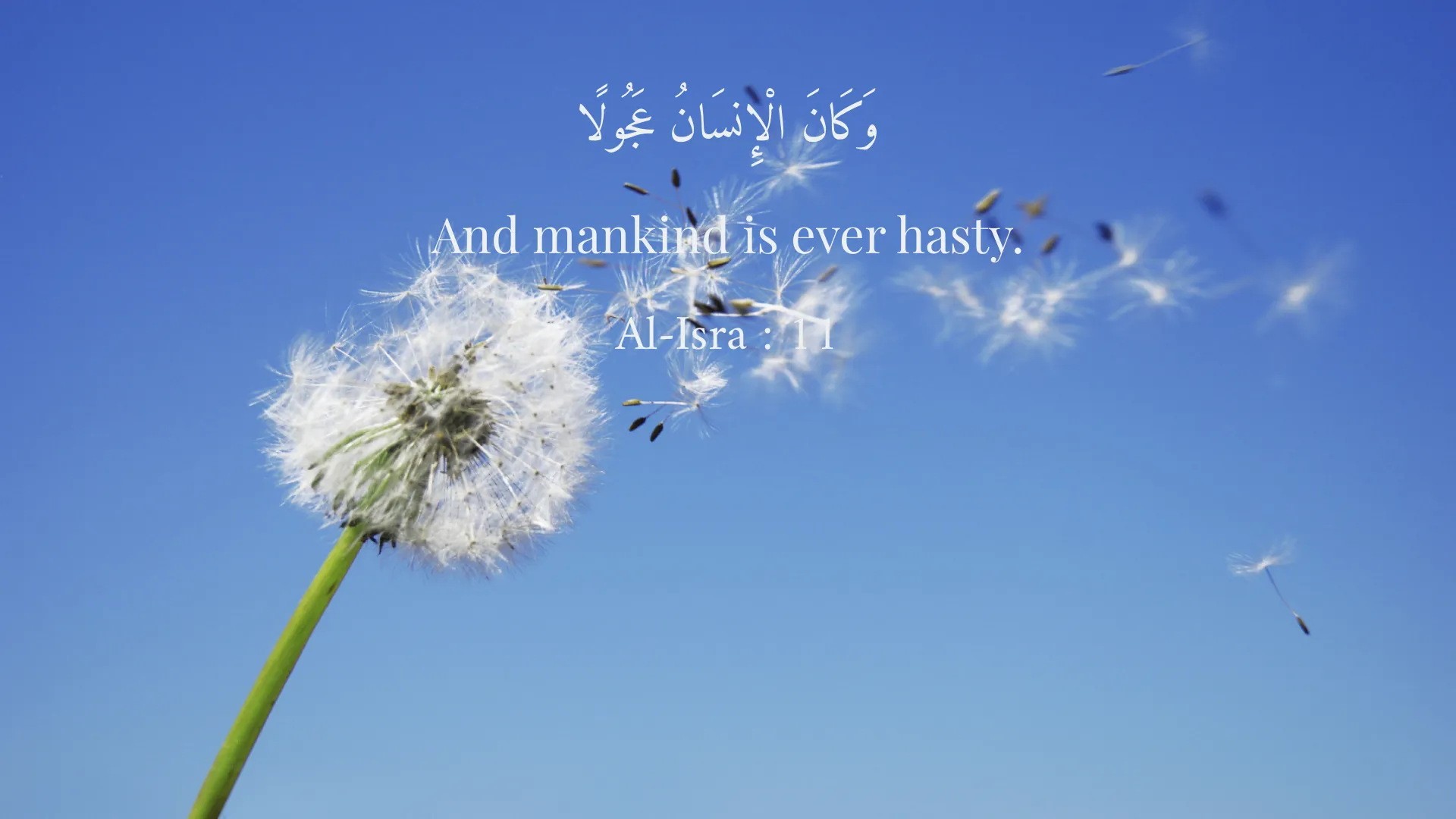
The feeling of fatigue or weariness from doing good deeds is an experience that many people may encounter on their life's journey. This is not necessarily a sign of weak faith, but rather a natural part of the human struggle against one's own self (nafs) and external temptations, a struggle extensively addressed in the Holy Quran. The Quran provides us with a profound insight into human nature, its challenges on the path of truth, and the means to overcome these obstacles. When a person becomes tired of doing good, it can stem from several factors, each reflected in the divine verses. One of the most significant reasons is the volatile and hasty nature of human beings. The Holy Quran refers to this human characteristic in several verses. For example, in Surah Al-Isra, verse 11, it states: "وَكَانَ الْإِنْسَانُ عَجُولًا" which means "and mankind is ever hasty." This hastiness can imply that humans expect to see the results of their good deeds quickly. When immediate rewards or positive feedback are not received, or when the path becomes arduous and long, one might become discouraged and fatigued. Indeed, the path of goodness often requires long-term patience and steadfastness, and its true reward is guaranteed in the Hereafter, not necessarily in this world. This mismatch between human expectation and the reality of the path can lead to exhaustion. Surah Al-Ma'arij, verses 19 to 21, also touches upon this characteristic of humanity: "إِنَّ الْإِنسَانَ خُلِقَ هَلُوعًا ﴿١٩﴾ إِذَا مَسَّهُ الشَّرُّ جَزُوعًا ﴿٢٠﴾ وَإِذَا مَسَّهُ الْخَيْرُ مَنُوعًا ﴿٢١﴾" meaning "Indeed, mankind was created anxious: (19) when evil touches him, impatient; (20) and when good touches him, withholding (21)." These verses illustrate how humans are inherently prone to restlessness and aversion to persistence, whether facing hardship or blessing, both of which can lead to discouragement in continuously performing good deeds. Another central factor contributing to fatigue from good deeds is the whispers of Satan. Satan is the clear enemy of humanity, and his mission is to divert people from the straight path and prevent them from performing righteous deeds. The Quran states in Surah Al-Baqarah, verse 268: "الشَّيْطَانُ يَعِدُكُمُ الْفَقْرَ وَيَأْمُرُكُمْ بِالْفَحْشَاءِ وَاللَّهُ يَعِدُكُمْ مَغْفِرَةً مِنْهُ وَفَضْلًا" meaning "Satan threatens you with poverty and enjoins you to immorality, while Allah promises you forgiveness from Him and bounty." Satan attempts to deter people by instilling fear of losing worldly gains or by exaggerating the difficulties and hardships of doing good. He makes benevolence seem arduous and fruitless, and he makes fleeting worldly pleasures appear more attractive. These temptations can deplete one's spiritual and physical energy, leading to fatigue and the abandonment of good deeds. Sometimes, fatigue from good deeds also arises from a lack of sufficient "sincerity" (ikhlas). If a person performs a deed not for the sake of Allah's pleasure but rather to gain people's admiration, attain status, or acquire worldly benefits, then upon not achieving these motives or encountering criticism and indifference, they may become disheartened and despair. The Quran emphasizes the importance of sincerity in all actions. In Surah Az-Zumar, verse 2, we read: "فَاعْبُدِ اللَّهَ مُخْلِصًا لَّهُ الدِّينَ" meaning "So worship Allah, [being] sincere to Him in religion." When actions are performed sincerely for Allah, even if they do not yield apparent results or human praise, they bring inner peace and contentment, which prevents fatigue. This is because the ultimate reward comes from the One who never forgets and is the Best of rewarders. Furthermore, one's environment and companions can significantly influence this feeling of fatigue. Associating with individuals who are indifferent to good or even mock it can weaken one's resolve and lead to laziness and exhaustion. The Quran emphasizes the importance of accompanying the righteous and avoiding gatherings of frivolity and falsehood, as righteous companionship can foster positive energy and motivation to continue on the path of goodness. To overcome this fatigue and discouragement, the Quran offers numerous practical and spiritual solutions. The first and foremost solution is "patience and prayer" (sabr wa salah). In Surah Al-Baqarah, verse 153, it states: "يَا أَيُّهَا الَّذِينَ آمَنُوا اسْتَعِينُوا بِالصَّبْرِ وَالصَّلَاةِ ۚ إِنَّ اللَّهَ مَعَ الصَّابِرِينَ" meaning "O you who have believed, seek help through patience and prayer. Indeed, Allah is with the patient." Patience means steadfastness on the path of truth and enduring its difficulties, and prayer means direct connection with Allah and spiritual recharging. These two provide immense sources of energy and tranquility for a person. "Remembrance of Allah" (Dhikr) is another remedy for fatigue. In Surah Ar-Ra'd, verse 28, it states: "أَلَا بِذِكْرِ اللَّهِ تَطْمَئِنُّ الْقُلُوبُ" meaning "Unquestionably, by the remembrance of Allah hearts are assured." Constantly remembering Allah's greatness and mercy, and knowing that every good deed we perform is recorded in His presence and its reward is preserved, strengthens one's spiritual fortitude and prevents discouragement. Moreover, focusing on "reward in the Hereafter" instead of worldly expectations changes one's perspective and makes them steadfast on the path of goodness. The Quran repeatedly mentions that worldly life is fleeting and unstable, and true, eternal rewards are in the Hereafter. In Surah Al-A'la, verses 16 and 17, we read: "بَلْ تُؤْثِرُونَ الْحَيَاةَ الدُّنْيَا ﴿١٦﴾ وَالْآخِرَةُ خَيْرٌ وَأَبْقَىٰ ﴿١٧﴾" meaning "But you prefer the worldly life (16), while the Hereafter is better and more enduring (17)." By changing this outlook and deeply believing in divine rewards, fatigue from good deeds loses its meaning, because one knows that every atom of their effort in seeking Allah's pleasure is preserved with the Lord and will yield an eternal outcome. Ultimately, fatigue from good deeds is a natural phenomenon on the path of human spiritual growth and development. The Quran, with its deep understanding of human nature, acknowledges these challenges and provides practical and spiritual solutions to overcome them. By relying on Allah, practicing patience, perseverance, sincerity in intention, constant remembrance of Him, and hoping for the reward in the Hereafter, this fatigue can be transformed into a bridge to higher levels of faith and closeness to Allah. This path is full of ups and downs, but with the provisions of the Quran and the Prophetic Sunnah, it will never be endless or fruitless.
Related Verses
وَكَانَ الْإِنسَانُ عَجُولًا
And mankind is ever hasty.
Al-Isra : 11
إِنَّ الْإِنسَانَ خُلِقَ هَلُوعًا
Indeed, mankind was created anxious:
Al-Ma'arij : 19
إِذَا مَسَّهُ الشَّرُّ جَزُوعًا
When evil touches him, impatient;
Al-Ma'arij : 20
وَإِذَا مَسَّهُ الْخَيْرُ مَنُوعًا
And when good touches him, withholding,
Al-Ma'arij : 21
يَا أَيُّهَا الَّذِينَ آمَنُوا اسْتَعِينُوا بِالصَّبْرِ وَالصَّلَاةِ ۚ إِنَّ اللَّهَ مَعَ الصَّابِرِينَ
O you who have believed, seek help through patience and prayer. Indeed, Allah is with the patient.
Al-Baqarah : 153
الشَّيْطَانُ يَعِدُكُمُ الْفَقْرَ وَيَأْمُرُكُم بِالْفَحْشَاءِ ۖ وَاللَّهُ يَعِدُكُم مَّغْفِرَةً مِّنْهُ وَفَضْلًا ۗ وَاللَّهُ وَاسِعٌ عَلِيمٌ
Satan threatens you with poverty and enjoins you to immorality, while Allah promises you forgiveness from Him and bounty. And Allah is all-Encompassing and Knowing.
Al-Baqarah : 268
Short Story
Once upon a time, in a lush green village, there lived a farmer named Faridun. Every day, he diligently worked his land and watered his crops with love. He was also benevolent, always giving a portion of his harvest to the poor and needy, and was always at the forefront of community efforts. But one year, a drought struck, and his efforts bore no fruit. The thirsty land yielded nothing, and Faridun, who once went to his farm with a heart full of hope, gradually grew tired of doing good deeds and even his daily work. He thought to himself, 'What is the point of all this hard work and benevolence?' One night, in a dream, a wise old man told him, 'O Faridun, do you see the fruits of a tree the moment you plant it? Every seed you sow requires time, patience, and reliance on God, from whom rain and blessings originate. If you do not see fruits today, know that the roots of your goodness are deep in the soil of faith, and one day they will bear fruit in ways you never imagined.' Faridun woke up, picked up his shovel again, and with the wise old man's words in mind and reliance on God, returned to his land. He resumed his work and good deeds, with the intention that everything he did was for God's pleasure, not for immediate results. Before long, divine mercy poured down, and his land came back to life, yielding a harvest many times greater than in previous years. Faridun understood that fatigue on the path of good is merely the whisper of Satan and human impatience, and that the true reward lies with God, not in worldly gains. Joyful that his seedling of faith and patience had borne fruit, he experienced a more blessed life, and from then on, he never tired of doing good.