Quranic Answer
Dear sister or brother, the distraction of the mind with worldly matters during prayer is a common experience for many believers, indicative of the internal challenges humans face on the path of servitude to God. The Holy Quran does not directly address why the mind wanders, but implicitly, within its verses, it both traces the roots of this distraction and offers practical solutions for achieving presence of heart and humility (Khushu') in prayer. This issue largely stems from two primary reasons: first, the nature of this world (dunya) and its allurements, and second, the constant struggle of the human being with the commanding self (nafs al-ammarah) and Satanic whispers. Firstly, it is essential to understand that the world, with all its glitter and attractions, is inherently tempting for humans. Allah the Almighty refers to the fleeting and temporary nature of this world in numerous verses, urging people not to be overly attached to it and to prioritize the Hereafter. For instance, in Surah Al-Hadid, verse 20, He states: "Know that the life of this world is only amusement and diversion and adornment and boasting among yourselves and competition in increase of wealth and children - like the example of a rain whose [resulting] plant growth pleases the disbelievers; then it dries and you see it turned yellow; then it becomes [scattered] debris. And in the Hereafter is severe punishment and forgiveness from Allah and approval. And what is the worldly life except the enjoyment of delusion." This verse clearly indicates that attachment to the world and preoccupation with its games and amusements can be a significant barrier to full attention towards God, even during the sacred moments of prayer. Our minds are filled throughout the day with material concerns, future plans, financial worries, social interactions, and thousands of other thoughts. When we enter prayer, these thoughts, which have taken root in our subconscious, find an opportunity to surface and disrupt our concentration. Secondly, and perhaps the most significant factor, are Satanic whispers and the human struggle with the nafs al-ammarah (the self that incites to evil). The Quran repeatedly refers to Satan as the clear enemy of humankind, always lying in wait to divert them from the right path. In Surah An-Nas, we read that Satan "وَسْوَسُ فِى صُدُورِ النَّاسِ" (whispers into the breasts of mankind). These whispers can appear at any time and in any place, and prayer, which is the pinnacle of connection with the Creator, is one of the main battlegrounds against Satan. Satan strives to distance humans from this source of peace and true connection, and by distracting the mind, he seeks to strip away the joy and impact of prayer. Furthermore, the nafs al-ammarah, mentioned in Surah Yusuf, verse 53: "وَمَا أُبَرِّئُ نَفْسِي ۚ إِنَّ النَّفْسَ لَأَمَّارَةٌ بِالسُّوءِ إِلَّا مَا رَحِمَ رَبِّي ۚ إِنَّ رَبِّي غَفُورٌ رَّحِيمٌ" ("And I do not acquit myself. Indeed, the soul is a persistent enjointer of evil, except for what my Lord has mercy upon. Indeed, my Lord is Forgiving and Merciful."), is inclined towards worldly desires and heedlessness of the Hereafter, and this inclination manifests as distracting thoughts during prayer. However, the Quran offers solutions to overcome this mental dispersion. The first and most important solution is the constant remembrance of Allah (dhikr). Allah states in Surah Taha, verse 14: "وَأَقِمِ الصَّلَاةَ لِذِكْرِي" ("And establish prayer for My remembrance.") This verse indicates that the primary purpose of prayer is the remembrance of God. The more vibrant the remembrance of God is in our daily lives, the easier it will be to focus on Him in prayer. Therefore, practicing continuous dhikr, even outside of prayer, helps prepare the mind for presence before the Divine. Secondly, seeking help through patience and prayer is vital. In Surah Al-Baqarah, verse 153, we read: "يَاأَيُّهَا الَّذِينَ آمَنُوا اسْتَعِينُوا بِالصَّبْرِ وَالصَّلَاةِ ۚ إِنَّ اللَّهَ مَعَ الصَّابِرِينَ" ("O you who have believed, seek help through patience and prayer. Indeed, Allah is with the patient.") This verse shows that prayer itself is a means of acquiring patience and steadfastness in the face of challenges. In fact, achieving presence of heart in prayer is a form of patience and spiritual striving that requires continuity and practice. One should not despair from initial attempts but should continue striving with patience and perseverance to achieve Khushu'. The third solution is to understand and reflect upon the meanings of what we recite in prayer. If the worshipper knows the meaning of the words and sentences and reflects upon them during recitation, their mind will have less opportunity to wander into worldly thoughts. This reflection itself is a deeper connection with God that shifts attention from the world to the Hereafter and from the created to the Creator. A fourth solution involves preparation before prayer. While the Quran does not directly mention this preparation, the concept of piety (taqwa) and being in the presence of the Divine implies that one should try to clear their mind of unnecessary concerns before entering prayer. Performing ablution (wudu) with attentiveness, removing distractions (like mobile phones or television), and taking a few moments to contemplate the greatness of Allah and the importance of the prayer about to be performed can be very helpful. Finally, recalling that prayer "تَنْهَىٰ عَنِ الْفَحْشَاءِ وَالْمُنكَرِ" ("forbids immorality and wrongdoing") (Al-Ankabut, 45) indicates that prayer performed with presence of heart has a profound impact on reforming human behavior and life. The more our daily lives are imbued with a divine essence and less contaminated by worldly attachments, the more tranquil and focused our minds will be during prayer. This is a two-way process: good prayer leads to a good life, and a good life helps in having good prayer. Therefore, to reduce mental distraction in prayer, it is necessary to redefine our perspective on this world and the Hereafter, and our purpose in life. By strengthening our relationship with Allah in all moments of life, we can gradually achieve Khushu' and presence of heart in prayer. This path requires patience, practice, and continuous supplication.
Related Verses
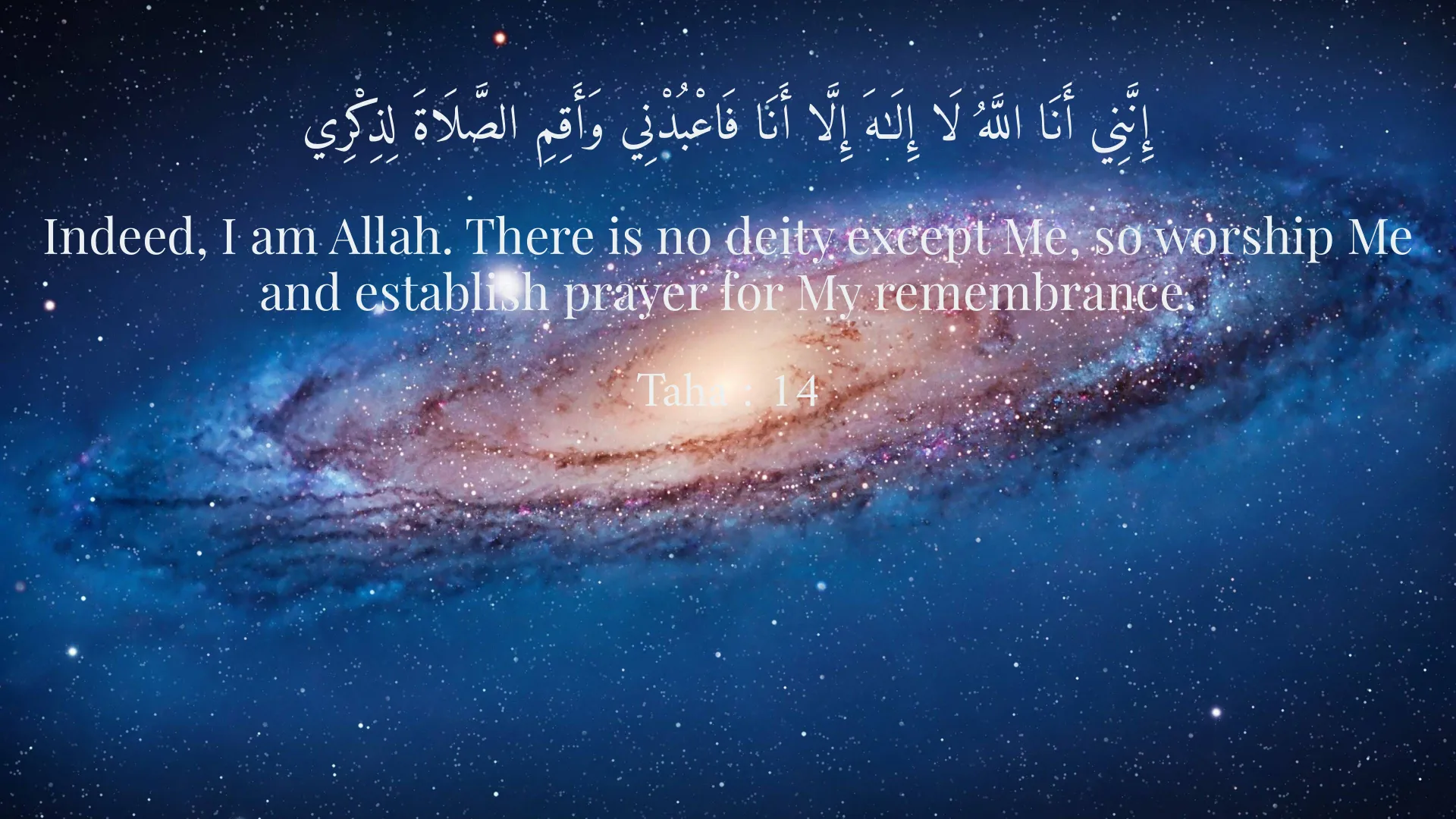
إِنَّنِي أَنَا اللَّهُ لَا إِلَٰهَ إِلَّا أَنَا فَاعْبُدْنِي وَأَقِمِ الصَّلَاةَ لِذِكْرِي
Indeed, I am Allah. There is no deity except Me, so worship Me and establish prayer for My remembrance.
Taha : 14
يَاأَيُّهَا الَّذِينَ آمَنُوا اسْتَعِينُوا بِالصَّبْرِ وَالصَّلَاةِ ۚ إِنَّ اللَّهَ مَعَ الصَّابِرِينَ
O you who have believed, seek help through patience and prayer. Indeed, Allah is with the patient.
Al-Baqarah : 153
اتْلُ مَا أُوحِيَ إِلَيْكَ مِنَ الْكِتَابِ وَأَقِمِ الصَّلَاةَ ۖ إِنَّ الصَّلَاةَ تَنْهَىٰ عَنِ الْفَحْشَاءِ وَالْمُنكَرِ ۗ وَلَذِكْرُ اللَّهِ أَكْبَرُ ۗ وَاللَّهُ يَعْلَمُ مَا تَصْنَعُونَ
Recite what has been revealed to you of the Book and establish prayer. Indeed, prayer prohibits immorality and wrongdoing, and the remembrance of Allah is greater. And Allah knows that which you do.
Al-Ankabut : 45
Short Story
It is narrated that a pious and virtuous man, whenever he stood for prayer, worldly thoughts would swarm his heart like ants and locusts, disturbing his peace. One day, he complained about this state to a wise teacher. The teacher smiled and said: "O good man, the heart is like a mirror; whatever is imprinted upon it throughout the day will appear even in solitude. If you leave the mirror of your heart in the marketplace of the world, and the dust of desires and regrets settle upon it, how can you expect to see anything but dust during worship?" The man understood and from then on, not only during prayer but in all his moments, he strove to wipe the dust of the world from his heart and engaged in the remembrance of God. After some time, he found that his heart became tranquil during prayer, and the remembrance of God prevailed over it, for the mirror of his heart had been polished.