Quranic Answer
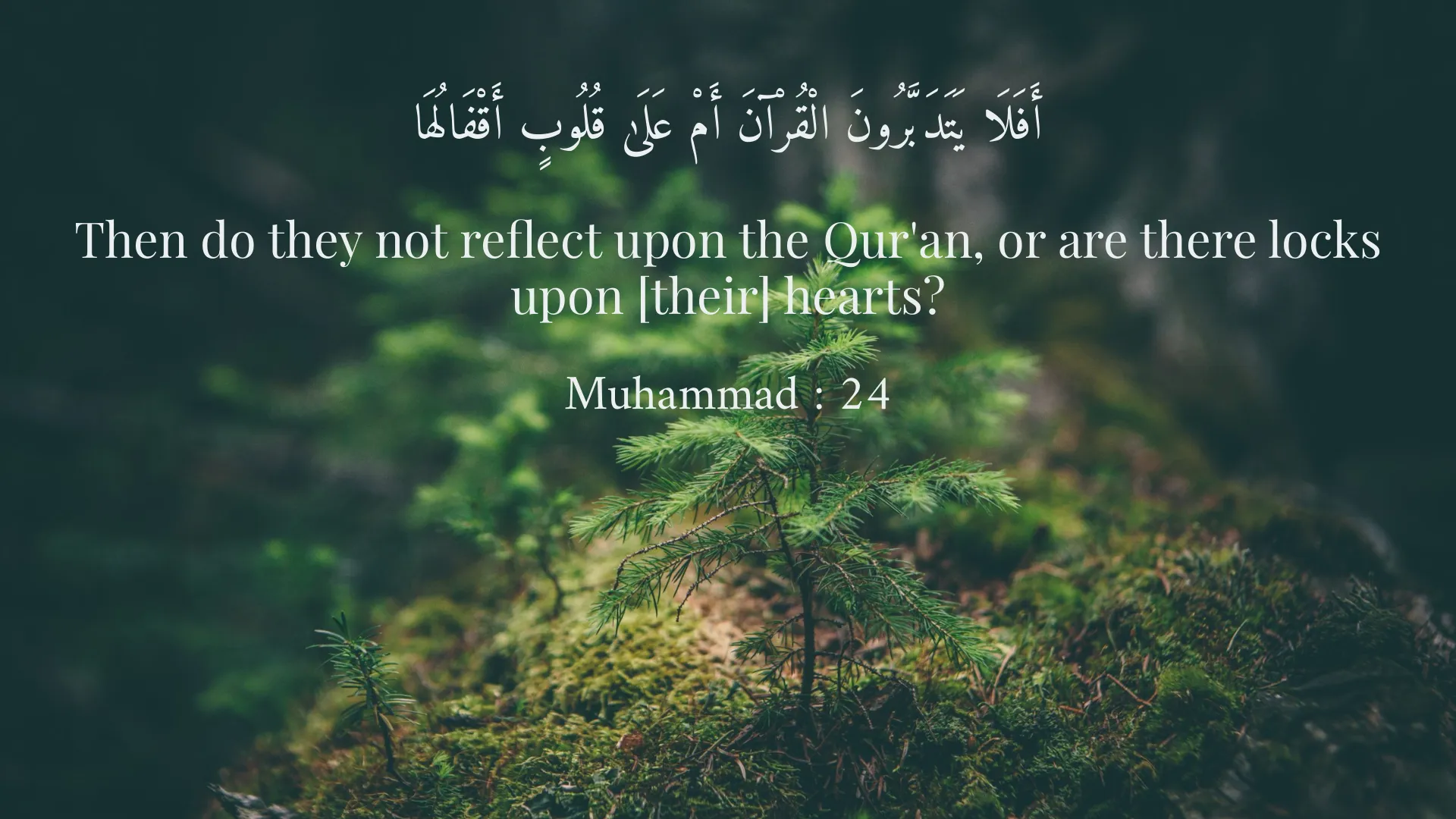
My dear brother or sister, your question is profound and a concern for many who seek spiritual growth and transformation. The Holy Quran, the luminous and guiding word of Allah Almighty, was revealed to lead humanity out of the darkness of ignorance and error into the light of guidance. In Surah Ibrahim, verse 1, Allah says: "A Book which We have revealed to you, [O Muhammad], that you might bring mankind out of darknesses into the light by permission of their Lord – to the path of the Exalted in Might, the Praiseworthy." This verse clearly states the purpose of the Quran's revelation: to bring about fundamental change and transformation in human beings. Therefore, if we find no change in ourselves despite reading the Quran, the fault is not with the divine word, but rather with our approach and interaction with this heavenly book. Let's delve into the main reasons for this issue and its Quranic solutions. The first and perhaps most crucial reason is the lack of 'tadabbur' (deep reflection) on the verses of the Quran. Many of us read the Quran, perhaps even daily, but do we truly ponder its meanings? Do we reflect on its messages and teachings? Allah says in Surah Muhammad, verse 24: "Do they not then contemplate the Qur'an? Or are there locks upon [their] hearts?" This verse indicates that tadabbur is the key to unlocking the locks on hearts. Tadabbur means going beyond mere recitation and literal translation; it means diving deep into the profound concepts of the verses, discovering their connection to our own lives, and asking ourselves what message this verse holds for me, here and now. When we read a verse about patience, do we think about situations in our lives that require patience? When we read a verse about justice, do we reflect on our own dealings with others? If there is no tadabbur, the Quran remains only a pleasant melody that passes by the ear, not a message that settles in the soul and transforms it. The second reason is the failure to 'act' upon the Quran's teachings. The Quran is not merely for knowing; it is for acting upon. Allah repeatedly pairs faith with righteous deeds in numerous verses. In Surah Al-Asr, He states: "Except for those who have believed and done righteous deeds and advised each other to truth and advised each other to patience." Knowing that backbiting is bad is one thing; actively refraining from it is another. Knowing that truthfulness is a virtue is one thing; always being truthful is another. If we read the Quran, enjoy it, but take no steps to implement its commands in our lives, it's natural that no change will occur. The Quran is a roadmap, but unless we move according to the map, we won't reach our destination. Acting upon the Quran means transforming knowledge into insight and insight into behavior. This process requires striving against one's ego and resisting temptations. The third factor is the lack of 'ikhlas' (sincerity) and pure 'niyyah' (intention). Are we reading the Quran merely for reward, or for the sake of appearing pious, or simply as a habit? Or do we genuinely desire with our whole being for the word of Allah to transform our hearts? Intention gives spirit to our actions. Allah says in Surah Al-Bayyinah, verse 5: "And they were not commanded except to worship Allah, [being] sincerely obedient to Him, inclined to truth, and to establish prayer and to give zakah. And that is the correct religion." When we approach the divine word with sincere intention and humility, it is as if our hearts become ready to receive the light of guidance. But if intentions are tainted by hypocrisy or heedlessness, the impact of the divine word diminishes. Fourthly, 'ghaflah' (heedlessness) and 'hardness of heart' can be significant barriers. Sometimes, the clamor of worldly life, material attachments, and daily worries rust our hearts and make them heedless. The Quran comes to wash away these rusts and awaken hearts. But if our hearts are closed to divine verses or have become hardened due to numerous sins and neglect of duties, the divine word will have less effect on them. In Surah Al-Anfal, verse 2, we read: "The believers are only those who, when Allah is mentioned, their hearts tremble, and when His verses are recited to them, it increases them in faith; and upon their Lord they rely." If reading the Quran does not increase our faith or instill fear of Allah in our hearts, we must examine the condition of our hearts. Fifthly, 'consistency' and 'patience' are vital. Change is a process, not an instantaneous event. Reading the Quran and striving to understand and act upon it is a continuous journey. We should not expect everything to transform after just a few readings. Allah emphasizes advising one another to patience in Surah Al-Asr. Spiritual transformation requires consistency, steadfastness, and continuous effort. A little reflection, a little action, a little repentance, and a little remembrance each day, over time, can move mountains. To bring about real change, consider these suggestions: 1. Read the Quran with Tadabbur (Reflection): In addition to recitation, dedicate at least a few minutes daily to studying the translation and interpretation of verses. Use reliable commentaries. Pause at each verse and ask yourself: "What message does this verse hold for me? How can I implement it in my life?" 2. Read the Quran for Action: Each day, choose one or more small lessons from the Quran and try to apply them in your behavior. For example, if a verse is about honesty, be mindful of your words that day. If a verse is about forgiveness, try to overlook someone's mistake. Action is the complement to knowledge. 3. Approach the Quran with Pure Intention: Before starting your recitation or study, purify your intention, saying: "O Allah, this is Your word, and I long for Your guidance. Help me to benefit from it and act upon it." 4. Prepare Your Heart: Seek Allah's forgiveness for purifying your heart and removing the rust of sins. Try to avoid sins, as they create a barrier between us and divine light. Prayer, remembrance (dhikr), and supplication (dua) can soften the heart. 5. Be Consistent: Even if it's little, read the Quran consistently and reflect upon it. Big changes are the result of small, continuous steps. Do not despair, and continue with reliance on Allah. Remember that the Quran is a healing for hearts and a light for the path. If we connect with this precious book with the right intention, deep reflection, and a firm resolve to act upon it, our lives will undoubtedly transform, and the divine light will manifest within us. Allah says: "And We send down of the Qur'an that which is healing and mercy for the believers, but it does not increase the wrongdoers except in loss." This verse indicates that the Quran's impact depends on the reader's faith and the state of their heart. So, with a prepared heart and firm faith, let us step towards this ocean of wisdom.
Related Verses
أَفَلَا يَتَدَبَّرُونَ الْقُرْآنَ أَمْ عَلَىٰ قُلُوبٍ أَقْفَالُهَا
Then do they not reflect upon the Qur'an, or are there locks upon [their] hearts?
Muhammad : 24
إِنَّمَا الْمُؤْمِنُونَ الَّذِينَ إِذَا ذُكِرَ اللَّهُ وَجِلَتْ قُلُوبُهُمْ وَإِذَا تُلِيَتْ عَلَيْهِمْ آيَاتُهُ زَادَتْهُمْ إِيمَانًا وَعَلَىٰ رَبِّهِمْ يَتَوَكَّلُونَ
The believers are only those who, when Allah is mentioned, their hearts tremble, and when His verses are recited to them, it increases them in faith; and upon their Lord they rely.
Al-Anfal : 2
وَنُنَزِّلُ مِنَ الْقُرْآنِ مَا هُوَ شِفَاءٌ وَرَحْمَةٌ لِّلْمُؤْمِنِينَ ۙ وَلَا يَزِيدُ الظَّالِمِينَ إِلَّا خَسَارًا
And We send down of the Qur'an that which is healing and mercy for the believers, but it does not increase the wrongdoers except in loss.
Al-Isra : 82
Short Story
It is related in Saadi's Golestan that there was a scholar who spent years accumulating books and memorizing texts, having a vast knowledge of the Quran, hadith, and many poems. People praised him and envied his knowledge. One day, a wise dervish said to him: "O wise man, for years your tongue has been engaged in remembrance and your heart in knowledge. But if this knowledge does not settle like a light in your heart and transform your conduct, what is the difference between you and those dusty books gathering dust on the shelves? True knowledge is that which wipes away the rust of ignorance and heedlessness from the mirror of the heart and guides you towards perfection." The scholar was initially offended by these words, but upon deep reflection, he realized that wisdom lies in action, not merely in accumulating information. From then on, he began to ponder what he had read and strove to make every verse and hadith a guiding light for his life. Thus, a profound transformation occurred within him, and he found a peace he had never known before.