Quranic Answer
The feeling that the remembrance of God has faded in one's mind is an experience many people encounter during their spiritual journey, and it should not lead to despair. The Holy Quran clearly points to the roots and solutions for this phenomenon. This state, often known as 'heedlessness' (Ghaflah) or 'forgetfulness' of God, primarily stems from various factors deeply embedded in our worldly lives and spiritual struggles. The Quran, with a compassionate yet firm tone, elucidates these factors for us so that we can find the path back to the constant remembrance of God and re-illuminate our hearts with divine light. One of the most significant reasons why the remembrance of God diminishes in the human mind is an excessive preoccupation with the adornments and attachments of worldly life. The world, with its attractions and temptations, can so thoroughly engross a person's heart and mind that there is no room left for the remembrance and mention of God. In Surah Al-Kahf, verse 28, the Quran states: 'And let not your eyes pass beyond them, desiring adornments of the worldly life, and do not obey one whose heart We have made heedless of Our remembrance and who follows his desire and whose affair is [ever] in excess.' This verse clearly indicates that the inclination towards material things and worldly ornaments can lead to the heart's heedlessness of God's remembrance. When a person dedicates all their time and energy to acquiring wealth, social status, fleeting pleasures, and worldly competitions, it is natural for the mental and spiritual space for contemplating divine verses, performing acts of worship with full presence, and continuously recalling the Lord to shrink. This constant engagement with worldly affairs draws a veil over the heart and weakens a person's connection with the source of existence. Another fundamental factor is the influence and whispers of Satan. Satan is the manifest enemy of humanity, and one of his primary goals is to divert people from the remembrance of God. In Surah Al-Mujadila, verse 19, the Holy Quran states: 'Satan has overcome them and made them forget the remembrance of Allah. Those are the party of Satan. Unquestionably, the party of Satan - they will be the losers.' Satan, through deceptions, false promises, instilling fear of poverty, tempting with sin, and beautifying evil in human perception, leads people towards forgetting God. He tries to close the heart's door to divine light by occupying humans with futile matters or by instilling negative thoughts and despair. His subtle whispers, like seeds of doubt or desires, can gradually take the place of God's remembrance in the heart and lead a person astray. Thirdly, human heedlessness and negligence itself play a crucial role. This heedlessness arises from not properly utilizing divine blessings such as intellect, heart, eyes, and ears in the path of recognizing the truth. In Surah Al-A'raf, verse 179, the Quran states: 'And We have certainly created for Hell many of the jinn and mankind. They have hearts with which they do not understand, and they have eyes with which they do not see, and they have ears with which they do not hear. Those are like livestock; rather, they are more astray. It is they who are the heedless.' This verse refers to those who possess the faculties of understanding and observation but do not use them to ponder over divine signs and recall the Creator's greatness. This indifference and lack of contemplation on God's signs in creation and within oneself, over time, causes the remembrance of God to fade and the heart to fall asleep. To restore and strengthen the remembrance of God in the heart and mind, the Quran offers practical solutions. The main axis of these solutions is abundant remembrance (Dhikr Katheer). Dhikr is not merely about uttering words; it encompasses any form of heartfelt, verbal, and practical remembrance of God. The five daily prayers, contemplative recitation of the Quran, supplication and intimate prayers, glorification (Tasbih) and declaration of God's oneness (Tahleel), and reflection on the grandeur of creation are all forms of Dhikr. In Surah Ar-Ra'd, verse 28, it states: 'Those who have believed and whose hearts are assured by the remembrance of Allah. Unquestionably, by the remembrance of Allah hearts are assured.' This verse demonstrates that the remembrance of God not only strengthens His memory but also bestows profound peace and tranquility upon the heart. Furthermore, avoiding gatherings that promote heedlessness and associating with righteous individuals who remind one of God are highly effective. Performing good deeds and serving humanity are also forms of remembering God, which steer a person away from idle preoccupations and draw the heart closer to God. Continuous repentance and seeking forgiveness (Tawbah and Istighfar) also serve as a gateway for purifying the soul and returning to God, as sins can act as a barrier between a person and the remembrance of the Lord. Ultimately, the fading of God's remembrance is a spiritual warning that calls us to re-evaluate our lives and priorities. It is an opportunity to return with stronger resolve to the primary source of peace and guidance, and to keep our hearts alive with the light of Dhikr and divine knowledge.
Related Verses
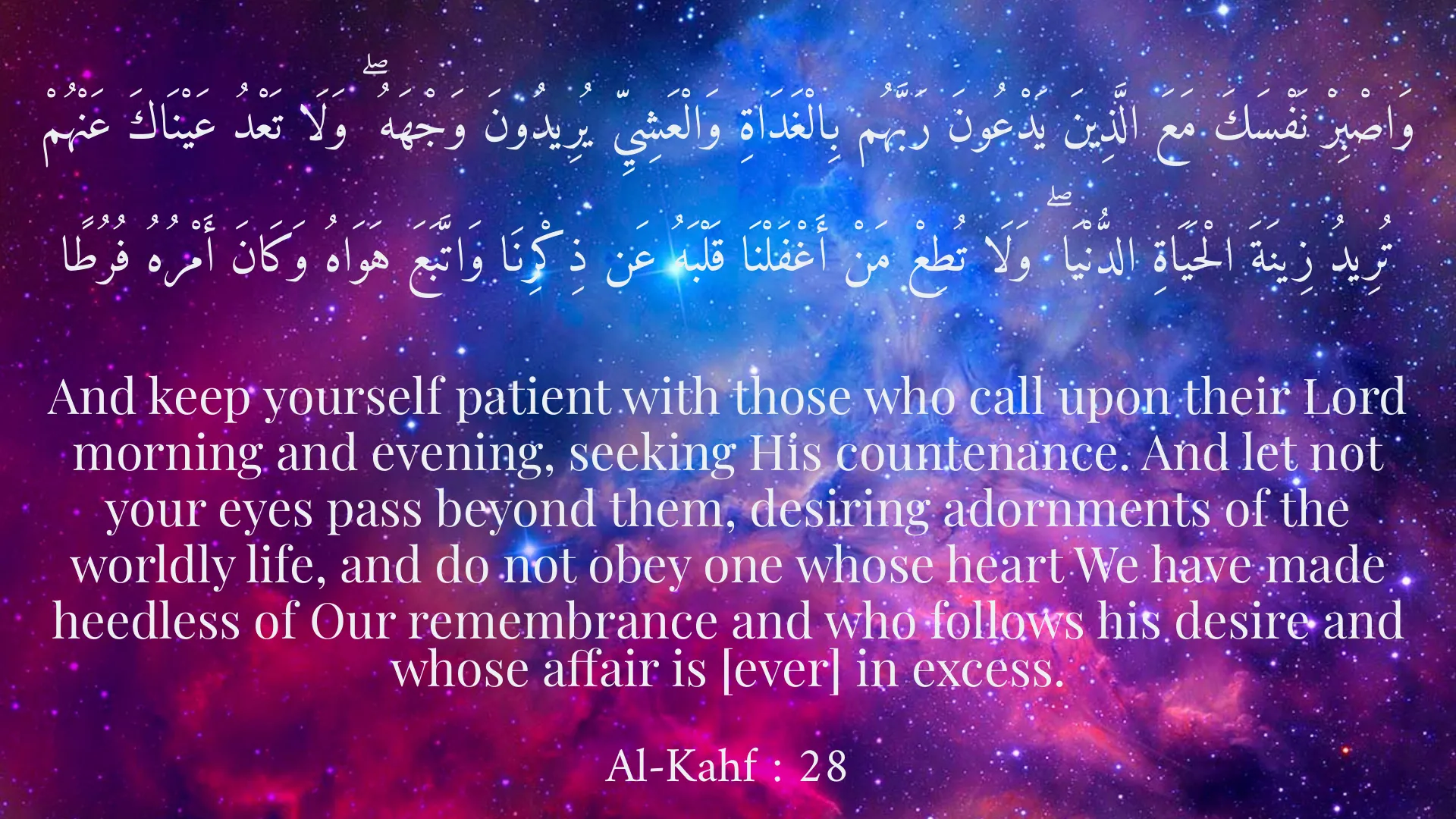
وَاصْبِرْ نَفْسَكَ مَعَ الَّذِينَ يَدْعُونَ رَبَّهُم بِالْغَدَاةِ وَالْعَشِيِّ يُرِيدُونَ وَجْهَهُ ۖ وَلَا تَعْدُ عَيْنَاكَ عَنْهُمْ تُرِيدُ زِينَةَ الْحَيَاةِ الدُّنْيَا ۖ وَلَا تُطِعْ مَنْ أَغْفَلْنَا قَلْبَهُ عَن ذِكْرِنَا وَاتَّبَعَ هَوَاهُ وَكَانَ أَمْرُهُ فُرُطًا
And keep yourself patient with those who call upon their Lord morning and evening, seeking His countenance. And let not your eyes pass beyond them, desiring adornments of the worldly life, and do not obey one whose heart We have made heedless of Our remembrance and who follows his desire and whose affair is [ever] in excess.
Al-Kahf : 28
اسْتَحْوَذَ عَلَيْهِمُ الشَّيْطَانُ فَأَنسَاهُمْ ذِكْرَ اللَّهِ ۚ أُولَٰئِكَ حِزْبُ الشَّيْطَانِ ۚ أَلَا إِنَّ حِزْبَ الشَّيْطَانِ هُمُ الْخَاسِرُونَ
Satan has overcome them and made them forget the remembrance of Allah. Those are the party of Satan. Unquestionably, the party of Satan - they will be the losers.
Al-Mujadila : 19
وَلَقَدْ ذَرَأْنَا لِجَهَنَّمَ كَثِيرًا مِّنَ الْجِنِّ وَالْإِنسِ ۖ لَهُمْ قُلُوبٌ لَّا يَفْقَهُونَ بِهَا وَلَهُمْ أَعْيُنٌ لَّا يُبْصِرُونَ بِهَا وَلَهُمْ آذَانٌ لَّا يَسْمَعُونَ بِهَا ۚ أُولَٰئِكَ كَالْأَنْعَامِ بَلْ هُمْ أَضَلُّ ۚ أُولَٰئِكَ هُمُ الْغَافِلُونَ
And We have certainly created for Hell many of the jinn and mankind. They have hearts with which they do not understand, and they have eyes with which they do not see, and they have ears with which they do not hear. Those are like livestock; rather, they are more astray. It is they who are the heedless.
Al-A'raf : 179
Short Story
It is narrated that a pious dervish, whose heart was always engaged in the remembrance of God and who shunned worldly adornments, once passed through the town's market. He became so captivated by the intricate patterns of exquisite carpets, the delightful aroma of spices, and the bustling sounds of the crowd, that he lost track of time. When he finally came to his senses, he realized that the time for Asr prayer had passed and the sun was setting. With a deep sigh, he exclaimed, 'Woe is me! The fleeting market of this world made me heedless of the eternal market (of the Hereafter).' From that day forth, he vowed to constantly observe the state of his heart and never allow heedlessness to veil the mirror of remembrance. Saadi, the eloquent, says: 'A heart accustomed to the remembrance of the Beloved is freed from both worlds.'