Quranic Answer
The Importance of Helping Orphans in Islam In the Islamic faith, the significance of aiding orphans is profoundly rooted in various teachings from the Holy Quran and Hadith. This responsibility is not just a moral obligation but a fundamental tenet that reflects divine compassion, mercy, and justice. This article will explore the verses from the Quran that emphasize the duty of Muslims to support orphans, as well as the broader social implications that arise from this commitment. ### Divine Compassion for Orphans The Quran highlights the significance of helping orphans in several verses. One notable mention is found in Surah Al-Baqarah. Verse 177 states: 'And they are those who fulfill their pledge when they pledge and when they speak, they are truthful.' (Al-Baqarah 177). This verse not only emphasizes the importance of honesty and integrity but also implies a strong moral duty toward fulfilling commitments made to disadvantaged groups, including orphans. The fulfillment of pledges reflects a societal responsibility that binds the community together through acts of kindness and charitable deeds. Moreover, in Surah An-Nisa, verse 10 warns about the dire consequences of neglecting orphans: 'Indeed, those who consume the wealth of the orphans unjustly are only consuming fire into their bellies.' (An-Nisa 10). This stark warning serves as a reminder that the rights of orphans must be safeguarded, and any exploitation of their resources is a grave sin. This verse underscores the notion that orphans are not merely objects of charity; rather, they have rights that must be respected. ### The Messenger's Teachings The teachings of Prophet Muhammad (PBUH) provide further insight into the profound significance of helping orphans. He stressed the importance of caring for orphans through numerous Hadiths, including the striking statement: 'He who takes care of an orphan will be with me in Paradise.' This profound promise signifies not only the rewards of the afterlife for those who aid orphans but also illustrates the strong connection between social responsibility and spiritual fulfillment. The emphasis on supporting orphans is, therefore, both an ethical duty and a spiritual pathway toward eternal bliss. ### The Modern Context In the contemporary world, the plight of orphans remains stark and pressing. Many children around the globe face circumstances characterized by poverty, neglect, and discrimination. According to UNICEF, an estimated 140 million children are orphans, and millions more live without adequate care and resources. The challenges they face can lead to long-lasting impacts on their mental, physical, and emotional health. For Muslims, the responsibility to assist orphans becomes even more significant when considering the Quranic and prophetic teachings. The call to action is clear: it is the duty of the Muslim community to extend their support and solidarity to these vulnerable individuals. Supporting orphans should not be perceived as an occasional act of charity, but rather as an ongoing commitment to ensure their well-being and integration into society. ### Strengthening Social Foundations Helping orphans can serve as a catalyst for building strong ethical and humanitarian foundations within society. When individuals and communities engage in supporting orphans, they contribute to fostering a culture of empathy and social responsibility. Such acts of kindness inspire others to participate in charitable endeavors, creating a ripple effect that encourages others to donate time, resources, and effort into the betterment of society. Moreover, aiding orphans strengthens the fabric of unity within the community, as collective action toward a common good can encourage cooperation and collaboration among its members. This unity is essential for addressing social injustice and structural inequalities that often leave vulnerable groups, including orphans, without the necessary support. ### Humanitarian Spirit and Religious Teachings The act of supporting orphans embodies the humanitarian spirit that is deeply embedded in religious teachings. In Islam, charity, known as 'Sadaqah,' is a tenet that reflects one’s faith and moral integrity. Similarly, Islamic tenets encourage believers to engage in acts of kindness not just towards fellow Muslims but to all of humanity. This emphasis on universal compassion is what makes aiding orphans a critical act of service that transcends cultural and religious boundaries. Additionally, the promotion of social justice is a fundamental aspect of Islamic teachings. Supporting orphans aligns closely with this concept, as it addresses the imbalance of power and resources within society. When individuals commit to helping those who are vulnerable and marginalized, they contribute to a more equitable and just world. ### Conclusion In conclusion, the teachings of the Holy Quran and the Prophet Muhammad (PBUH) manifest a profound and ongoing obligation to aid orphans within society. Helping orphans is not only a moral duty, as depicted in various verses and Hadiths but also an important factor in enhancing social responsibility, strengthening community bonds, and fostering a spirit of humanitarianism. In a world where so many face the challenges of orphanhood, it stands as a fundamental responsibility for Muslims to extend help, nurture, and protect these vulnerable members of society. Ultimately, the legacy of helping orphans serves not just to transform the lives of those in need but also influences the moral landscape of society, promoting justice, compassion, and unity.
Related Verses
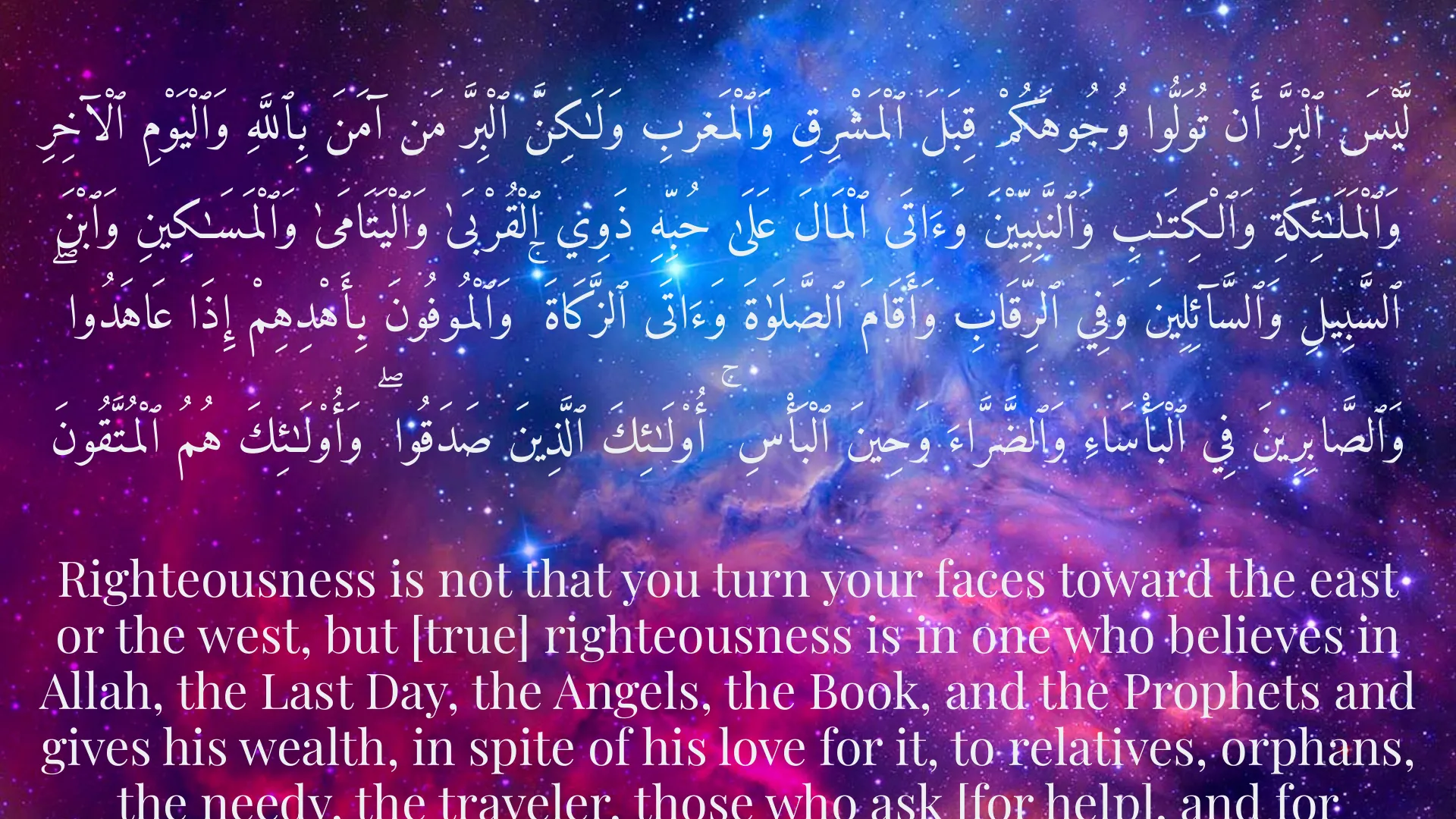
لَّيْسَ ٱلْبِرَّ أَن تُوَلُّوا وُجُوهَكُمْ قِبَلَ ٱلْمَشْرِقِ وَٱلْمَغربِ وَلَـٰكِنَّ ٱلْبِرَّ مَن آمَنَ بِٱللَّهِ وَٱلْيَوْمِ ٱلْآخِرِ وَٱلْمَلَـٰئِكَةِ وَٱلْكِتَـٰبِ وَٱلنَّبِيِّيْنَ وَءَاتَى ٱلْمَالَ عَلَىٰ حُبِّهِ ذَوِي ٱلْقُرْبَىٰ وَٱلْيَتَامَىٰ وَٱلْمَسَـٰكِينِ وَٱبْنَ ٱلسَّبِيلِ وَٱلسَّآئِلِينَ وَفِي ٱلرِّقَابِ وَأَقَامَ ٱلصَّلَوٰةَ وَءَاتَى ٱلزَّكَاةَ ۚ وَٱلْمُوفُونَ بِأَهْدِهِمْ إِذَا عَاهَدُوا ۖ وَٱلصَّابِرِينَ فِي ٱلْبَأْسَاءِ وَٱلضَّرَّاءَ وَحِينَ ٱلْبَأْسِ ۚ أُو۟لَـٰئِكَ ٱلَّذِينَ صَدَقُوا ۖ وَأُو۟لَـٰئِكَ هُمُ ٱلْمُتَّقُونَ
Righteousness is not that you turn your faces toward the east or the west, but [true] righteousness is in one who believes in Allah, the Last Day, the Angels, the Book, and the Prophets and gives his wealth, in spite of his love for it, to relatives, orphans, the needy, the traveler, those who ask [for help], and for freeing slaves; and establishes prayer and gives zakah; [those who fulfill their promise when they promise] and [those who are] patient in poverty and hardship and during battle. Those are the ones who have been true, and it is those who are the righteous.
Al-Baqarah : 177
إِنَّ ٱلَّذِينَ يَأْكُلُونَ أَمْوَٰلَ ٱلْيَتَامَىٰ ظُلْمًۭا إِنَّمَا يَأْكُلُونَ فِي بُطُونِهِمْ نَارًۭا ۖ وَسَيَصْلَوْنَ سَعِيرًۭا
Indeed, those who consume the wealth of the orphans unjustly are only consuming fire into their bellies, and they will be burned in a Blaze.
An-Nisa : 10
Short Story
On a warm summer day, the neighborhood children gathered and were engrossed in play. A lonely orphan boy named Ali sat in a corner watching them play. One of the children, named Amir, noticed him and walked over. Amir took Ali's hand and invited him to join the group. From that day on, Ali was no longer alone and made friends who helped him and included him in the games. This story illustrates how helping others, even an orphan, can change their lives.