Quranic Answer
This is a profound and insightful question that many individuals grapple with throughout their lives. The feeling of peace being fleeting and unstable is a common experience, and the Holy Quran, with its deep wisdom, beautifully addresses its roots and offers comprehensive solutions. Indeed, the Quran does not merely state the problem but provides a roadmap for achieving a profound and enduring tranquility that transcends the fluctuations of worldly life. One of the primary reasons why peace in our lives might be short-lived lies in the very nature of human existence and the transient nature of this world. The Quran describes humanity as a being created with inherent inclinations that can lead to restlessness. In Surah Al-Ma'arij, verses 19-21, Allah states: “Indeed, mankind was created anxious: When evil touches him, impatient; and when good touches him, withholding [of it].” These verses point to the restless and impatient disposition of humanity – a human who becomes distressed when afflicted by harm and avaricious when blessed with good. This inherent nature causes the peace derived from temporary blessings or the removal of fleeting problems to be short-lived, as humans greedily seek more or fear losing what they possess. Secondly, the ephemeral and transient nature of this world contributes significantly to the brevity of peace. The Quran repeatedly emphasizes that worldly life is merely a brief enjoyment and a plaything. In Surah Al-Kahf, verse 46, it says: “Wealth and sons are adornment of the worldly life. But the enduring good deeds are better to your Lord for reward and better for [one's] hope.” This verse reminds us that everything we acquire in this world – wealth, status, fame, or even human relationships – is finite and temporary. Peace built upon such unstable foundations can never be lasting. When the source of peace is variable and subject to decay, peace itself is inevitably short-lived. The third and perhaps most crucial reason is Allah's purpose in creating this world and humanity. The Quran explicitly states that worldly life is a field of trial and tribulation. In Surah Al-Baqarah, verse 155, we read: “And We will surely test you with something of fear and hunger and a loss of wealth and lives and fruits, but give good tidings to the patient.” This verse demonstrates that difficulties and unrest are an integral part of worldly life. Absolute and uninterrupted peace does not exist in this world because it is a realm of trials. If peace were always stable, the purpose of testing and distinguishing individuals would not be fulfilled. Thus, part of the instability of peace stems from the very essence of this world and the divine purpose behind its creation. However, the Quran does not merely outline the reasons for this instability; it offers practical and spiritual solutions for achieving a deeper and more enduring peace: 1. Remembrance of Allah (Dhikrullah): The most fundamental path to lasting peace is the remembrance of Allah. In Surah Ar-Ra'd, verse 28, it states: “Those who have believed and whose hearts are assured by the remembrance of Allah. Unquestionably, by the remembrance of Allah hearts are assured.” This verse clearly indicates that the only source of true and lasting peace is the remembrance and mention of God. Dhikr is not merely repeating words but encompasses contemplation of divine verses, prayer, supplication (du'a), recitation of the Quran, and every act that connects a person to the infinite presence and power of Allah. When one's heart is bound to the Creator of existence, fears of loss, worries about the future, and despair from problems fade away because one knows that a superior and benevolent power is always observing and managing affairs. This connection grants a person assurance and tranquility, allowing them to find a stable anchor even amidst life's storms. 2. Patience and Steadfastness (Sabr): In contrast to humanity's restless and impatient nature, the Quran presents patience as a guiding light. Patience is not merely enduring but an active and hopeful resistance against difficulties. It helps individuals not to despair in the face of adversities and to understand that every hardship is temporary, followed by ease. Verse 155 of Surah Al-Baqarah, mentioned earlier, gives glad tidings to the patient after describing various forms of trials. This patience brings peace because, by relying on Allah and hoping for divine reward in the hereafter, one is freed from anxiety. 3. Prayer (Salah) and Supplication (Du'a): Prayer is the pillar of faith and the believer's ascension. This direct connection with Allah provides an opportunity to release worries, renew strength, and attain peace. The Quran in Surah Al-Baqarah, verse 153, says: “O you who have believed, seek help through patience and prayer. Indeed, Allah is with the patient.” Prayer is not just an obligation but a rich source of tranquility and a spiritual revitalizer. Supplication (Du'a) is also a powerful tool for connecting with the Creator, freeing individuals from feelings of loneliness and helplessness. 4. Reliance upon Allah (Tawakkul): When a person accepts that all matters are in Allah's hands and that He is the Best Disposer of affairs, a heavy burden is lifted from their shoulders. True reliance does not mean abandoning effort but entrusting the outcome to Allah after making sincere efforts and trusting in His wisdom. This reliance eliminates the anxiety arising from the uncontrollability of situations and replaces it with profound peace. 5. Contentment and Detachment from Worldly Possessions: Since attachment to worldly matters is a source of restlessness, the Quran advises us to be content with what we have and not to cling to this world. This does not mean refraining from striving for a better life but rather not having emotional attachment to it. When our happiness and peace are not tied to accumulating wealth, status, or other worldly affairs, our peace is not disturbed by their loss. This is a form of inner liberation that leads to lasting peace. In conclusion, short-lived peace is a natural consequence of a superficial view of the world and attachment to its variables. Due to humanity's restless nature and the testing essence of this world, one cannot find permanent and trouble-free peace in this abode. However, the Quran offers solutions for achieving a deeper and more enduring peace—a peace that originates from within and through an unbreakable connection with Allah. This peace keeps the believer's heart assured even amidst hardships and enables them to view life with a transcendent perspective. Therefore, if we seek more lasting peace, we must first strengthen our relationship with the Creator of existence and, through His remembrance, assure our hearts. This way, we can be less affected by life's fluctuations and possess an anchor of inner peace in the turbulent sea of the world.
Related Verses
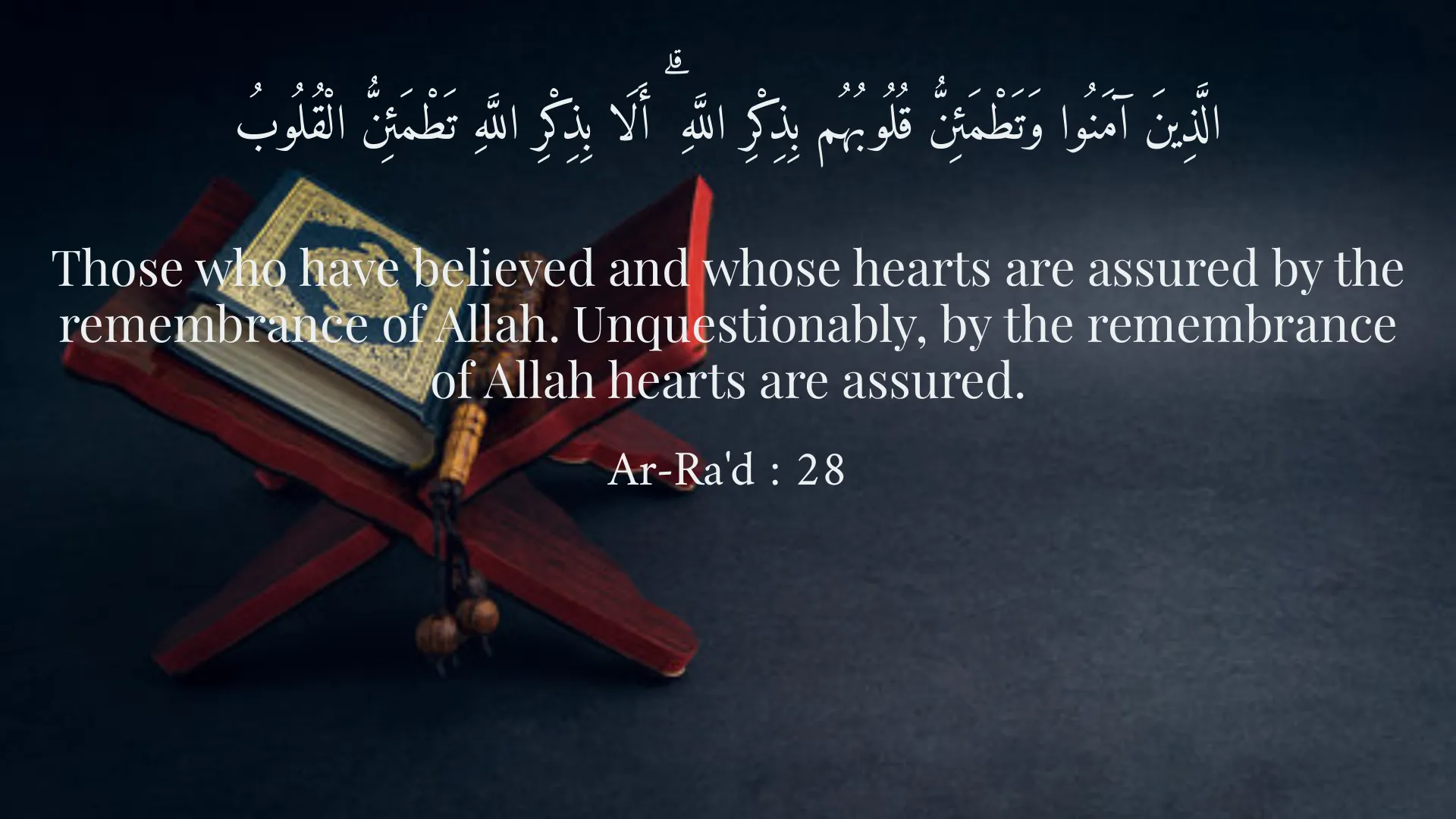
الَّذِينَ آمَنُوا وَتَطْمَئِنُّ قُلُوبُهُم بِذِكْرِ اللَّهِ ۗ أَلَا بِذِكْرِ اللَّهِ تَطْمَئِنُّ الْقُلُوبُ
Those who have believed and whose hearts are assured by the remembrance of Allah. Unquestionably, by the remembrance of Allah hearts are assured.
Ar-Ra'd : 28
وَلَنَبْلُوَنَّكُم بِشَيْءٍ مِّنَ الْخَوْفِ وَالْجُوعِ وَنَقْصٍ مِّنَ الْأَمْوَالِ وَالْأَنفُسِ وَالثَّمَرَاتِ ۗ وَبَشِّرِ الصَّابِرِينَ
And We will surely test you with something of fear and hunger and a loss of wealth and lives and fruits, but give good tidings to the patient.
Al-Baqarah : 155
إِنَّ الْإِنسَانَ خُلِقَ هَلُوعًا إِذَا مَسَّهُ الشَّرُّ جَزُوعًا وَإِذَا مَسَّهُ الْخَيْرُ مَنُوعًا
Indeed, mankind was created anxious: When evil touches him, impatient; and when good touches him, withholding [of it],
Al-Ma'arij : 19
Short Story
In ancient times, in a bustling city, lived a man named "Restless Scholar." Every day he sought peace, but whenever he found it, it quickly slipped away. One day, in a lush garden by a tranquil river, he observed a small sparrow joyfully picking up a grain and flying off. The scholar, astonished, wondered, "How does this sparrow, with so little, possess such peace, while I, with all my possessions, find my peace so fleeting?" A wise old man sitting nearby said, "Young man, true peace does not depend on what you possess, but on being free from the fear of losing it. This sparrow has not tied its heart to the grain; it knows that its sustenance will come from elsewhere too. Whatever you gain with the fear of losing it, its peace will be short-lived. Entrust your heart to the One who holds everything in His hands, and you will discover that lasting peace is not in external things, but in the deepest part of your being, through connection with Him." The scholar was transformed by these words and understood that true peace lies not in accumulation, but in reliance and contentment. From then on, although hardships and joys came and went, a profound and enduring inner peace settled in his heart.