Quranic Answer
In the Holy Quran, the concept of religious upbringing is an intricate tapestry woven with threads of love, compassion, and respect. The Quran emphasizes that the foundation of nurturing children should be built not upon fear or violence, but rather through an environment that fosters affection, kindness, and understanding. This philosophy is vital for effective parenting and has profound implications on a child's understanding of faith and morality. One of the significant sources in the Quran that highlights the importance of gentle parenting is Surah Luqman. This Surah contains profound advice from Luqman, a wise figure, to his son. In verse 13, he advises, 'O my son, do not associate [anything] with Allah…' Such a simple yet impactful statement encapsulates the essence of Islam and sets the tone for a healthy father-son relationship that is built on trust and love. This verse acts as a reminder to parents that nurturing their children’s religious beliefs should stem from mutual respect and gentle guidance. The mention of associating partners with Allah is not just a religious teaching, but a life lesson that emphasizes the importance of singular devotion and integrity, which can only be effectively conveyed in a loving environment. Moreover, the teachings of Prophet Muhammad (peace be upon him) further reinforce the notion of compassionate parenting. Numerous hadiths stress the importance of showing affection towards one’s children. The Prophet emphasized that loving and nurturing one’s children is a critical part of a parent’s responsibilities. For instance, he stated, 'He is not one of us who does not show mercy to our young and does not know the honor of our elderly.' The essence of this teaching is clear — Islam advocates for balance, nurturing relationships, and the importance of emotional connections within the family. Such guidance is essential, as it lays the foundation of a supportive environment where children feel safe and cherished. The atmosphere of safety and love is crucial in ensuring that children absorb religious teachings effectively. Scientific studies support the idea that children who grow up in loving households are more inclined to exhibit empathy and kindness in their behavior. They are better equipped to internalize moral lessons and religious teachings when they experience them in a nurturing environment. This phenomenon can be seen through the lens of attachment theory in psychology, which states that the bond between a child and their primary caregivers fundamentally influences their emotional and social development. Creating an atmosphere filled with positive emotional relationships is, therefore, one of the most practical approaches to effective religious education. Parents play a vital role in shaping their children's understanding of faith. Those who treat their children with respect and encourage open dialogue about religious matters are most likely fostering a deeper connection between their children and their faith. By engaging in conversations about beliefs, values, and moral dilemmas, parents help their children navigate their faith journey confidently. This open space allows children to explore and question their beliefs in a supportive environment, promoting a sense of agency and personal connection to their faith. In addition to open discussions, parents can further emphasize the importance of love and compassion through their actions. Leading by example is one of the most powerful forms of education. When children observe their parents demonstrating kindness, forgiveness, and understanding towards others, they are more likely to emulate these behaviors. Acts of charity, showing compassion towards those less fortunate, and maintaining good relationships not only embody religious teachings but also reinforce family bonds. Religion is not just a set of beliefs and practices; it is also a way of life. By intertwining faith with daily habits, parents can create a seamless environment where religion manifests through love and compassion. Family traditions that promote kindness, such as volunteering together or helping neighbors in need, can serve as practical lessons for children. These activities create a sense of identity and belonging within the family, further solidifying the foundations of their faith. It is important to note that while love and gentleness are fundamental, discipline and guidance are also essential components of parenting. However, the methods employed should still reflect the values of compassion and respect. Parents can set boundaries and expectations in a manner that communicates love and care, thereby avoiding punitive measures that could lead to anxiety and fear. This balance of guidance and affection fosters a secure environment where children learn and grow, both as individuals and as faithful adherents of their religion. In conclusion, religious upbringing within the framework of love and compassion is not just a cultural ideal but a profound necessity. The Quran and Hadith clearly encapsulate the significance of nurturing children with affection, kindness, and respect. Such an approach not only enhances a child's understanding of faith but also cultivates moral and ethical values that contribute to their development as empathetic and responsible individuals. By creating a supportive family environment and encouraging open discussions about religion, parents can empower children to develop a thriving relationship with their faith, ultimately nurturing a new generation that embodies the principles of Islam. Adopting this compassionate approach to religious upbringing is essential, as it cultivates deep emotional connections and a sense of security, ultimately allowing children to flourish in both their religious beliefs and everyday lives.
Related Verses
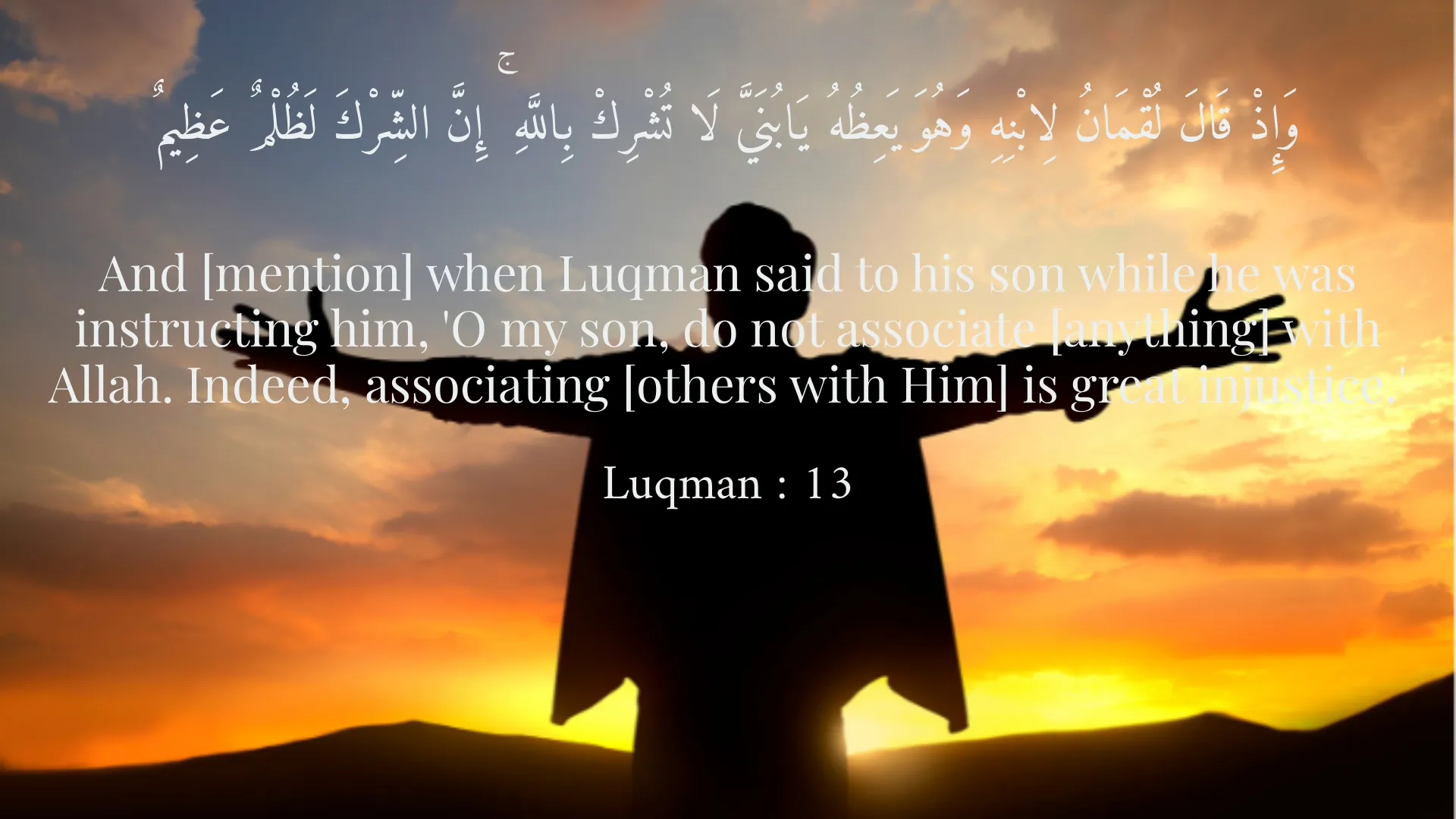
وَإِذْ قَالَ لُقْمَانُ لِابْنِهِ وَهُوَ يَعِظُهُ يَابُنَيَّ لَا تُشْرِكْ بِاللَّهِ ۚ إِنَّ الشِّرْكَ لَظُلْمٌ عَظِيمٌ
And [mention] when Luqman said to his son while he was instructing him, 'O my son, do not associate [anything] with Allah. Indeed, associating [others with Him] is great injustice.'
Luqman : 13
لَيْسَ الْبِرَّ أَنْ تُوَلُّوا وَجُوهَكُمْ قِبَلَ الْمَشْرِقِ وَالْمَغْرِبِ وَلَكِنَّ الْبِرَّ مَنْ آمَنَ بِاللَّهِ وَالْيَوْمِ الْآخِرِ وَالْمَلَائِكَةِ وَالْكِتَابِ وَالنَّبِيِّينَ وَآتَى الْمَالَ عَلَى حُبِّهِ ذَوِي الْقُرْبَى وَالْيَتَامَى وَالْمَسَاكِينِ وَابْنَ السَّبِيلِ وَالسَّائِلِينَ وَفِي الرِّقَابِ وَأَقَامَ الصَّلَاةَ وَآتَى الزَّكَوٰةَ وَالْمُوفُونَ بِعَهْدِهِمْ إِذَا عَاهَدُوا وَالصَّابِرِينَ فِي الْبَأْسَاءِ وَالضَّرَّاءَ وَحِينَ الْبَأْسِ ۚ أُو۟لَـٰئِكَ الَّذِينَ صَدَقُوا ۖ وَأُو۟لَـٰئِكَ هُمُ الْمُتَّقُونَ
Righteousness is not that you turn your faces toward the east or the west, but [true] righteousness is in one who believes in Allah, the Last Day, the Angels, the Book, and the Prophets and gives his wealth, in spite of his love for it, to relatives, orphans, the needy, the traveler, those who ask [for help], and for freeing slaves; and [who] establishes prayer and gives zakah; [those who] fulfill their promise when they promise; and [those who] are patient in poverty and hardship and during battle. Those are the ones who have been true, and it is those who are the righteous.
Al-Baqarah : 177
قُلْ إِن كَانَ آبَاؤُكُمْ وَأَبْنَاؤُكُمْ وَإِخْوَانُكُمْ وَأَزْوَاجُكُمْ وَعَشِيرَتُكُمْ وَأَمْوَالٌ اقْتَرَفْتُمُوهَا وَتِجَارَةٌ تَخْشَوْنَ كَسَادَهَا وَمَسَاكِنُ تَرْضَوْنَهَا أَحَبَّ إِلَيْكُمْ مِّنَ اللَّهِ وَرَسُولِهِ وَجِهَادٍ فِي سَبِيلِهِ فَتَرَبَّصُوا حَتَّى يَأْتِيَ اللَّهُ بِأَمْرِهِ ۚ وَاللَّهُ لَا يَهْدِي الْقَوْمَ الْفَاسِقِينَ
Say, 'If your fathers, your sons, your brothers, your wives, your relatives, the wealth which you have obtained, and the commerce in which you fear decline, and the dwellings in which you delight are more beloved to you than Allah and His Messenger and jihad in His cause, then wait until Allah executes His command. And Allah does not guide the defiantly disobedient people.'
At-Tawbah : 24
Short Story
One day, a father was talking with his son and felt that his child was drifting away from religion and its values. He recalled the verses of the Quran and decided to teach his son with love and compassion. He said to his son, 'My dear, God loves us and wants us to love each other as well. Let's pray together and remind each other of our religious values.' With such love, the son felt secure and expressed interest in religion and religious practices again.