Quranic Answer
The importance of family is a fundamental aspect of human existence that reflects not only our social nature but also our moral duties as individuals. In the Islamic faith, the Holy Quran serves as a guiding document that emphasizes the significance of proper behavior towards family members, particularly parents. Through various verses, the Quran illustrates how our relationship with our family is intertwined with our worship of Allah, offering essential teachings that shape our conduct. Among these teachings, Surah Al-Isra, verse 23, stands out, where Allah commands us to worship no one but Him and to treat our parents with respect and kindness. This particular verse advises that even when our parents advance in age and might be more vulnerable, showing them respect and utilizing kind words is imperative. It emphasizes that our behavior towards our parents reflects our deep-seated reverence for the Creator, as honoring our parents is considered one of the highest acts of worship in Islam. Furthermore, the Quran emphasizes that being dutiful to one's parents extends beyond mere verbal expressions of respect; it involves tangible support, love, and care, especially as they grow older. Surah Luqman, verse 14, illustrates this sentiment beautifully by urging us to be good to our parents and to provide them with adequate love and support throughout their elderly years. This directive underscores the importance of compassion and attentiveness towards the needs and troubles faced by elderly family members. It highlights a critical component of religious behavior: not only is it essential to acknowledge our parents’ sacrifices and efforts, but we must also actively show our gratitude through actions that reflect love, care, and support. Such engagement fosters an environment where family members feel valued and respected, and it reinforces the ethical standards set forth in Islam. In addition to the nurturing relationship one should have with parents, the Quran addresses several other crucial aspects of familial bonds. For instance, in Surah Al-Anfal, verse 28, it is emphasized that our wealth and children should not divert our attention from the remembrance of Allah. This verse implies that while we may have responsibilities and commitments towards providing for our families, we should remain conscious of our ultimate purpose as believers, which is to worship Allah. It suggests a balance that must be achieved where one’s devotion to family does not overshadow or become a distraction from one's spiritual obligations. By maintaining that balance, family life can thrive hand-in-hand with one's faith, creating a wholesome environment that encourages spiritual growth and interconnectedness among family members. Consequently, behaving religiously towards our family signifies much more than mere financial provision; it embodies love, respect, and unwavering support across every stage of life. This encompasses being available to listen to their concerns, offering advice when solicited, and making every effort to alleviate their struggles. It is essential to remember that every action taken in kindness towards family is regarded as an act of charity and devotion to Allah. The Quran reminds us that good conduct breeds happiness in our households, cultivation of patience, and the formation of strong family ties, which are essential for individual and communal wellbeing. Additionally, the emotional landscape of a family is greatly enhanced by nurturing respectful and loving relationships. With the current societal challenges, including the disintegration of familial bonds due to stress, busyness, and external influences, the teachings of the Quran can provide a guiding light toward strengthening the family unit. For example, the Quran’s advocacy for kind words and respectful communication can serve as a buffer against familial conflicts and personal grievances, fostering a peaceful atmosphere laden with empathy and patience. Moreover, being conscientious individuals in our familial relationships means recognizing when someone within the family requires assistance, comfort, or simply a listening ear. It is essential that family members routinely check in with one another and engage in meaningful conversations that would help solidify their emotional frequencies. In Islam, the embodiment of such qualities is highly meritorious, as it is believed that engaging in genuine conversations, offering moral support, and being present in each other's lives acts as a conduit for divine blessings in both this life and the hereafter. In conclusion, adhering to the Quran's teachings about treating family, particularly parents, with kindness, love, and respect not only benefits individual family dynamics but also contributes to the broader social fabric. Recognizing the sacred bond of family as a divine trust helps to instill a culture of respect and moral responsibility, creating legacies of kindness that persist through generations. Thus, in a world replete with distractions and uncertainties, the steadfast commitment to pious behavior towards our families emerges as a transformative pursuit that reaps spiritual, social, and emotional rewards, ultimately affirming the sanctity of family in Islam. This is a reminder to all believers that our journey towards piety and acceptance by Allah is significantly tied to our treatment of family members, and it is through our actions that we live out our faith in a tangible and meaningful way.
Related Verses
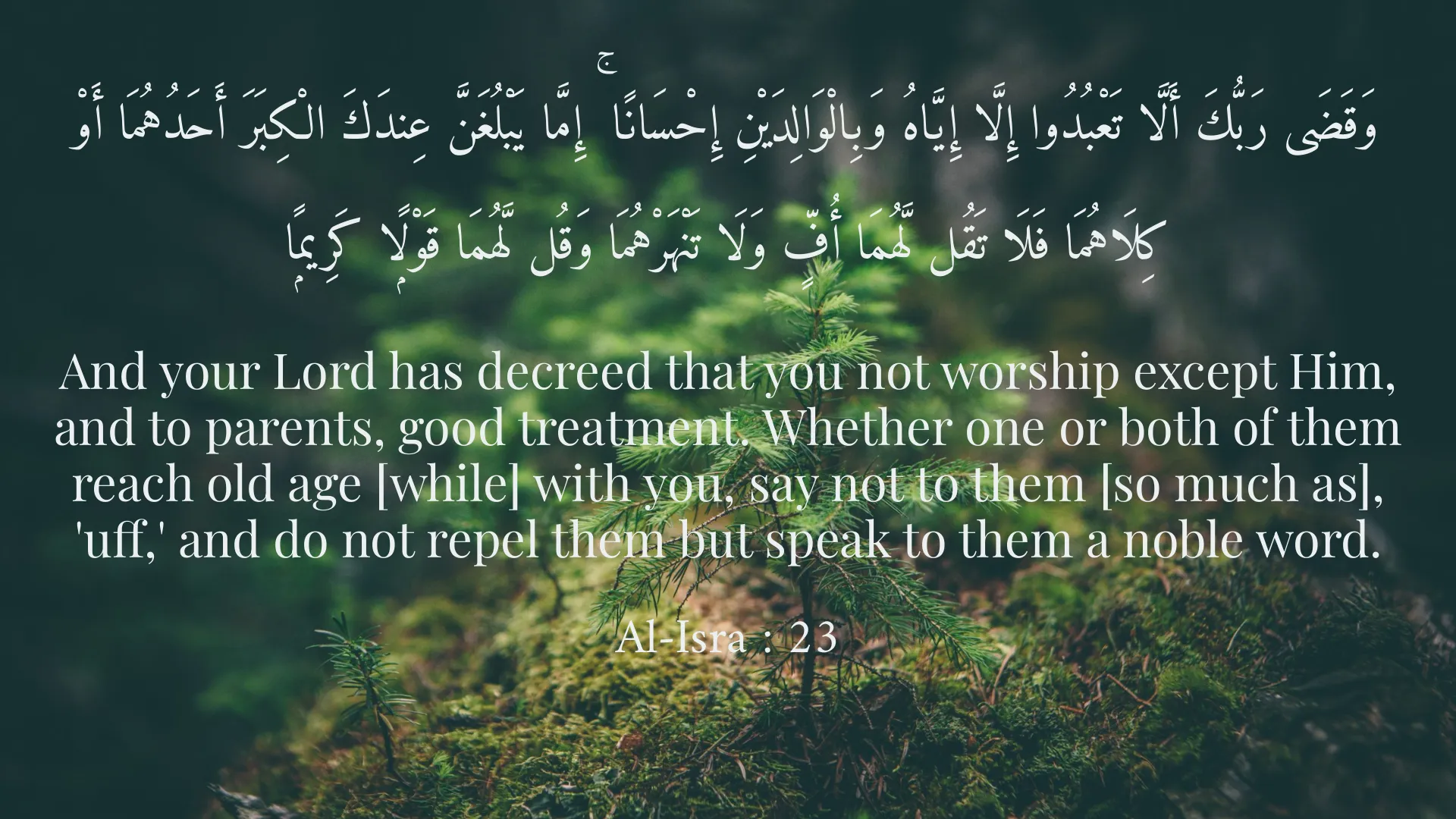
وَقَضَى رَبُّكَ أَلَّا تَعْبُدُوا إِلَّا إِيَّاهُ وَبِالْوَالِدَيْنِ إِحْسَانًا ۚ إِمَّا يَبْلُغَنَّ عِندَكَ الْكِبَرَ أَحَدُهُمَا أَوْ كِلَاهُمَا فَلَا تَقُل لَّهُمَا أُفٍّ وَلَا تَنْهَرْهُمَا وَقُل لَّهُمَا قَوْلًۭا كَرِيمًۭا
And your Lord has decreed that you not worship except Him, and to parents, good treatment. Whether one or both of them reach old age [while] with you, say not to them [so much as], 'uff,' and do not repel them but speak to them a noble word.
Al-Isra : 23
وَوَصَّيْنَا الْإِنْسَانَ بِوَالِدَيْهِ ۚ إِنْ شَكَرْتَ لِي وَلِوَالِدَيْكَ فَأَنَّ عَذَابِي شَدِيدٌ
And We have enjoined upon man [care] of his parents. But if they endeavor to make you associate with Me that of which you have no knowledge, do not obey them. To Me is your return, and I will inform you about what you used to do.
Luqman : 14
يَا أَيُّهَا الَّذِينَ آمَنُوا لَا تَنفَعْكُمْ أَمْوَالُكُمْ وَلَا أَوْلَادُكُمْ يَوْمَ الْفَصْلِ ۖ وَالَّذِينَ هُمْ فِي غَفْلَةٍ مُّكَانُهُمْ وَمَا أَدْرَاكَ مَا يَوْمُ الْفَصْلِ
O you who have believed, your properties and your children are but a trial, and Allah has with Him a great reward.
Al-Anfal : 28
Short Story
One day, a young boy named Ali had a desire to make his mother happy. He decided that for the next three days, he would perform a good deed for her each day; from helping with chores to preparing a delicious snack. On the first day, Ali woke up early and made a delightful breakfast for his mother. She was very happy and thanked him. On the second day, Ali offered her to rest while he went to the store to get groceries. His mother looked at him in surprise, never expecting her son to pay such attention. On the third day, he wrote a heartfelt letter for her and placed it on her desk. When his mother read the letter, tears of joy filled her eyes. Ali felt a special sense of peace and happiness within himself as he knew that these actions resulted in his mother's joy.