Quranic Answer
Piety is a term that resonates profoundly within the framework of Islam and the teachings of the Quran. It encapsulates notions of conscientiousness and adherence to the fundamental tenets of the faith. The significance of piety is underscored through various verses in the Quran, where God highlights its essential role not only in the personal relationship between individuals and their Creator but also in cultivating a harmonious existence within society. At its core, piety serves as a guiding principle that fosters moral integrity, compassion, and a sense of responsibility towards oneself and others. One of the foundational verses that exemplifies the importance of piety is found in Surah Al-Baqarah, verse 177. In this verse, God articulates that righteousness is not solely confined to the rituals of prayer and fasting; rather, it encompasses a broader spectrum of ethical conduct which includes giving zakat (charity), aiding the needy, and advocating for justice. This multifaceted portrayal of piety reveals that it is not merely a set of obligations to be fulfilled but a holistic way of life that compels individuals to respond actively to the needs of their fellow beings. By engaging in acts of charity and service, a person embodies the essence of piety, fostering compassion and empathy in their interactions. Furthermore, piety is reinforced in Surah Al-Imran, verse 102, where believers are urged to be mindful of God and to adhere steadfastly to righteousness. This call for mindfulness is imperative as it directs individuals to maintain a conscious awareness of their actions and their alignment with divine expectations. In essence, someone who integrates piety into their daily routine is likely to experience a transformative journey, drawing closer to divine guidance and tranquility. This connection leads to a clearer understanding of one's purpose in life and the ethical imperative to contribute positively to the community. Piety acts as a moral compass during trying times, enabling individuals to make sound decisions rooted in their faith, thus steering them away from the alluring temptations of wrongdoing. When faced with adversity, a pious individual is often equipped with the strength and resilience to navigate through challenges by relying on their faith and the principles of righteousness. In this way, the cultivation of piety not only uplifts the individual spirit but also has far-reaching implications for the community at large. As individuals pursue a pious existence, they inspire others to follow suit, creating a ripple effect that fosters a more just and compassionate society. Moreover, the Quran frequently emphasizes the social dimensions of piety. It illustrates that true worship transcends individual acts of devotion and manifests in how one interacts with others. The guidance of the Quran reinforces the understanding that piety is intrinsically linked to social responsibility; that one’s faith must be articulated through actions that benefit the wider community. By promoting values such as honesty, generosity, and humility, piety encourages individuals to engage actively in the betterment of society, thereby establishing a collective consciousness rooted in ethical principles. The essence of piety also stresses the importance of nurturing the self, as inner cultivation often yields significant external manifestations. A person truly invested in piety will be inclined towards introspection, self-improvement, and the pursuit of knowledge. These attributes resonate with the Quranic injunctions that advocate for personal growth aligned with spiritual fulfillment. Such individuals often find solace in moments of reflection and prayer, using these practices to solidify their relationship with God and to affirm their commitment to a righteous path. Additionally, piety is not a stagnant state; rather, it is a dynamic interplay between fear of God and love for Him, guiding individuals to act justly and with kindness. The balance between these two aspects of piety fosters a comprehensive spiritual experience, allowing individuals to develop a profound connection with the Divine while remaining grounded in their social responsibilities. When one recognizes that piety is an ongoing journey—requiring continuous effort and dedication—they become more receptive to personal and spiritual growth. In addressing the challenges of modern life, where distractions and secular influences abound, the significance of piety cannot be overstated. In a fast-paced society often characterized by self-interest, the principles of piety remind individuals of their duties toward God and society. In cultivating a pious lifestyle, individuals stand against the tide of moral ambiguity, promoting integrity and ethical behavior as cornerstones of their existence. In summary, piety is a profound and transformative principle within Islam that encompasses a deep awareness of one’s actions, fostering both an intimate relationship with God and a commitment to societal well-being. Through the teachings of the Quran, individuals are reminded that piety is not merely a collection of rituals but a comprehensive way of life that advocates compassion, social responsibility, and personal growth. As believers strive to embody the essence of piety, they establish meaningful connections with others, enhance their moral compass, and contribute to a just and harmonious society. Thus, embracing piety is essential not only for individual spiritual elevation but also for the collective upliftment of humanity.
Related Verses
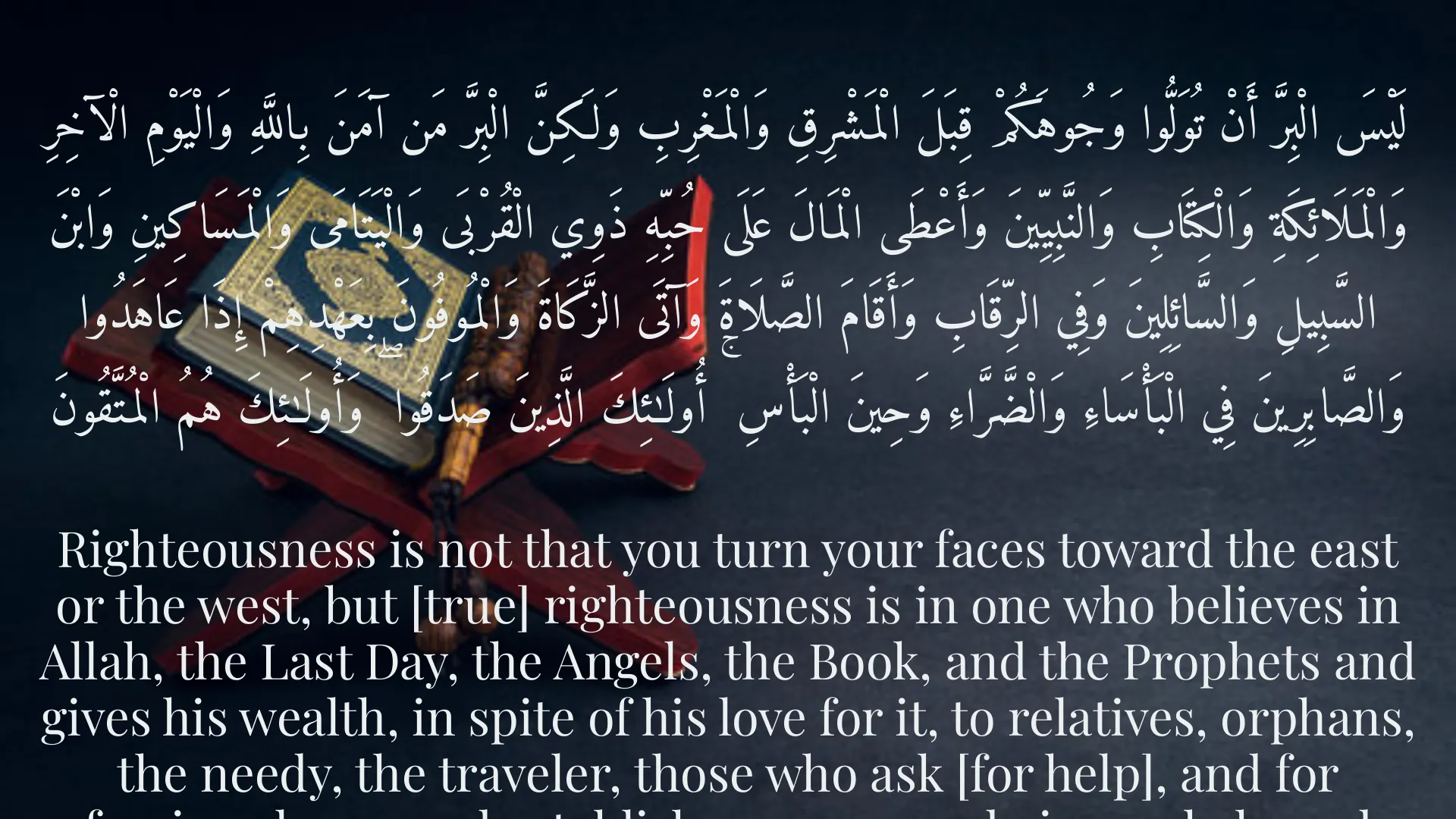
لَيْسَ الْبِرَّ أَنْ تُوَلُّوا وَجُوهَكُمْ قِبَلَ الْمَشْرِقِ وَالْمَغْرِبِ وَلَكِنَّ الْبِرَّ مَن آمَنَ بِاللَّهِ وَالْيَوْمِ الْآخِرِ وَالْمَلَائِكَةِ وَالْكِتَابِ وَالنَّبِيِّينَ وَأَعْطَى الْمَالَ عَلَى حُبِّهِ ذَوِي الْقُرْبَى وَالْيَتَامَى وَالْمَسَاكِينِ وَابْنَ السَّبِيلِ وَالسَّائِلِينَ وَفِي الرِّقَابِ وَأَقَامَ الصَّلَاةَ وَآتَى الزَّكَاةَ وَالْمُوفُونَ بِعَهْدِهِمْ إِذَا عَاهَدُوا وَالصَّابِرِينَ فِي الْبَأْسَاءِ وَالْضَّرَّاءِ وَحِينَ الْبَأْسِ ۚ أُولَـٰئِكَ الَّذِينَ صَدَقُوا ۖ وَأُولَـٰئِكَ هُمُ الْمُتَّقُونَ
Righteousness is not that you turn your faces toward the east or the west, but [true] righteousness is in one who believes in Allah, the Last Day, the Angels, the Book, and the Prophets and gives his wealth, in spite of his love for it, to relatives, orphans, the needy, the traveler, those who ask [for help], and for freeing slaves; and establishes prayer and gives zakah; and those who fulfill their promise when they promise; and [those who are] patient in poverty and hardship and during battle. Those are the ones who have been true, and it is those who are the righteous.
Al-Baqarah : 177
يَـٰ أَيُّهَا الَّذِينَ آمَنُوا اتَّقُوا اللَّهَ حَقَّ تُقَاتِهِ وَلَا تَمُوتُنَّ إِلَّا وَأَنْتُمْ مُسْلِمُونَ
O you who have believed, fear Allah as He should be feared and do not die except as Muslims.
Al-Imran : 102
Short Story
Once upon a time, there was a man named Hasan living in a city. He always tried to live a life of piety and avoid sin. One day, Hasan encountered tough times and realized that only by maintaining piety and being close to God could his life improve. Through reading the Quran and praying, he found peace in his heart and began to overcome his problems one by one. Hasan learned that the only path to happiness is through following God and being pious.