Quranic Answer
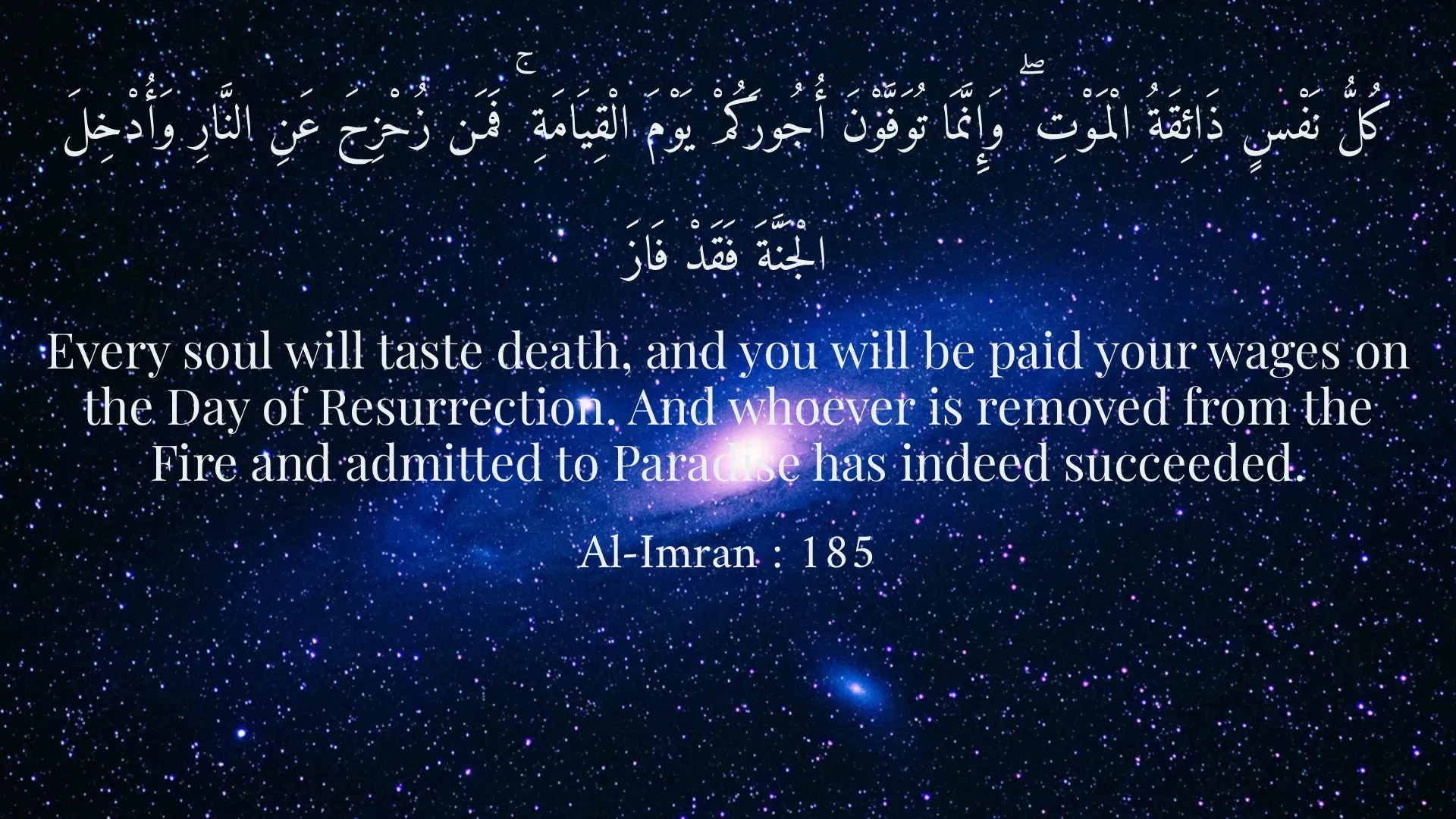
The remembrance of the Day of Judgment is profoundly significant in the Islamic faith, serving as a guiding beacon for believers to navigate the complexities of life with righteousness and integrity. This pivotal event, which marks the time when all souls will be held accountable for their deeds, is not merely a distant occurrence but a constant reminder that influences individual behavior and moral decision-making. In Islamic teachings, the Day of Judgment holds a critical place, emphasizing the importance of actions and the consequences they yield. The Quran emphasizes the significance of the Day of Judgment numerous times, driving home the notion that life is temporary, and the afterlife is everlasting. In Surah Al-Imran (3:185), Allah states: "Every soul will taste death, and you will be paid your wages on the Day of Resurrection. And whoever is removed from the Fire and admitted to Paradise has indeed succeeded." This verse serves as a profound reminder that death is an inevitable part of the human experience. It not only highlights the transient nature of worldly life but also assures that everyone will face their deeds in the hereafter. The mention of being 'removed from the Fire' and 'admitted to Paradise' articulates the stakes involved; it accentuates the notion of success in this life, which is ultimately measured in terms of one's standing in the afterlife. The contemplation and awareness of the Day of Judgment spur individuals to reflect upon their actions and choices daily. When one internalizes the reality of this event, it engenders a heightened sense of responsibility towards one's conduct. The moral weight of every deed becomes clearer; thus, individuals are encouraged to act with integrity, kindness, and justice, contributing positively to their surroundings. Life choices, therefore, become imbued with significance, as believers strive for righteousness and seek to engage in deeds that align with divine guidance. Furthermore, the Quran emphasizes the promise of success for the righteous on the Day of Judgment. In Surah Al-Mu'minun (23:103), it states: "Then those whose scales are heavy [with good deeds] – it is they who are the successful." This reinforces the message that regardless of the trials and tribulations faced in this world, a wealth of good deeds can lead to salvation and eternal bliss. The imagery of scales highlights the accountability that every individual faces, and thus, the act of canvassing one's own actions can cultivate a deeper sense of awareness in one's daily life. The moral implications of the Day of Judgment extend beyond individual growth; they also encompass broader societal ramifications. As individuals engage in self-reflection and seek goodness, the ripple effects are felt within communities. A society composed of individuals who are mindful of the Day of Judgment is likely to manifest virtues such as compassion, cooperation, and a collective sense of responsibility. As people strive to embody the principles of faith through increased empathy, support for one another, and the pursuit of justice, the overall moral fabric of society is strengthened. Moreover, one of the most profound impacts of remembering the Day of Judgment is the sense of peace and tranquility it brings to the spirit. In the face of life's challenges, uncertainties, and trials, this remembrance serves as a source of solace. When individuals internalize that their struggles are known to a Higher Power and that justice will prevail in the hereafter, they experience a reduction in anxiety and stress. The belief that there is an eventual reckoning fosters resilience, empowering individuals to cope with adversity more effectively. Additionally, the concept of accountability transforms how people view their interactions with others. Understanding that all actions are recorded and will be revealed cultivates a sense of caution about engaging in harmful behaviors. This encourages believers to refrain from sins, making conscious efforts to guide their behavior toward purity and virtue. In a world where moral ambiguity often reigns, individuals grounded in the remembrance of Judgment Day can stand firm against temptations and societal pressures that veer them away from righteousness. Beyond personal growth and societal benefits, the remembrance of the Day of Judgment also creates a unique interplay of hope and anxiety. While there is an intrinsic fear associated with the reckoning of one’s deeds, this fear serves as a catalyst for positive transformation. It creates a sense of urgency to rectify wrongs, seek forgiveness, and commit to a path of righteousness. The duality of hope for Paradise and fear of Hellfire motivates believers to cultivate a life rich in good actions and repentance. In conclusion, the remembrance of the Day of Judgment lies at the heart of the Islamic experience, acting as a compass that guides individuals toward the righteous path while distancing them from sin and impurities. The teachings in the Quran, illustrating the inevitability of death and accountability, trigger a powerful response in the hearts of believers. By reflecting on the afterlife, individuals are encouraged to nurture their faith, bolster their moral character, and foster a sense of community grounded in virtue. In this way, the reminder of the Day of Judgment transcends mere belief; it becomes a transformative force that shapes behavior, cultivates resilience, and fortifies the spirit amidst the trials of life.
Related Verses
كُلُّ نَفْسٍ ذَائِقَةُ الْمَوْتِ ۖ وَإِنَّمَا تُوَفَّوْنَ أُجُورَكُمْ يَوْمَ الْقِيَامَةِ ۚ فَمَن زُحْزِحَ عَنِ النَّارِ وَأُدْخِلَ الْجَنَّةَ فَقَدْ فَازَ
Every soul will taste death, and you will be paid your wages on the Day of Resurrection. And whoever is removed from the Fire and admitted to Paradise has indeed succeeded.
Al-Imran : 185
فَمَن ثَقُلَتْ مَوَازِينُهُ فَأُولَـٰئِكَ هُمُ الْمُفْلِحُونَ
Then those whose scales are heavy [with good deeds] – it is they who are the successful.
Al-Mu'minun : 103
وَجَاءَتْ سَكْرَةُ الْمَوْتِ بِالْحَقِّ ۚ ذَٰلِكَ مَا كُنتَ مِنهُ تَحِيدُ
And the intoxication of death will bring the truth; that is what you were trying to avoid.
Qaf : 20
Short Story
One day, a young man named Ahmad found himself feeling lonely and confused in his busy life. He decided to remember the Day of Judgment, and this remembrance transformed his life dramatically. He felt that by recalling the day when all his deeds would be judged, he gained a greater sense of responsibility. From then on, he dedicated time each day to contemplate the Day of Judgment, leading to a gentler demeanor towards others and a profound sense of inner peace.