Quranic Answer
The Holy Quran places great importance on work and effort, considering it a fundamental principle of life. Work is an essential aspect of human existence that transcends the mere act of earning a livelihood; it is viewed as a vital element of worship and a pathway to spiritual fulfillment. Within the sacred texts of Islam, numerous references illustrate the profound significance of work, urging believers to engage proactively in their pursuits while aligning their intentions with piety and devotion to God. This article delves into the Quranic perspective on work, emphasizing the dual nature of effort - both as a means of sustenance and a form of spiritual worship. The notion of work in the Holy Quran is interwoven with the concept of divine responsibility. The verses convey a clear message that every individual has a role to play in the tapestry of life, and by fulfilling their obligations through diligent effort, they contribute positively to society. In Surah Al-Baqarah, verse 286, Allah states, 'Allah does not burden a soul beyond that it can bear.' This profound declaration serves as a reminder that human beings are endowed with the capacity and resilience required to strive toward their goals. The verse encourages individuals to harness their inner strength, abilities, and determination to overcome obstacles and achieve success. In this context, effort is not merely a means to an end but a purposeful action that reflects one's faith in God's wisdom and justice. Moreover, Surah Al-An'am, verse 132, reinforces the significance of personal endeavor, declaring, 'And for all are degrees for what they have done.' This assertion encapsulates the idea that human beings are rewarded based on their actions and efforts. The Quran not only acknowledges the diversity of human capabilities but also underscores the need for individuals to aspire and work diligently. The notion of being rewarded according to one's efforts highlights the moral imperative of hard work, encouraging believers to embrace a proactive attitude in both their worldly and spiritual undertakings. The Quran's teachings extend beyond the material realm, emphasizing the importance of conducting work with sincerity and integrity. In Surah At-Talaq, verse 2, Allah states, 'And whoever fears Allah - He will make for him a way out.' This verse emphasizes the intrinsic relationship between piety and one's daily labor. The fear of God serves as a guiding principle that shapes ethical conduct in the workplace, fostering a sense of responsibility and accountability among individuals. The idea that faith can lead to divine assistance in overcoming challenges is a powerful motivator for believers to pursue their work with devotion and moral fortitude. Furthermore, the Quran advocates for a balanced approach to work, recognizing the significance of both worldly pursuits and spiritual obligations. In Islam, work is not merely an act of economic necessity; it is intertwined with the pursuit of goodness and the betterment of society. Engaging in productive labor is seen as a way to honor the resources provided by God and serve the community. The concept of 'Khadamat' (service) is deeply rooted in Islamic teachings, emphasizing that one's labor should aim to benefit others and contribute to the greater good. The spiritual dimension of work in Islam is further emphasized through the practice of 'niyyah' (intention). The intention behind one's work elevates mundane tasks to acts of worship, as believers are encouraged to align their efforts with the goal of pleasing God. Whether one is a professional, a student, or a homemaker, the underlying aim should be to perform their duties with the consciousness of divine observation and to seek God's pleasure through sincerity, excellence, and integrity in their efforts. Moreover, the Quran provides practical guidance on how to approach work and balance various facets of life. For instance, Allah commands believers to seek 'rizq' (sustenance) through lawful means. In Surah Al-Mulk, verse 15, it is mentioned, 'It is He who has made the earth subservient to you; so traverse in its tracks and partake of the sustenance He has provided.' This encourages individuals to explore the world, use their intellect and skills, and engage in enterprises that are beneficial and ethical. By doing so, believers can cultivate a sense of responsibility towards the environment and society, emphasizing the sustainable use of resources and encouraging ethical business practices. Additionally, the Quran illustrates the significance of collaboration and cooperation in work through the principle of 'Ummah,' or community. Believers are called upon to support and assist one another in their endeavors, fostering a sense of unity and collective growth. This concept encourages individuals to work together, innovate, and contribute their unique talents to lift the community as a whole. The Quranic perspective promotes a holistic view of work that recognizes shared responsibilities and the need for social cohesion in the pursuit of common goals. In conclusion, the Holy Quran positions work and effort as central tenets of human life, intertwining the material and spiritual dimensions of existence. It urges individuals to engage actively in their pursuits while remaining mindful of their duties towards God and society. By framing work as both a necessity and an act of worship, Muslims are motivated to find purpose in their endeavors and strive for excellence. The teachings of the Quran illuminate the path for believers to approach their work with integrity, piety, and a sense of responsibility, all of which contribute to personal growth and collective prosperity. Ultimately, the Quran not only encourages hard work but also reassures believers that such efforts, when undertaken with sincerity and the right intention, align harmoniously with the divine will and lead to rewards in both this life and the hereafter.
Related Verses
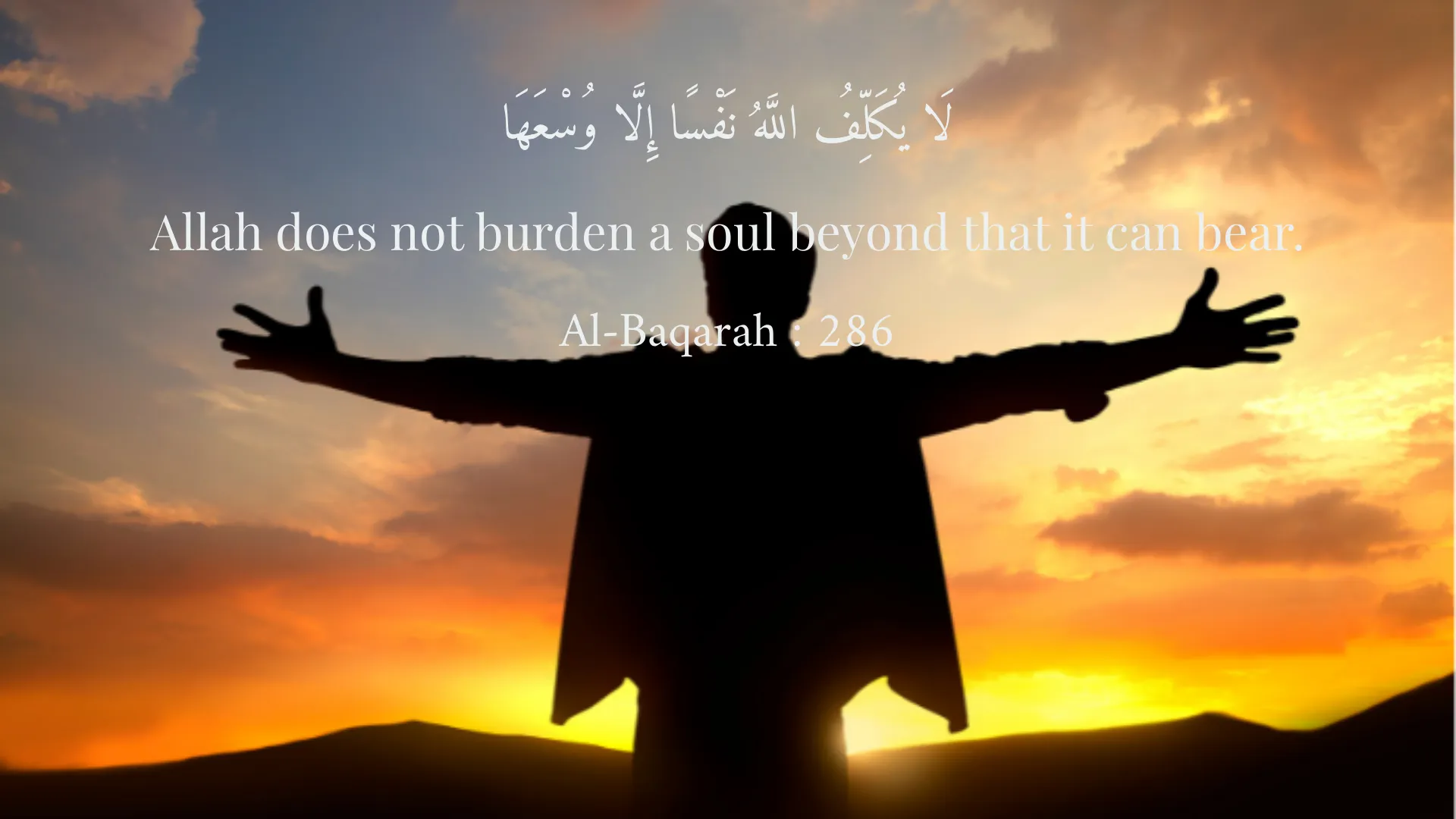
لَا يُكَلِّفُ اللَّهُ نَفْسًا إِلَّا وُسْعَهَا
Allah does not burden a soul beyond that it can bear.
Al-Baqarah : 286
وَلِكُلٍّ دَرَجاتٌ مِّمَّا عَمِلُوا
And for all are degrees for what they have done.
Al-An'am : 132
وَمَن يَتَّقِ اللَّهَ يَجْعَل لَّهُ مَخْرَجًا
And whoever fears Allah - He will make for him a way out.
At-Talaq : 2
Short Story
One day, a man named Ahmad decided to establish a small workshop. He kept working hard every day, knowing that his efforts would not only benefit him but also provide for his family. After a while, his workshop flourished and became a center for employment for local youth. Ahmad always remembered the Quranic verses that state, 'Allah does not burden a soul beyond that it can bear.' He was confident that with effort and piety, he could achieve his goals.