Quranic Answer
The Significance of Language and Speech in the Holy Quran: A Comprehensive Exploration Language is one of the most potent tools bestowed upon humankind, serving not only as a means of communication but also as a vehicle for expressing one's thoughts, beliefs, and emotions. In the realm of religion, particularly within the Islamic faith, the importance of language transcends mere speech; it embodies a divine obligation to represent truth and uphold moral standards. The Holy Quran emphasizes the significance of proper speech and the ethical responsibilities that come with using language. This article delves deep into the Quranic verses that illustrate these points, underscoring the implications for interpersonal communication as well as the spiritual dimensions of language use. ### Language as a Tool for Truth The Quran prioritizes the use of language as an instrument for articulating truth and reality. One pivotal verse in this context is found in Surah Al-Isra (17:53), which instructs believers, "And speak to them a good word." This verse serves as a gentle reminder of the importance of politeness and respect in our conversations. It emphasizes that believers should engage with others using words that uplift and inspire rather than those that demean or belittle. This notion of a 'good word' suggests that language should serve as a means to promote understanding and harmony among individuals. This directive extends beyond mere etiquette; it calls for a profound responsibility to uphold the truth in discourse. The implications of this guidance are far-reaching, asking individuals to refrain from indulging in gossip, slander, or any form of speech that may be harmful to others. By engaging in positive and constructive dialogue, believers can contribute to a more peaceful and just society. ### The Danger of Negative Assumptions Another key Quranic reference is found in Surah Al-Hujurat (49:12): "O you who have believed, avoid much [negative] assumption." This verse highlights the importance of truthfulness, advising believers to refrain from making unfounded assumptions about others. Negative assumptions often stem from misunderstandings or inadequate information, leading to discord and strife. The Quran, therefore, encourages believers to seek clarification and understanding before forming opinions about others. The message here is clear: promoting an environment where assumptions are minimized is vital for maintaining relationships and social equilibrium. Language, in this context, acts as a bridge to understanding; it is imperative to communicate openly and honestly, as this reduces the likelihood of misinterpretation and fosters a climate of trust. ### The Importance of Choosing Words Wisely An effective method for avoiding linguistic slip-ups lies in the conscious selection of words. It is easy to speak impulsively, but the Quran inspires believers to think before they speak. The act of weighing one's words carefully and considering their impact on others is not merely an act of courtesy; it is enshrined in the religious ethos that values compassion and kindness. By being mindful of one's language, individuals can avoid misunderstandings that may arise from careless speech. This mindfulness also encompasses the recognition that words can have profound emotional ramifications. Words can uplift spirits or cause deep wounds; thus, the Quran's exhortation to use good words is deeply relevant in every facet of human interaction. ### Cultivating Patience and Tolerance In addition to the focus on mindful speaking, the Quran advocates for patience and tolerance when confronted with linguistic challenges. The ability to remain calm and composed, even when faced with difficult or provocative speech, is a quality that is highlighted throughout the Quran. This patience is not just about enduring negative language but about deliberately choosing responses that are constructive rather than retaliatory. For instance, in scenarios where one might encounter rude or disrespectful speech, the Quran encourages a measured response, one that exemplifies dignity and respect, even in adversity. Such patience reinforces the notion that language is not merely a means of expression but a reflection of one's character and faith. ### The Power of Language Ultimately, the Quran reminds us that the power of language is immense, and thus, a source of both great responsibility and opportunity. Each word we utter possesses the potential to create unity, spread positivity, or foster division and negativity. Given this dual capacity, it is imperative that believers approach their speech with awareness and intentionality. The teachings of the Quran guide discussions not just between individuals but extend to broader societal interactions. The application of these principles can lead to peaceful resolutions in conflicts and disputes, as well as the nurturing of mutual respect and understanding within communities. The emphasis on good speech and avoiding misconceptions can effectively build bridges within diverse groups, promoting social cohesion and harmony. ### Conclusion In summary, the Holy Quran extensively emphasizes the significance of language and proper speech as pivotal components of a believer's life. By advocating for truth, respect, thoughtful speech, and patient interaction, the Quran provides believers with essential guidelines for navigating their interpersonal communication. In a world where words can influence profoundly, it is crucial for individuals to internalize these teachings and apply them in their daily lives. The Quranic wisdom serves as a compass, steering believers toward a path where language is used judiciously, nurturing both personal relationships and societal well-being.
Related Verses
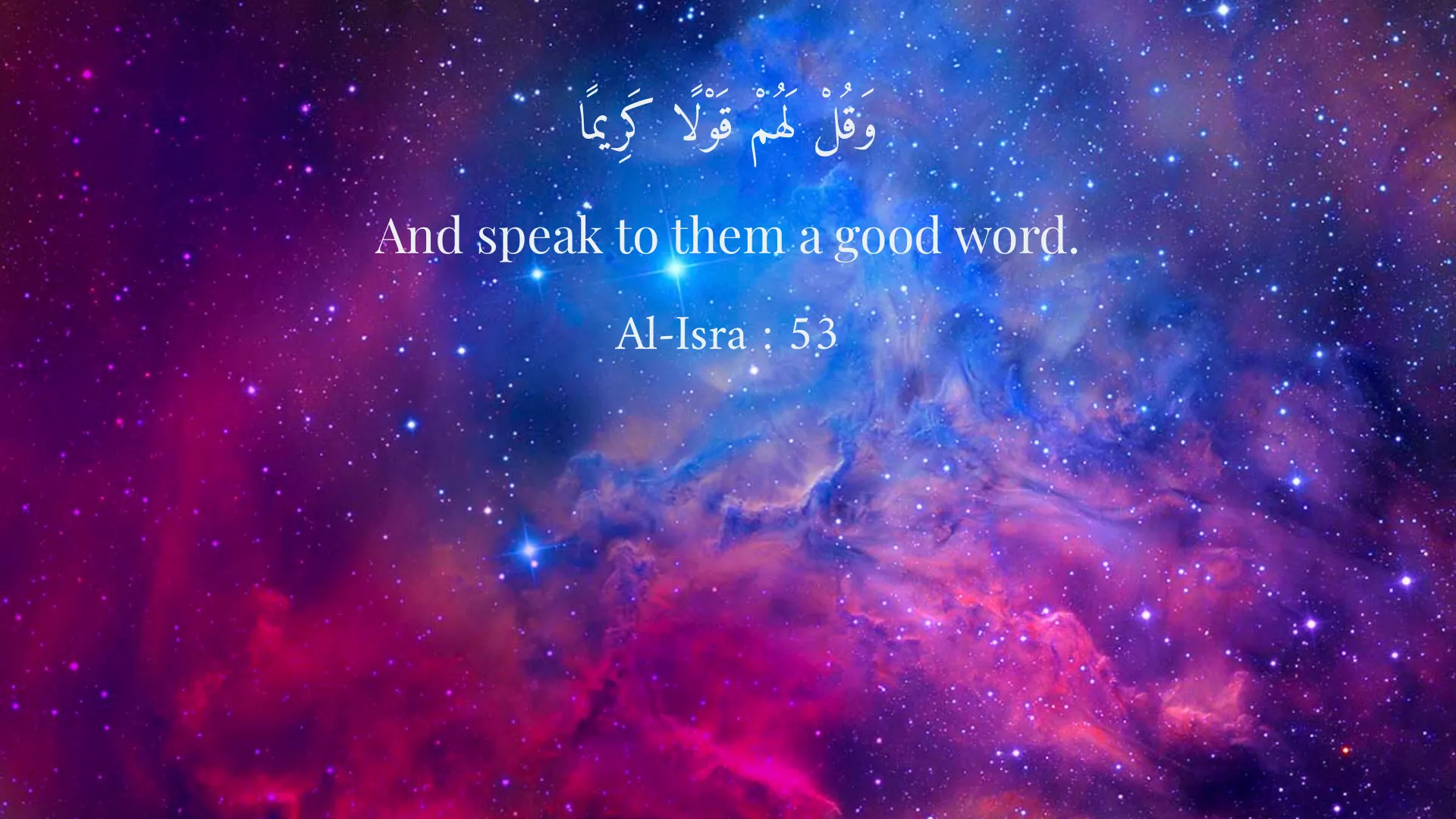
وَقُلْ لَهُمْ قَوْلًا كَرِيمًا
And speak to them a good word.
Al-Isra : 53
يَا أَيُّهَا الَّذِينَ آمَنُوا اجْتَنِبُوا كَثِيرًا مِّنَ الظَّنِّ
O you who have believed, avoid much [negative] assumption.
Al-Hujurat : 12
Short Story
A dervish with a frank and straightforward tongue spoke whatever was in his heart. One day an old man said to him, 'O dervish! Your tongue is like a sharp sword; your words can break or build hearts.' The dervish pondered and from that day on, he spoke more cautiously and tried to use smiles and kindness in his continued speech.